


Can You Mix Human and Pet Ashes? What to Know Before You Decide
If you’re asking, “can you mix human and pet ashes,” the answer depends on what you plan to do with them. Cemetery placement, shared storage, a keepsake, and a memorial diamond can each involve different requirements. Once remains are physically combined, separating them may be difficult or impossible.
Wanting a shared memorial for companions who belonged to the same family is understandable. Before combining anything, check whether the cemetery or memorial provider accepts your intended arrangement, whether separate containers are required, and what records it needs. This guide explains the difference between mixing ashes and placing separate containers together, outlines questions to ask, and compares several ways to create a shared remembrance. It also covers memorial diamonds. Because the carbon used for a diamond is extracted and purified from provided ashes or hair, ask the provider whether it can use both human and pet material together before combining anything.
Key Takeaways
- “Mixing” can mean physically combining ashes, sharing a container, arranging burial together, or using material for a keepsake. Clarify which option you mean first.
- If you’re wondering “can you mix human and pet ashes,” the answer depends on the intended setting and its requirements.
- Before combining remains, ask the cemetery or provider about acceptance, identification records, documentation, and whether the ashes must stay separate.
- Consider whether you may want separate keepsakes or arrangements later. Combined material may be difficult or impossible to separate.
- A memorial diamond may be one keepsake option. Ask Diamond Cremations whether your specific human and pet materials can be used together before combining them.
Can You Mix Human and Pet Ashes? First Clarify What 'Mix' Means
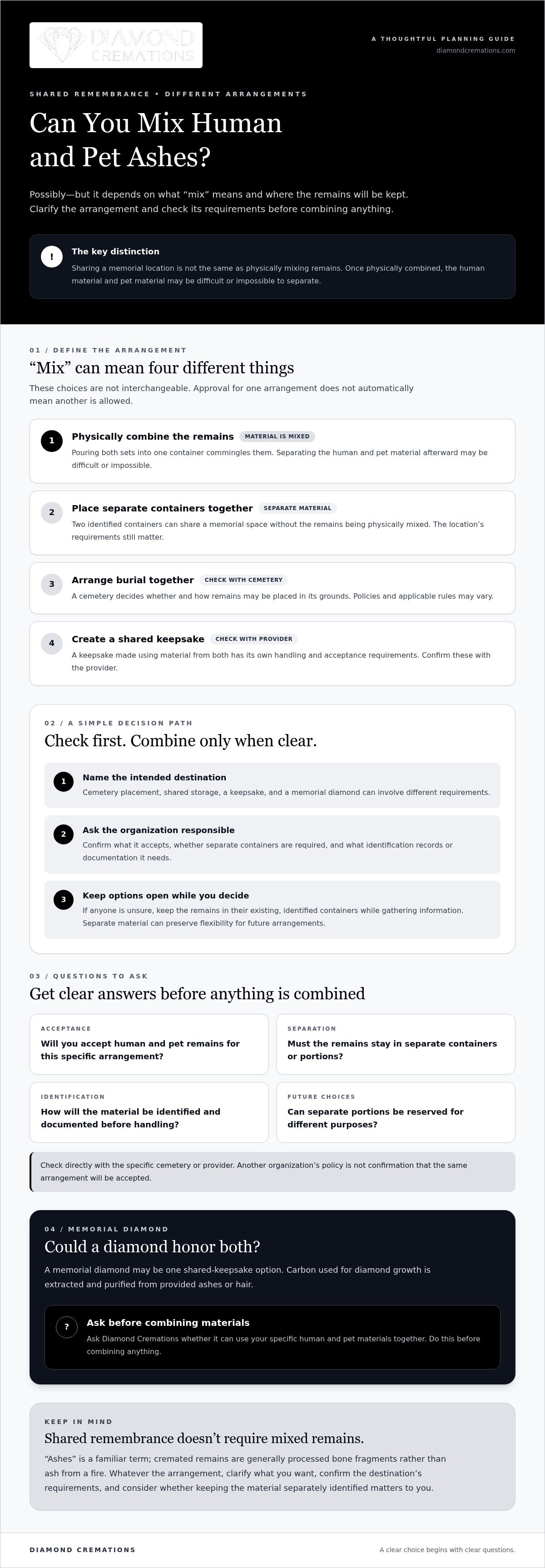
Possibly, but the answer depends on what you mean by “mix” and where the remains will be kept. The term can refer to physically combining human and pet cremated remains, placing separate remains in one container, arranging to bury them together, or using material from both for a shared keepsake. These choices are not interchangeable. Approval for one arrangement doesn’t automatically mean another is allowed.
“Ashes” is the familiar term, though cremated remains are generally processed bone fragments rather than ash from a fire. You can read more about cremated remains and the cremation process. Knowing what the material is doesn’t determine where it can be placed or how it can be used. The intended destination matters.
Does mixing ashes mean combining them in one container?
Not necessarily. Two separate, identified containers placed together in a memorial space share a location, but the remains have not been physically commingled. Pouring both sets into one container does combine them. A shared keepsake made using material from both is another kind of remembrance, with separate practical considerations.
After remains are physically combined, separating the human material from the pet material may be difficult or impossible. If individual identification, separate keepsakes, or flexibility for future arrangements matters to you, pause before mixing them. Ask how the material will be identified and documented, and whether separate portions can be reserved for different purposes.
Is burial together the same as making a shared memorial?
No. A cemetery decides whether and how remains may be placed in its grounds. Its policies may vary, as may applicable rules. A private keepsake involves different considerations, including family wishes and the requirements of the provider handling the material. Acceptance for a keepsake doesn’t mean a cemetery will accept the same arrangement.
Before making burial plans, contact the specific cemetery. Ask whether it permits human and pet remains to be placed together, whether they must remain in separate containers, and what records or documentation it requires. Don’t rely on another cemetery’s policy as confirmation. If you’re considering a keepsake or memorial diamond, ask the provider whether it can work with your intended materials before combining them.
In short, a shared memorial means remembering together; combined remains means the material itself has been physically mixed. Clarify which you want before choosing an arrangement. That first step can help honor your wishes while preserving the options that matter to you.
What to Know About Combining Human and Pet Cremated Remains
Combining remains is a personal choice with practical consequences. Before changing containers or preparing material for a keepsake, make sure everyone involved understands what will be combined, where it will go, and whether the choice could limit future options. If anyone is unsure, keep the remains in their existing, identified containers while you gather information.
The destination determines which permission and handling questions to ask. General planning guidance can help you identify those questions, but it can’t confirm whether a particular cemetery or memorial provider will accept combined material. The Cremation Association of North America (CANA) offers information about cremation. For a specific arrangement, check directly with the organization responsible for it.
What should families consider before combining remains?
Start by discussing what each family member wants. Some may prefer a shared memorial, while others may want to keep each set of remains identifiable or reserve some for separate keepsakes. Talk through those preferences before anything is mixed. If there’s uncertainty, keeping the remains separately identified preserves more choices while you decide.
Next, contact the person or organization responsible for the intended destination. A cemetery may have placement and recordkeeping requirements; a keepsake or memorial provider may have different material acceptance requirements. Ask what it accepts, what documentation it needs, and whether the remains must stay separate during handling. Don’t assume permission for one purpose applies to another.
Can you still identify or separate ashes after they’re mixed?
Once remains are physically commingled, separating the human material from the pet material may not be practical. Identification records can document what was provided and how it was handled before combining, but they shouldn’t be treated as a promise that individual sources can be traced afterward. Ask about identification, tracking, and documentation before changing containers or mixing material.
This matters whether you’re planning a shared keepsake, cemetery placement, or another form of remembrance. There isn’t one answer to “can you mix human and pet ashes” that applies in every situation. The cemetery or provider responsible must confirm its own requirements, and your family should decide whether keeping the materials separate is important.
If you’re considering memorial diamonds, Diamond Cremations works with human or pet ashes or hair, extracting and purifying carbon from the provided material. Whether the company can use combined human and pet material isn’t confirmed, so ask directly before combining anything. You can explore memorial diamond options and ask about your specific materials while they’re still separate.
Burial, Shared Keepsakes, or Diamonds: Which Option Fits Your Wishes?
The right choice depends on what your family wants to preserve and what the intended setting allows. Use this comparison to identify whom to contact and what to confirm before deciding whether remains should stay separate or be combined.
| Option | Who to consult | Are remains combined? | Confirm first |
|---|---|---|---|
| Burial together | The specific cemetery | Not necessarily; placement together may involve separate containers. | Whether the cemetery accepts the arrangement and what container or documentation requirements apply. |
| Shared storage | The person responsible for the chosen memorial space or container | Only if you physically place both sets of remains in one container. | Whether separate, identified containers can share the space and how they’ll be recorded. |
| Separate keepsakes | Family members and any keepsake provider | No, if material remains separate. | How to preserve identification and whether each person’s wishes are represented. |
| Memorial-diamond inquiry | The memorial-diamond provider | Only if the provider accepts and processes combined source material. | Whether your specific human and pet material can be used together, and what identification and documentation questions to ask. |
Approval for shared burial doesn’t mean a memorial provider can process mixed material. The decision-makers and requirements differ. For example, the New York Department of State explains New York state law regarding pet cremated remains and interment. That state-specific guidance isn’t a substitute for checking the rules and policies that apply to your own cemetery or memorial provider.
When might separate keepsakes preserve more choice?
Keeping the remains separate may let family members choose different forms of remembrance or make arrangements at different times. Separate containers or keepsakes are options, not requirements. If you’re exploring a diamond, first confirm what material the provider can use. Shape is a later design consideration, and options can depend on the diamond selected.
What if the family wants one shared tribute?
A shared tribute could mean a shared location, one container, or a keepsake made using material from both. Be precise about which arrangement you mean when speaking with the cemetery or provider. Ask what it accepts and requires before combining anything. Families may choose different arrangements; no single option is right for everyone.
If you’re asking, “can you mix human and pet ashes” for a memorial diamond, confirm directly with Diamond Cremations whether it can use your specific materials together. The company works with human or pet ashes or hair, but acceptance of combined human and pet material isn’t confirmed.
Questions to Ask Before You Combine Human and Pet Ashes
A few careful questions can help you make a more informed decision. First identify the destination, then speak with the person or organization responsible and confirm its requirements. Decide whether to combine anything only after you have clear answers. Until then, keep the remains separately identified.
- Step 1: Define the destination. Are you considering cemetery placement, shared storage, separate keepsakes, or a memorial diamond? Be clear about whether you mean placing remains near one another or physically combining them.
- Step 2: Contact the decision-maker. For burial, ask the cemetery. For a keepsake or diamond, ask the provider handling the material. If applicable rules are unclear, consult the relevant authority rather than relying on assumptions or another organization’s policy.
- Step 3: Confirm requirements. Ask whether the arrangement is accepted, whether remains must stay in separate containers, and what identification records or documentation are needed. Clarify any advance-planning steps.
- Step 4: Decide as a family. Make sure everyone understands the plan and consider whether keeping the option of separate keepsakes or arrangements matters. Combine material only after the relevant provider confirms what it can accept.
What should you ask a cemetery or cremation provider?
Ask the cemetery whether its policy permits the placement you have in mind, including whether human and pet remains can be placed together and whether separate containers are required. Confirm documentation, container, and advance-planning requirements with the organization responsible. If its answer will guide an irreversible decision, request clarification in writing and keep it with your planning records. Policies and applicable rules can vary, so general guidance can’t replace checking the details for your location and intended arrangement.
What should you ask a memorial diamond provider?
Ask whether the provider can work with material from both a person and a pet. Don’t assume it accepts combined source material just because the ashes may be placed together elsewhere. Ask how customer-provided material is identified, tracked, handled, and documented, and whether the provider needs the sources kept separate for the memorial you’re considering. These answers can help you decide what to do before changing containers or combining anything.
For families asking “can you mix human and pet ashes” for a memorial diamond, Diamond Cremations works with human or pet ashes or hair, but acceptance of combined human and pet material isn’t confirmed. Contact the provider before mixing remains to discuss your specific materials and wishes while they’re still separate.
Could a Memorial Diamond Honor Both a Person and a Pet?
A memorial diamond may be a lasting keepsake made using human or pet ashes or hair. Whether one diamond can be made using material from both a person and a pet is a separate question. Diamond Cremations works with human or pet source material, but its ability to process combined human and pet material isn’t confirmed. Ask the company directly before combining or sending anything.
How are ashes or hair used in a memorial diamond?
In general, carbon is extracted and purified from the provided ashes or hair, then prepared for diamond growth. Specialized equipment recreates the high-pressure and high-temperature conditions needed for carbon to crystallize as diamond. A diamond seed may be used to initiate growth; it doesn’t come from the loved one. The process uses purified carbon from the source material, but it would be inaccurate to say every carbon atom in a finished diamond comes exclusively from the remains.
Certification may be available depending on your preference and the diamond selected; it isn’t automatically included with every diamond. A diamond’s certification concerns its grading, not whether it verifies the biological source of the carbon.
How can you explore this option without combining material prematurely?
Keep the human and pet materials separately identified while you ask the provider about your plans. Explain that you hope to honor both in one memorial diamond, then confirm whether the materials can be used together and whether the provider needs them kept separate. You can also ask how customer-provided material is identified, tracked, handled, and documented. Clear answers can help you choose your next step without giving up the option to keep the sources distinct.
If you’re considering “can you mix human and pet ashes” for a diamond, make that the first question you ask. Diamond Cremations can discuss its memorial-diamond options, but confirm acceptance of combined material directly before changing containers or making arrangements.
Choose a Memorial That Reflects Your Wishes
The answer to “can you mix human and pet ashes” depends on the intended destination and its requirements. Burial, shared storage, and keepsakes involve different decision-makers, so confirm acceptance, identification, and documentation before combining anything. Once remains are commingled, separating them later may not be practical.
A memorial diamond may be another keepsake to consider. Diamond Cremations creates memorial diamonds using carbon extracted and purified from human or pet ashes or hair, and offers personalized diamond and jewelry options. If you hope to include material from both a person and a pet, ask the company whether your specific materials can be used together before combining or sending them.
There’s no need to rush. Clear answers can help you choose an arrangement that honors your family’s wishes while preserving the options that matter to you.
Whatever you decide, a thoughtful choice can create a meaningful way to remember the bonds you cherish.
Frequently Asked Questions
Can you mix human and pet ashes in the same urn?
It depends on your wishes and the requirements of the place or provider involved. Placing two separately identified containers together differs from physically combining their contents in one urn. Before changing containers, ask the cemetery or keepsake provider whether it accepts the arrangement, what documentation it needs, and whether the remains must stay separate. If you may want individual keepsakes later, consider that before mixing.
Is it legal to bury pet ashes with human ashes?
There isn’t one answer that applies to every cemetery and situation. Applicable rules and cemetery policies can vary, so contact the specific cemetery and ask what it permits before making arrangements. Confirm whether remains may be placed together, whether separate containers are required, and what documentation or advance planning is needed. For a specific burial decision, rely on current guidance from the relevant authority or cemetery, not a general online answer.
Can you separate ashes after they have been mixed?
It may be difficult or impossible to reliably separate specific material after cremated remains have been physically combined. If your family wants to preserve each person’s or pet’s material separately, keep it identified and apart while you confirm the plan. Before changing containers, ask the intended cemetery or memorial provider about identification and documentation. Don’t assume a provider can trace individual sources after they’ve been mixed.
Can human and pet ashes be used together to make a memorial diamond?
Don’t assume every memorial-diamond provider accepts combined human and pet material. Diamond Cremations uses carbon extracted and purified from human or pet ashes or hair, but whether it can use both sources together should be confirmed directly. Before combining or sending material, ask whether your specific sources can be used together and how they’re identified, handled, and documented. This gives you a chance to clarify requirements while the materials remain separate.
What should I ask before combining ashes for a keepsake?
Ask the keepsake provider whether it accepts combined material, what identification records or documentation it needs, and whether the sources should remain separate during preparation. Clarify whether your plan involves shared placement, one container, or a keepsake made using material from both. Consider whether family members may want individual keepsakes later. Confirm the provider’s requirements before mixing, since its process may not match your family’s preferred arrangement.
Can a memorial diamond be made from pet ashes?
Yes. Memorial diamonds can be made using carbon extracted and purified from pet ashes or hair. Diamond Cremations works with human or pet source material. If you’re considering a diamond for a pet, ask about your specific circumstances and the process before sending material. If you hope to include both human and pet sources, confirm that directly first, since acceptance of combined material isn’t established.
Does diamond certification prove whose ashes were used?
No. A diamond grading report assesses the diamond’s characteristics; it doesn’t establish the biological identity of the person or pet who supplied material. Certification may be available depending on your preference and the diamond selected, but it isn’t automatically included with every diamond. For questions about source material, ask the provider how it identifies, tracks, handles, and documents customer-supplied ashes or hair.