


Choosing the Perfect Memorial Diamond Shape: A Guide to Timeless Remembrance
A diamond's shape is more than a technical specification; it's the visual echo of a person's character. Choosing between different memorial diamond shapes can feel like a daunting task when you're already carrying the weight of a recent loss. You want a tribute that fits the person you're honoring, yet the complex world of lab-grown diamonds often feels clinical or overwhelming. It's common to worry that a specific cut won't capture their spirit or that the technical quality might not endure.
This guide is designed to replace that uncertainty with a sense of calm and clarity. You'll discover how to select a diamond cut that honors your loved one's unique legacy through brilliance, symbolism, and expert craftsmanship. We'll walk through the six available shapes, including the classic round and the sophisticated emerald, while explaining how these genuine stones are grown using the HPHT process at approximately 800,000 PSI. By the end, you'll have the confidence to match a shape to a jewelry setting and the peace of mind that your choice is a permanent, beautiful reflection of a life well-lived.
Key Takeaways
- Explore our curated selection of six memorial diamond shapes, including the classic Round Brilliant and modern Princess cut, to find the perfect silhouette for your tribute.
- Understand how different cuts interact with light and our four signature colors-Colorless, Blue, Yellow, and Pink-to create a deeply personalized memorial.
- Learn why specific shapes like the Pear and Oval are ideal for pendants, while others provide the structural durability needed for a cherished memorial diamond ring.
- Discover the technical precision of the HPHT growth process, which uses approximately 800,000 PSI to create a stone with the same physical properties as a mined diamond.
- Gain peace of mind by exploring optional gemological certification from the GIA or IGI to verify the quality and expert craftsmanship of your stone.
The Significance of Shape in a Memorial Diamond
The shape of a diamond serves as the visual anchor of a tribute. It is the first detail the eye perceives and the last one the heart holds onto. While the technical creation of a memorial diamond involves intricate science, selecting its silhouette is a deeply personal act of remembrance. This choice acts as a bridge between the past and the future, turning carbon into a tangible legacy that can be held and cherished.
Understanding the distinction between shape and cut is helpful. Shape refers to the outward silhouette, such as a circle or a square. Cut describes the specific arrangement of facets that allow the stone to reflect light and display fire. Choosing from the available memorial diamond shapes is a pivotal moment in the transition from ashes to heirloom. It defines how the stone will interact with its surroundings and how it will be viewed by future generations.
Symbolism and Personal Connection
Different silhouettes reflect different facets of a person’s character. Round cuts are often chosen for their association with eternal, unbroken bonds and their unmatched brilliance. They represent a life that was classic and full of light. For those who lived a life defined by structure and resilience, the Emerald and Princess cuts offer a sense of architectural strength. These shapes appeal to those who valued order and clarity.
Pear and Oval shapes provide a unique sense of grace and individuality. They are often the choice for a legacy that didn't follow a traditional path. The Cushion cut, with its soft, rounded corners, often represents a gentle nature and a love for vintage elegance. By matching the stone's silhouette to these personal traits, the diamond becomes a more accurate reflection of the individual it honors.
Balancing Aesthetics with Durability
Practicality matters as much as beauty when designing a piece for daily wear. Certain shapes protect the stone better during physical activity, ensuring the heirloom remains secure in its setting. Rounded edges, like those found in Round or Oval cuts, are less prone to chipping or snagging on fabric. Angular cuts like the Princess provide a modern, bold presence but may require more protective settings to shield their corners. Every shape we offer is a genuine lab-grown diamond with identical chemical, physical, and optical properties to those of mined stones.
Selecting a timeless design ensures the tribute remains as relevant in fifty years as it is today. Trends in jewelry come and go, but the core shapes of high-end gemology remain constant. By choosing a shape that balances personal meaning with structural integrity, you create a piece that can be passed down with confidence. This balance ensures that the brilliance of your loved one’s legacy never fades.
The Signature Six: Exploring Your Custom Cut Options
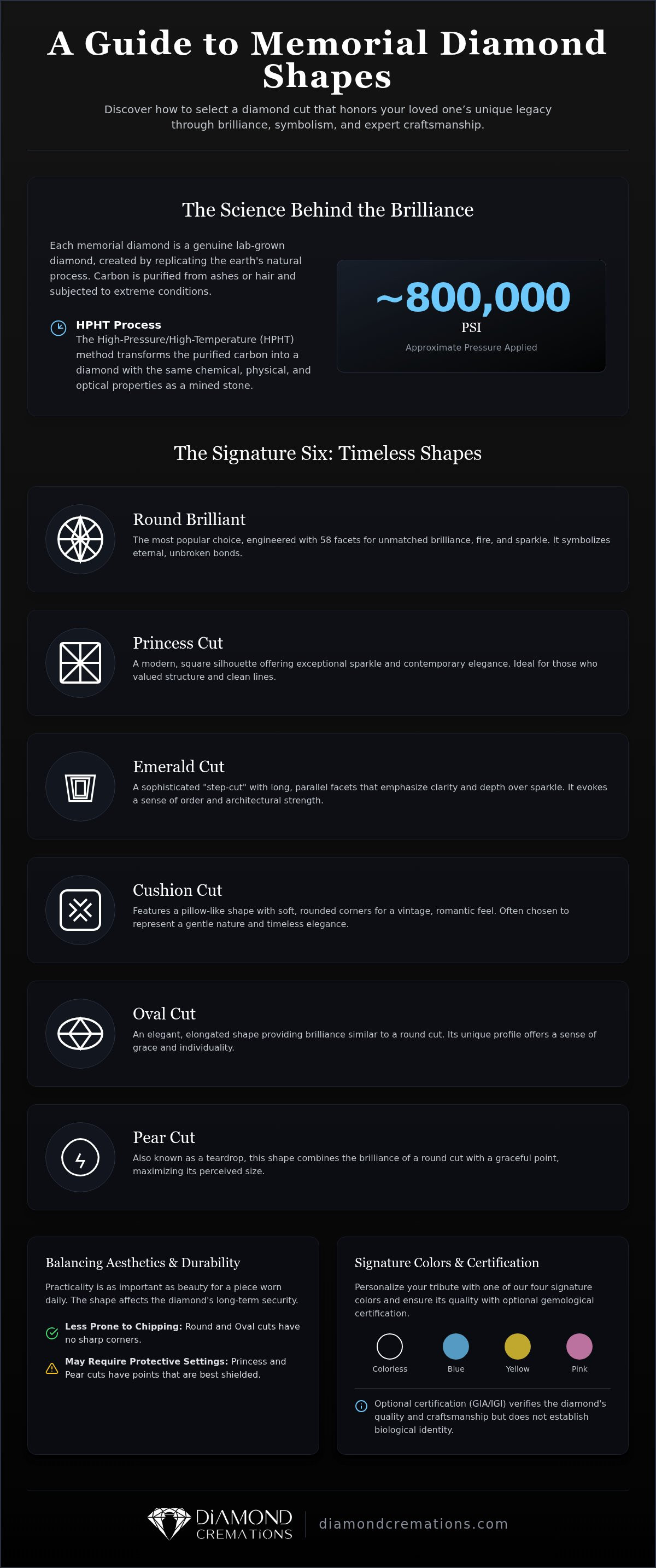
Choosing from our curated selection of memorial diamond shapes allows you to focus on the most timeless and durable silhouettes. Rather than offering an overwhelming array of fleeting trends, we specialize in six classic cuts that emphasize the stone's inherent beauty. Each stone is a genuine lab-grown diamond, created through the HPHT process at approximately 800,000 PSI to ensure it possesses the same optical and physical properties as a mined stone.
- The Round Brilliant: This remains the most popular choice for its unmatched ability to maximize light and fire. Its 58 facets are specifically engineered for peak brilliance.
- The Princess Cut: A modern, square silhouette that offers exceptional sparkle. It's a bold choice for those who appreciate clean lines and contemporary elegance.
- The Emerald Cut: This sophisticated "step-cut" features long, parallel facets. It emphasizes the clarity and depth of the stone rather than raw sparkle.
- The Cushion Cut: With its rounded corners and pillow-like shape, this cut offers a vintage, romantic feel that has remained popular for centuries.
- The Oval Cut: An elegant, elongated shape that provides a similar brilliance to the Round Brilliant while offering a more unique profile.
- The Pear Cut: Often called a teardrop, this shape combines the brilliance of a round cut with a graceful point, maximizing its perceived size.
The scientific development of lab-created diamond technology has reached a point where these six shapes can be crafted with absolute precision. If you're looking for guidance on which silhouette best honors your memories, our specialists can help you explore custom memorial diamonds that resonate with your personal journey.
Brilliant vs. Step-Cut Styles
Understanding the visual texture of your diamond is essential. Brilliant cuts, like the Round, Princess, and Cushion, are designed with triangular and kite-shaped facets. These create what many call a "crushed ice" look, where light bounces rapidly within the stone to produce intense sparkle. This style is excellent at masking tiny natural characteristics that may occur during the growth process. It's a forgiving style that prioritizes light return above all else.
Step-cuts, most notably the Emerald cut, utilize rectangular facets that resemble a hall of mirrors. This style is more transparent and honest; it draws the eye into the depths of the stone. While it doesn't sparkle as intensely as a brilliant cut, it offers a quiet, regal elegance that highlights the purity of the diamond's color and clarity. It's an ideal choice for those who value understated sophistication.
Carat Weight and Shape Perception
The physical weight of a diamond doesn't always dictate how large it looks to the eye. Elongated shapes like the Pear and Oval often have a larger top-down surface area than a Round Brilliant of the same carat weight. This means they can appear more substantial when set in jewelry. Conversely, the Cushion cut often carries more of its weight in its depth, which can make it look slightly smaller but gives it a lovely, heavy feel. Choosing the right size involves balancing the silhouette's proportions with the desired visual impact on the wearer's hand or neckline.
Comparing Performance: Brilliance, Color, and Clarity
The optical performance of a diamond begins with its growth. By replicating the intense conditions found deep within the earth, we create stones that possess remarkable clarity and light-handling capabilities. The HPHT process uses approximately 800,000 PSI to grow these gems, ensuring they are structurally identical to mined stones. This technical foundation allows each of the six memorial diamond shapes to interact with light in specific, predictable ways, turning a piece of jewelry into a vibrant tribute.
Optical properties like brilliance, fire, and scintillation are not just technical terms. They represent how a stone "lives" in different lighting environments. While the growth process provides the raw material, the choice of shape determines how that material expresses its beauty. Understanding these performance metrics helps you select a stone that matches the energy and presence of the person you are honoring.
Light Performance Across Different Shapes
Brilliance is the measure of white light reflected from the surface and the interior of the stone. The Round Brilliant remains the gold standard for refractive index performance. Its symmetrical shape and precise facet alignment ensure that almost every ray of light entering the stone is returned to the eye. For those seeking maximum sparkle, this shape is unsurpassed. It sets a high bar for light return that other cuts strive to emulate through different faceting patterns.
Princess and Cushion cuts handle light differently. A Princess cut offers a sharp, modern brilliance that focuses on rapid light return. In contrast, the Cushion cut provides a softer, broader light pattern. While it may have slightly less fire than a Round Brilliant, its deeper facets create a romantic glow that is highly valued in memorial settings. Oval and Pear shapes offer a middle ground, providing high brilliance with a more unique, elongated silhouette that can make the stone appear more active during movement.
Color Saturation and Cut Selection
The interaction between shape and color is a critical consideration. We offer diamonds in four distinct shades: Colorless, Blue, Yellow, and Pink. Fancy colors often appear more intense in deeper cuts like the Cushion or the Pear. These shapes allow light to travel a longer path through the stone, which can enhance the perceived saturation of a Blue or Pink diamond. If you desire a stone that showcases a rich, concentrated hue, these deeper silhouettes are often the preferred choice.
Maintaining the crispness of a Colorless diamond requires a different approach. For these stones, the Princess or Emerald cuts are exceptional. The Emerald cut, with its long, open facets, requires higher clarity because it does not have a dense pattern of sparkle to hide internal characteristics. It offers a clear, honest view into the heart of the diamond. When selecting a Colorless stone in an Emerald cut, clarity becomes the primary driver of the stone's beauty. By understanding these nuances, you can ensure your chosen shape perfectly complements the color and clarity of your memorial tribute.
Matching Your Diamond Shape to the Perfect Setting
Selecting the right setting is the final step in creating a wearable legacy. The setting doesn't just hold the stone; it acts as a protective frame that ensures the diamond remains secure for a lifetime. When choosing from the available memorial diamond shapes, it's helpful to consider how the jewelry will be worn. A ring undergoes significantly more daily impact than a pendant, which influences which silhouette might be most practical for your lifestyle.
Every setting should honor the diamond without overshadowing its origin. Whether you prefer a minimalist design or something more ornate, the goal is to highlight the brilliance of the lab-grown stone while providing the structural integrity it deserves. Balancing these aesthetic and practical needs ensures your tribute remains as resilient as it is beautiful.
Rings: A Handcrafted Circle of Love
Round and Cushion shapes are exceptionally well-suited for classic solitaire and halo settings. Because they lack sharp corners, they are naturally more resistant to snagging on clothing or chipping during daily tasks. If you lead an active lifestyle, these shapes allow for low-profile settings that sit close to the hand. This reduces the risk of accidental knocks while maintaining a timeless, elegant appearance. They're the most durable choices for a memorial diamond ring that you intend to wear every day.
For those who prefer a vintage-inspired or sophisticated aesthetic, the Emerald cut is a premier choice. Its long, parallel facets look stunning in a secure four-prong or bezel setting. However, shapes with sharp points, like the Princess or Pear, require specialized care. Jewelers use V-prongs to wrap around and protect these delicate corners. This specific type of setting provides the essential support needed to keep the points of your diamond safe from damage without hiding its unique silhouette. It's a thoughtful way to ensure even the most intricate cuts remain pristine over the years.
Pendants: Keeping Them Near Your Heart
Pendants offer more freedom to choose elongated or intricate shapes that might feel too large for a ring. The Pear shape is a perennial favorite for necklaces because its teardrop silhouette hangs gracefully. It creates a natural focal point that draws the eye and sits comfortably against the skin. Choosing a memorial diamond pendant in this shape provides a sense of elegance that works well for both formal occasions and daily wear.
The Oval cut is another excellent option for necklaces. It offers a graceful, elongated look that maximizes the visual presence of the diamond without the sharp point of a Pear cut. Because pendants don't face the same physical wear as rings, you can opt for more delicate prong settings that allow the maximum amount of light to enter the stone. This enhances the fire and brilliance of your chosen shape, ensuring it remains a vibrant, glowing reflection of the life it represents. These elongated shapes are often favored because they provide a larger appearance while remaining lightweight and comfortable.
From Carbon to Certified Brilliance: Your Next Steps
The journey from carbon to a finished diamond is a meticulous process of transformation. While we have explored how different memorial diamond shapes reflect a legacy, the final stone's integrity relies on scientific precision. At Diamond Cremations, we prioritize transparency throughout the HPHT growth process. By subjecting purified carbon to approximately 800,000 PSI, we create a diamond that is physically and chemically identical to one found in nature. This transition ensures that the beauty of your chosen cut is matched by the enduring quality of the stone itself.
This path from remembrance to a tangible heirloom is a steady, respectful transition. Once you've selected a silhouette that resonates with your loved one’s story, the focus shifts to the artisanal care required to bring that shape to life. Every facet is a testament to a life well-lived and a legacy that will continue to shine for generations.
The Importance of Professional Grading
Independent certification from bodies like the GIA or IGI is available as an optional step for your peace of mind. It's vital to understand what these reports represent. A gemological report provides an objective grade of the diamond’s quality across the four Cs: Carat, Color, Cut, and Clarity. It serves as an independent record of the physical attributes that make your diamond unique, providing a standard of value recognized worldwide.
There's a common misconception regarding these reports that's important to clarify. While they verify the stone is a real lab-grown diamond and grade its craftsmanship, they don't establish biological identity or prove the specific source of the carbon. They are tools for quality assurance rather than biological tracing. For those selecting high-carat stones or intricate cuts, this certification offers confidence by confirming that the diamond meets global standards for excellence.
Beginning the Transformation
Starting this journey begins with a quiet, supportive conversation. Consulting with a specialist allows you to refine your choice of shape and color, ensuring the final piece aligns with your vision. The process is handled with the utmost security; carbon is carefully extracted and purified from hair or ashes before the growth phase begins. While a diamond seed is used to initiate the crystal's formation, the resulting stone is a permanent, brilliant tribute to the life it honors.
We're here to guide you through each step of this meaningful transition. Whether you're just starting to explore the possibilities or you're ready to begin the purification process, our team provides the expert care your legacy deserves.
Designing a Legacy That Endures
Selecting from the six curated memorial diamond shapes is a deeply personal decision that balances aesthetic beauty with the weight of a lasting legacy. You've explored how different cuts, from the classic round brilliant to the sophisticated emerald silhouette, interact with light and color to reflect a specific personality. By understanding the technical foundation of the HPHT process and the importance of secure settings, you can now move forward with confidence. This journey turns a simple choice into a meaningful transition; ensuring that the brilliance of your loved one’s life is captured in a stone of certified lab-grown excellence.
Our bespoke concierge service and secure nationwide handling ensure your experience is met with transparency and care. We're here to act as your knowledgeable guide; helping you create a custom piece of jewelry that provides peace of mind and timeless beauty. Your decision today is the first step toward a permanent, radiant remembrance that will be cherished for generations to come.
Frequently Asked Questions
What is the most popular shape for a memorial diamond?
The Round Brilliant is the most frequently chosen silhouette among our available memorial diamond shapes. This preference is largely due to its 58 facets, which are mathematically designed to maximize light return and fire. It offers a timeless aesthetic that suits almost any jewelry setting, from a minimalist solitaire ring to an intricate halo pendant. Its symmetrical nature ensures consistent brilliance, making it a reliable choice for those who value classic elegance and peak optical performance.
Does the shape of the diamond affect its price?
While the chemical growth process remains consistent, the choice of shape can influence the final value of your tribute. Some cuts, such as the Round Brilliant, require the removal of more rough diamond material during the artisanal faceting process to achieve perfect proportions. Other shapes might involve more intensive labor to ensure symmetry and light performance. We focus on providing a curated selection of six timeless cuts that balance exceptional craftsmanship with the enduring value of your memorial.
Can I change my mind about the shape once the growth process has started?
You typically have until the diamond has finished its growth cycle in the HPHT machine to finalize your choice of cut. Because the shape is determined during the precision faceting of the rough stone, the growth phase itself is focused on creating the raw crystal. However, once our master cutters begin the physical shaping of the diamond, the silhouette cannot be changed. We encourage you to discuss your vision with a specialist early in the process to ensure total confidence.
Which diamond shape is the most durable for a memorial ring?
The Round and Cushion cuts are considered the most durable options for daily wear in a memorial ring. These shapes lack the sharp points or delicate corners found in Princess or Pear cuts, which makes them less susceptible to chipping or snagging on fabric. By choosing a silhouette with rounded edges, you ensure the stone is better protected against the accidental knocks of an active lifestyle, providing long-term structural integrity for your cherished heirloom.
Do certain shapes make the diamond look larger than others?
Elongated silhouettes like the Pear, Oval, and Emerald cuts often possess a larger surface area relative to their carat weight. This can make them appear more substantial to the eye when viewed from the top down compared to a Round Brilliant of the same weight. If your goal is to maximize the visual presence of the stone on a ring or pendant, these elongated memorial diamond shapes are often the preferred choice for their graceful and expansive profile.
Can Diamond Cremations create custom shapes like a heart?
We specialize exclusively in a curated selection of six timeless shapes: Round, Princess, Oval, Cushion, Pear, and Emerald. We don't offer custom silhouettes like hearts because our chosen cuts are specifically selected for their superior light performance and long-term durability. By focusing on these six established standards of gemology, we ensure that every stone we produce meets our high requirements for brilliance and structural excellence, regardless of the setting you choose.
How does the shape interact with the color of the cremation diamond?
Diamond shape plays a significant role in how the four available colors, Colorless, Blue, Yellow, and Pink, are perceived. Deeper cuts like the Cushion or Pear can concentrate color, making it appear more saturated and intense. Conversely, step-cuts like the Emerald shape emphasize the clarity and depth of the hue rather than dispersing it through sparkle. Choosing the right shape allows you to either amplify the fire of a fancy color or maintain the crispness of a colorless stone.
Is a GIA certificate included with every diamond shape?
Optional certification from the GIA or IGI is available for any of our diamond shapes, but it is not automatically included. These gemological reports provide an independent assessment of the stone’s quality, including its color, cut, clarity, and carat weight. It's important to remember that while these reports verify the diamond is a real lab-grown stone and grade its physical properties, they don't establish biological identity or prove the specific source of the carbon used in the HPHT process.