


Feeling Close to a Loved One: Keeping Their Memory Alive
What if feeling close to someone who passed away begins with making their favorite recipe or pausing over a familiar song? The absence of everyday conversations and routines can make ordinary moments feel different. Reminders may bring comfort one day and sadness the next. Both responses are natural.
If you’re wondering whether a remembrance ritual is normal or whether you should feel connected in a particular way, there’s no single right answer. Grief is personal, and what feels meaningful can change over time. You don’t have to force comfort or follow a pace that doesn’t feel like your own.
This article explores gentle ways to keep a loved one’s memory present, from sharing stories and creating small rituals to considering a lasting memorial when you feel ready. You’ll find ideas to help you choose what feels true to your relationship while making room for both warmth and sadness. A memorial diamond made from carbon extracted and purified from provided ashes or hair is one possible choice, not a necessary step. The most meaningful remembrance is the one that feels right to you.
Key Takeaways
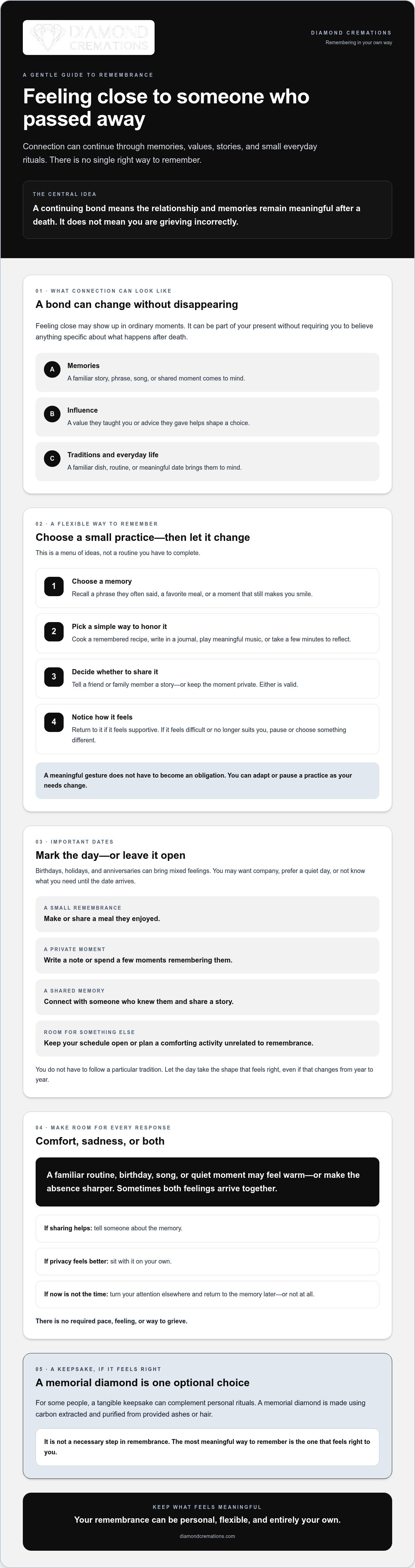
- A continuing bond means memories and the relationship can remain meaningful after a death. It doesn’t mean you’re grieving incorrectly.
- Explore small remembrance practices at your own pace, and adapt or pause them as your needs change.
- Compare private rituals, shared remembrance, written memories, and keepsakes to find what feels personal to you.
- Feeling close to someone who passed away can bring comfort, sadness, or both. There’s no single response you need to have.
- A memorial diamond is one optional keepsake, made using carbon extracted and purified from provided ashes or hair. It doesn’t need to be part of your remembrance.
Feeling Close to Someone Who Passed Away: Why the Bond Can Continue
Missing someone can sit alongside the responsibilities and ordinary moments of daily life. You might laugh with a friend, make plans, and still wish you could share the news with the person who died. That longing doesn’t mean you’re moving backward or remembering them incorrectly. It reflects the place they hold in your life.
Continuing bonds are the ways a person’s memories, influence, and relationship remain meaningful after their death. The idea describes how connection may change rather than disappear. It isn’t a clinical diagnosis or a rule for how anyone should grieve. People find their own ways to remember, and those ways can shift over time.
What does it mean to feel connected after someone dies?
Feeling close to someone who passed away may come through a value they taught you, a story you tell often, or a tradition you choose to keep. Perhaps you remember their advice while making a decision, or prepare a familiar dish on a day that mattered to you both. These experiences can make the relationship part of your present without requiring you to believe anything specific about what happens after death.
People interpret dreams, signs, and spiritual experiences through their own beliefs and cultures. There’s no need to prove or dismiss someone else’s interpretation. For a plain-language overview of the idea, see Continuing bonds. What matters is what a memory or practice means to you and whether it feels supportive.
Is it normal to still miss someone in ordinary moments?
Yes. A familiar routine, a birthday, a song in a shop, or a quiet moment at home can bring someone to mind. Sometimes the reminder feels warm. Sometimes it makes the absence sharper. It may bring both feelings at once, and none of these responses determines whether you’re grieving “well.”
You might gently notice what happens when a memory comes up. Does sharing it with someone help? Would you rather sit with it privately, or turn your attention elsewhere for now? There’s no requirement to make every remembrance comforting or to create a ritual around it. Let your response guide you, and give yourself permission to change what you do as your needs change.
How to Feel Close Through Memories and Everyday Rituals
A remembrance ritual doesn’t need to be elaborate or happen every day. It can be private, occasional, and shaped by your personal or spiritual beliefs. If you’re exploring ways of feeling close to someone who passed away, start with a small act that feels manageable. You can change it later.
Which simple remembrance rituals can fit into everyday life?
Try this flexible sequence. It’s a menu of ideas, not a routine you have to complete:
- 1. Choose a memory. Recall a phrase they often said, a favorite meal, or a moment that still makes you smile.
- 2. Pick a simple way to honor it. Cook a remembered recipe, write the memory in a journal, play meaningful music, or set aside a few minutes to reflect.
- 3. Decide whether to share it. You might tell a family member or friend a story, or invite others to share their memories in a conversation. Keeping the ritual to yourself is just as valid.
- 4. Notice how it feels. If the practice brings comfort, you may want to return to it. If it feels difficult or no longer suits you, pause or choose something different.
There’s no need to turn a meaningful gesture into an obligation. A small repeated act can give remembrance a place in daily life while leaving room for ordinary routines and changing feelings.
How can you remember someone on birthdays and important dates?
Birthdays, holidays, and anniversaries can bring more than one feeling. You may want company, prefer a quiet day, or not know what you need until the date arrives. There’s no required way to mark it.
If planning ahead feels helpful, choose one option while remembering that you can change your mind:
- Make or share a meal they enjoyed.
- Write a note or spend a few moments remembering them privately.
- Connect with someone who knew them and share a story.
- Keep your schedule open, or plan a comforting activity that has nothing to do with remembrance.
You don’t have to celebrate, visit a particular place, or follow a tradition to show that someone matters to you. Let the day take the shape that feels right, even if that shape changes from year to year.
For some people, a tangible keepsake can complement personal rituals. Diamond Cremations offers memorial diamond options for those who are considering this kind of remembrance. It’s one possible form of remembrance, not a requirement.
How to Choose a Remembrance Practice That Feels Personal
A remembrance practice can be quiet and private, shared with others, kept in writing, or held in a tangible object. The best fit is the one that feels manageable and meaningful to you, not the one that appears most elaborate. When thinking about what might help you feel close to someone who passed away, consider your comfort, personal beliefs, and whether you want to remember alone or with others.
What kind of remembrance might suit your personality and needs?
Use the questions below as a starting point, not a test. You can try an approach, combine a few, or decide that none feels right just now.
| Format | Possible benefit | Reflection question |
|---|---|---|
| Private ritual | Creates personal space to remember without needing to explain your feelings. | Would quiet reflection or a simple personal gesture feel comforting? |
| Shared remembrance | Can make room for others’ stories and different memories of the person. | Would talking with someone who knew them feel supportive, or feel like too much? |
| Written memories | Gives you a place to preserve thoughts, stories, or words you want to revisit. | Would writing feel natural, or would another form of expression suit you better? |
| Tangible keepsake | Offers a physical reminder you can choose to keep nearby or wear. | Would having an object connected with remembrance feel meaningful to you? |
Your preference may change. A shared gathering might feel right one year, while a private moment suits another. You don’t have to make a permanent decision or keep up a practice that no longer helps.
When might a lasting keepsake feel meaningful?
A keepsake may appeal if you value a tangible reminder, such as memorial jewelry or a memorial diamond. It can hold personal meaning, but it can’t replace the relationship, and choosing one isn’t a measure of love or commitment. There’s no need to decide while feelings are especially raw. You can take time to reflect or decide a keepsake isn’t for you.
If you consider a memorial diamond, think through the choices that shape its appearance and how you might wear or keep it. Personalization can include carat size, shape, color, and jewelry setting. Consider which details feel meaningful to you, rather than choosing based on what someone else might prefer. Remembrance can take many forms, with or without a keepsake.
When Feeling Close Brings Comfort: And When It Feels Difficult
A continuing emotional bond doesn’t mean you’re grieving incorrectly or failing to move forward. Remembering someone can be part of how you carry the relationship with you, but there’s no single way that should look or feel. For some, a familiar story brings warmth. For others, the same memory may feel tender or difficult, depending on the day.
Can a memory bring comfort and sadness at the same time?
Yes. You might feel grateful for a memory and miss the person deeply in the same moment. You don’t have to choose one feeling or turn every remembrance into a positive experience. Feeling close to someone who passed away can mean making space for the bond as it is, including moments when it hurts.
If a ritual or reminder begins to feel overwhelming, you can adjust it. Try spending less time with it, choosing a different setting, or taking a break altogether. You might also notice whether the practice feels like an obligation rather than a choice. Pausing doesn’t diminish the person’s importance. It gives you room to respond to what you need now.
When might additional support help?
Sometimes it helps to share what you’re experiencing with someone you trust, whether that’s a friend, family member, or someone who knew your loved one. You can say plainly that you’d like them to listen, sit with you, or talk about the person. You don’t need to explain your feelings perfectly to ask for company.
If you’d welcome more support, consider speaking with a qualified grief professional. Reaching out is a personal choice, not a sign that you’re remembering someone the wrong way. This article offers general ideas, but it can’t replace care that’s responsive to your circumstances. You deserve support that respects your beliefs, your relationship, and your own pace.
There’s no need to force a practice that doesn’t feel right or settle on one form of remembrance. A continuing bond can be held in stories, values, private reflection, or a tangible keepsake. If a lasting memorial feels meaningful to you, take time to consider the options without pressure.
Ways to Carry Their Memory Forward, Including a Memorial Diamond
There’s no single way to keep someone’s memory present. A next step might be as simple as writing down a story you don’t want to forget, or it might be something you consider later. Choose what feels manageable now, and leave room for your needs to change.
How can you preserve memories in a way that feels right?
You could gather photographs, save meaningful messages, or write a few reflections about what you learned from the person. If others shared the relationship, you might invite family or friends to contribute their own stories when that feels appropriate. There’s no need to assemble everything at once. A single photograph or a short note can be enough to begin.
Some people prefer to keep memories private; others find meaning in creating something together. You can talk through shared remembrance choices with family, or wait until you feel ready. The right next step may be small, personal, or postponed. There’s no deadline for deciding how you want to remember someone.
What should you know about memorial diamonds as a keepsake?
A memorial diamond is one optional, tangible form of remembrance. It’s a real lab-grown diamond with the same fundamental chemical, physical, and optical properties as a mined diamond. For diamond growth, carbon is extracted and purified from provided ashes or hair. The finished diamond shouldn’t be understood as containing only carbon from that material.
When comparing memorial diamond options, consider the characteristics you can personalize, such as carat size, shape, color, and jewelry setting. Diamond Cremations creates certified memorial diamonds and provides professional diamond grading. Certification grades the diamond; it doesn’t identify the biological origin of the material used. If you’re considering this kind of keepsake, take time to review the process and available options without feeling you need to decide now.
A memorial diamond won’t replace the relationship or define how deeply you care. It may simply offer a physical reminder that feels meaningful to you. Other forms of remembrance, including stories, photographs, and traditions, can be just as personal.
Diamond Cremations creates memorial diamonds from carbon extracted from the ashes or hair of loved ones and pets. Its service includes secure collection of remains and personalized support. The details of a keepsake, including its appearance and jewelry setting, can be chosen to suit your preferences.
Choose a Remembrance That Feels Right for You
Feeling close to someone who passed away doesn’t depend on one ritual or keepsake. A shared story, a written memory, or a small personal tradition can help keep their place in your life present. Reminders may bring comfort, sadness, or both, and you can change your approach as your needs shift.
If a tangible memorial feels meaningful, a memorial diamond is one option, not a requirement. Diamond Cremations creates lab-grown diamonds using carbon extracted and purified from provided human or pet ashes or hair. Customers can personalize diamond characteristics and jewelry settings, and Diamond Cremations serves families throughout the United States.
There’s no deadline for choosing how to remember someone. Let your next step, however small or private, be one that feels true to you.
Frequently Asked Questions
Is it normal to feel close to someone who passed away?
Yes, feeling close to someone who passed away can be a meaningful part of remembering them. Their stories, values, familiar expressions, or traditions may continue to influence your life. There’s no single correct way to experience that connection, and it doesn’t mean you’re grieving incorrectly. Your feelings may change over time, too. Let remembrance take a form that feels comfortable, without comparing your experience with anyone else’s.
How can I feel close to someone who passed away?
Try a small act that connects with your relationship, such as writing down a memory, listening to music you shared, making a familiar recipe, or telling someone a story about them. You might prefer a private moment or shared remembrance with family or friends. Notice how the practice feels, and adjust or pause it if it becomes burdensome. It doesn’t have to happen regularly to matter.
Can I talk to someone who has passed away?
Many people find it meaningful to speak aloud to someone who has died, write them a letter, or imagine what they might say in a familiar situation. These can be personal ways to express thoughts, remember the relationship, or mark what you wish you could share. People understand such experiences differently according to their beliefs. You don’t need to adopt a particular spiritual explanation for a practice to feel meaningful.
What can I do on a loved one’s birthday after they have died?
Choose what feels manageable for that day. You could make a favorite meal, look through photographs, share stories with someone who knew them, spend a few quiet moments remembering, or keep your schedule open. Birthdays can bring mixed feelings, so you don’t have to celebrate or follow a tradition. Consider making a flexible plan and giving yourself permission to change it as the day unfolds.
Why do reminders sometimes make me feel closer and sometimes sadder?
A reminder can bring back the warmth of a familiar memory while also highlighting that the person is no longer here. A song, date, place, or everyday routine may feel comforting at one moment and painful at another. You don’t have to choose which feeling is more valid. If a reminder feels overwhelming, you can step away, change the setting, or return to it another time.
Can a memorial diamond help me feel close to someone who passed away?
It may be a meaningful tangible keepsake for some people, but it isn’t necessary for remembrance and won’t replace the relationship. Memorial diamonds are real lab-grown diamonds created using carbon extracted and purified from provided ashes or hair; the finished diamond shouldn’t be described as containing only carbon from that material. Diamond characteristics and jewelry settings can be personalized. Certification grades the diamond rather than identifying its biological origin.
When should I seek help if grief feels difficult?
You can reach out whenever support would feel welcome. A trusted friend or family member may offer a listening ear, while a qualified grief professional can provide more focused support. Consider asking for help if you feel overwhelmed, alone, or unsure how to manage what you’re experiencing. There’s no need to wait for a particular milestone or prove that your feelings are serious enough. Seeking support is a personal choice.