


Finding Closure After Losing a Pet: Gentle Steps Toward Healing
What if finding closure after losing a pet doesn’t mean leaving them behind, but learning to carry their place in your life differently? Grief can arrive in waves, and it may feel even harder when others don’t understand how deep the bond was. You might replay decisions from your pet’s final days or find familiar routines suddenly painful. These feelings are real, and you don’t have to resolve them on anyone else’s timetable.
Closure isn’t a deadline or a single moment when sadness disappears. It can take shape through small acts of remembrance, new routines, and self-compassion. This guide offers practical ways to honor your pet while making room for grief, without asking you to move on before you’re ready.
You’ll find ideas for remembering your companion, adjusting everyday habits, and easing feelings of guilt. We’ll also cover where to turn if grief feels too heavy to carry alone. Take what feels helpful, leave what doesn’t, and move at your own pace.
Key Takeaways
- Closure can mean finding ways to carry your bond with your pet while adapting to life without them.
- For finding closure after losing a pet, try a flexible approach: reflect, connect with someone, adjust a routine, or create a remembrance ritual.
- Honor your companion in a way that feels right to you, whether that means keeping a private photo ritual or sharing a favorite story.
- Small changes to familiar routines can make space for memories while helping you build new rhythms into your days.
- Trusted friends, pet-loss support groups, and licensed mental health professionals are possible sources of support whenever you want guidance or company.
Finding closure after losing a pet: what closure can, and cannot, mean
The absence of a companion animal can change the shape of an ordinary day. The greeting at the door, a familiar walk, or the quiet presence beside you may no longer be part of your routine. If you’re finding closure after losing a pet, you don’t have to make the bond smaller or decide that your grief is finished.
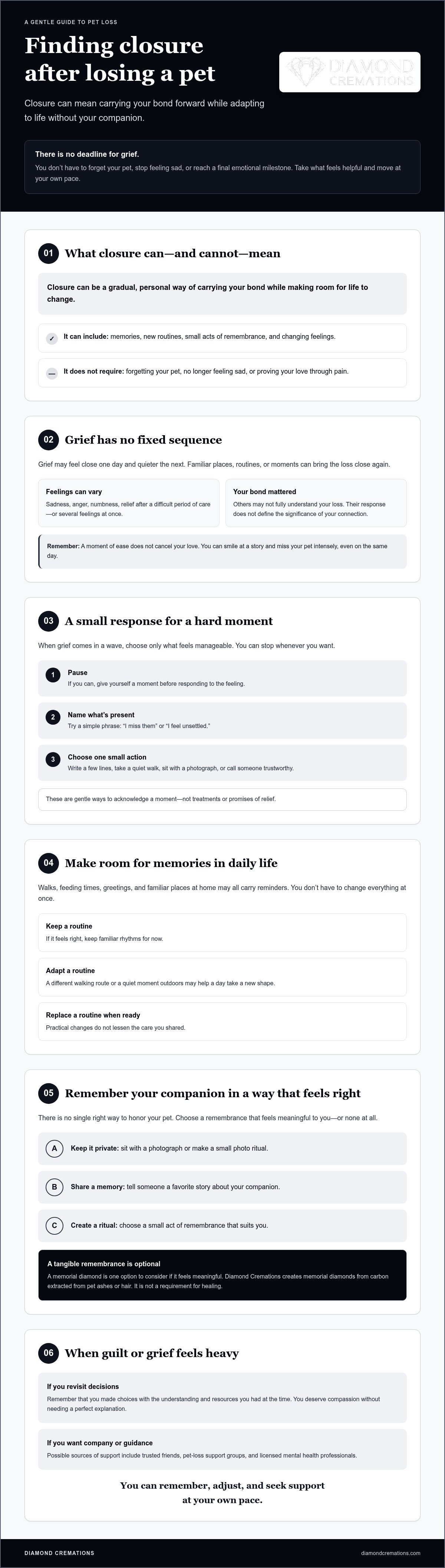
Closure after pet loss means finding ways to carry your bond with your pet while adapting to life after their death. It doesn’t require forgetting them, no longer feeling sad, or reaching a final emotional milestone. Closure can be gradual and personal, with room for memories and changing feelings.
Why grief after pet loss can feel deeply personal
A pet becomes part of daily life in specific ways: the sound of paws nearby, a feeding routine, or a favorite place you shared. When those patterns change, familiar spaces and moments can bring the loss close again.
Your response may include sadness, anger, numbness, relief after a difficult period of care, or several feelings at once. There’s no required sequence. Some people also find that others don’t fully recognize the significance of their loss. The term disenfranchised grief describes grief that may not receive the understanding or recognition a person needs. Whatever others understand, your connection mattered to you.
Does finding closure mean letting go of your pet?
No. Adapting to your pet’s absence doesn’t erase your affection or the memories you made together. You can continue to speak about them, keep a photograph, or remember a shared ritual while also allowing your daily life to change.
Remembering your pet and remaining in the sharpest moments of grief aren’t the same thing. You might smile at a story one day and miss them intensely the next. Neither response cancels the other, and feeling a moment of ease isn’t a betrayal. You don’t have to prove your love through ongoing pain.
For some, closure may mean accepting that the relationship has changed form: your pet is no longer physically present, but the care and companionship you shared remain part of your life story. For others, the word “closure” may not feel right at all. You’re allowed to choose language and ways of remembering that feel honest to you, without measuring your progress against someone else’s expectations.
How to make room for grief after losing a pet
Grief doesn’t follow a fixed sequence. It may feel close one day and quieter the next, or return when a familiar place or time brings your pet to mind. Finding closure after losing a pet doesn’t mean forcing those feelings to stop. It can begin with noticing what’s present and giving yourself permission to respond at your own pace.
Supportive practices can offer space for grief, but they can’t guarantee how you’ll feel or when. Try an option because it feels manageable, not because you expect it to make sadness disappear.
Guilt can also surface, especially when you revisit choices made during your pet’s final days. You may wish you’d known more, acted differently, or had another option. Try to remember that you were making decisions with the understanding and resources you had at the time. If those memories feel heavy, share them with someone you trust. You don’t need a perfect explanation before you deserve compassion.
What can I do when grief comes in waves?
When a difficult moment arrives, pause if you can. Name what you’re feeling, even with a simple phrase such as “I miss them” or “I feel unsettled.” Then choose one small action that feels possible: write a few lines, take a quiet walk, sit with a photograph, or call someone trustworthy. You can stop whenever you want. These are gentle ways to acknowledge the moment, not treatments or promises of relief.
How can I adjust to routines that included my pet?
Walks, feeding times, greetings, and familiar places at home can all carry reminders. You might keep a routine for now, adapt it, or replace it when you feel ready. For example, you could take a different walking route or make a quiet moment outdoors part of your day. There’s no need to change everything at once. Practical adjustments don’t lessen the care you shared; they can make daily life workable in a new shape.
Choose what feels kind today. If a tangible remembrance feels right at some point, a pet memorial diamond is one option to explore, not a requirement for healing. Diamond Cremations creates memorial diamonds from carbon extracted from pet ashes or hair. You can consider the idea when and if it feels meaningful to you.
Practical ways to find closure after losing a pet
There’s no single right way to remember your pet or make sense of their absence. Treat these ideas as choices, not a checklist. Skip anything that doesn’t fit, return to an idea later, or adapt it to your beliefs, budget, and family.
- Pause for a little reflection. Write down a memory you want to keep, such as your pet’s favorite place to rest or a small habit that made you smile. A few words are enough. Keep the note private or add to it as other memories come to mind.
- Connect in a way that feels safe. Choose a photograph to share, tell a favorite story to someone who understands, or ask a trusted person to listen. If you’d rather remember privately, that’s just as valid.
- Adjust one part of daily life. When you feel ready, decide what to do with a pet-related routine or space. You might keep a familiar walk, change its route, or rearrange the place where your pet’s belongings were kept. There’s no need to make every decision at once.
- Choose a form of remembrance, if you want one. You could save a photo, create a small memory page, or choose another gesture that feels personal. An object or ritual can mark what your pet meant to you, but it doesn’t have to resolve your grief.
Reflection, connection, routine changes, and remembrance are possible ways to carry your bond. They don’t guarantee closure or require you to feel differently.
Small steps for honoring your pet’s place in your life
Start with what feels manageable. You might collect a few photographs in a folder, write a brief memory on an ordinary piece of paper, or tell someone a story you haven’t shared before. If the usual feeding spot or favorite resting place is difficult to see, you can leave it as it is, change it, or wait. Your choices can change over time, too.
How to include family members in remembering a pet
If children are part of your household, invite their questions and answer gently and honestly in language they can understand. Don’t ask them to join a ritual if they don’t want to. Family members might share memories over a meal or choose a simple activity together. At the same time, accept that one person may want to talk while another prefers a private moment. There’s room for different ways of remembering the same pet.
Pet memorial ideas that honor a bond without rushing grief
Remembering your pet doesn’t have to involve a formal ceremony or a lasting object. A small private ritual, a shared tribute, or a keepsake may feel right at different times. You can also choose nothing for now. A memorial is a personal expression of connection, not a measure of how much you loved your pet or how close you are to finding closure after losing a pet.
- Create a photo ritual. Choose one picture to look at on a meaningful day, or keep a favorite image somewhere you’ll see it naturally.
- Mark a special date. Take a walk in a place your pet enjoyed, or spend a few minutes remembering them in your own way.
- Make or keep something personal. A handwritten note, a small piece of art, or a memory box for a collar or tag can hold meaning without being elaborate.
- Share a tribute. Tell someone about a quality you loved in your pet, or invite family members to add a favorite memory to a shared page or notebook.
Choosing a remembrance that feels right for you
Ask yourself what kind of remembrance feels comfortable: an ongoing ritual, a tribute shared with others, or a personal keepsake. Your answer may depend on your beliefs, your household, and what feels manageable now. A tangible or permanent memorial isn’t automatically more meaningful than a quiet act of remembrance. You can change your mind, keep the choice simple, or wait until you feel ready.
When a lasting keepsake feels meaningful
For some people, a memorial diamond may be a fitting keepsake. It’s an optional way to remember a pet, never a requirement for grieving. In this process, carbon is extracted and purified from provided pet ashes or hair for diamond growth. If you’re considering this option, think about what matters to you in a keepsake, such as its shape, color, or how you might wear or display it. You can also ask what source material is needed and how the collection process works before deciding. These questions can help you explore the option without pressure.
If you’d like to learn more, explore pet memorial diamond options at your own pace.
When to seek support and move forward at your own pace
You don’t need to reach a certain level of distress before asking for support. If grief feels difficult to carry alone or is affecting your everyday wellbeing, reaching out can give you company and a place to speak openly. You can also seek support simply because you’d rather not face this loss by yourself.
How do I know when extra support could help?
Start with someone you trust, such as a friend or family member who can listen without minimizing your bond. If you’d value talking with people who understand pet loss, a pet-loss support group may offer a shared space for memories and feelings. A licensed mental health professional is another option, especially if you want individual guidance. These are choices, not requirements. You can explore what feels suitable without committing to a particular path.
You don’t have to wait until you can explain everything clearly. You might say, “I’m having a hard time with the quiet at home,” or “Could you sit with me while I talk about my pet?” A small, direct request can help someone understand what kind of company you need. If you or someone else is in immediate danger or crisis, contact emergency services or crisis support in your area.
A gentle next step, whenever you feel ready
For today, one step is enough. You might write down a memory, reach out to someone kind, adjust one part of a routine, or ask for professional support. You can also take no action beyond getting through the day. Finding closure after losing a pet is personal; progress doesn’t need to be visible to anyone else, and there’s no deadline for making decisions about remembrance.
If a memorial feels meaningful, you can consider options when you’re ready. A memorial diamond is one possible keepsake, not a necessary part of grieving. You don’t have to choose one today, or at all. Let the decision remain yours. Read more about memorial diamond information if you want to explore it.
Carry your bond forward, one step at a time
Finding closure after losing a pet doesn’t mean forgetting or reaching a point where you never feel sadness. It can mean making room for grief, remembering your companion in a way that feels true to you, and adjusting familiar routines when you’re ready. A trusted person, support group, or licensed mental health professional can offer company and guidance along the way.
There’s no single right memorial. If a memorial diamond feels meaningful, Diamond Cremations creates certified lab-grown diamonds from carbon extracted from human or pet ashes or hair. Customers can personalize diamond characteristics and jewelry settings, and professional diamond grading is available. Exploring the option doesn’t obligate you to make a decision.
For now, one small step is enough. Let your memories stay, let your needs change, and give yourself permission to move at your own pace.
Frequently Asked Questions
How long does it take to find closure after losing a pet?
There’s no set amount of time for finding closure after losing a pet. Grief can shift, and certain days, routines, or memories may bring a fresh sense of loss. You don’t need to meet a deadline or feel that sadness has to disappear. Focus on what feels manageable now, whether that’s sharing a memory, adjusting a routine, or simply giving yourself room to feel.
Is it normal to still grieve a pet years after their death?
Memories and feelings of missing a pet can return long after their death, especially around meaningful dates or when something reminds you of them. That doesn’t mean you’ve failed to move forward or that your bond must be forgotten. If grief feels difficult to carry alone or is affecting your everyday wellbeing, consider talking with someone you trust or seeking guidance from a licensed mental health professional.
Can creating a memorial help after losing a pet?
A memorial can offer a way to acknowledge your pet’s place in your life, but it can’t guarantee a particular feeling or outcome. You might choose a photo ritual, write down a memory, share a story, or keep a meaningful item. A memorial can be private, shared, simple, or tangible. Choose an approach that feels comfortable, and remember that you don’t have to create one to honor your pet.
How do I cope with guilt after losing my pet?
Guilt can arise when you replay decisions made during your pet’s final days. Try to consider what you understood and what choices were available to you at the time, rather than judging the past with what you know now. You don’t have to work through these thoughts alone. A trusted person may listen, and a licensed mental health professional can offer individual guidance if you want it.
What can I do to honor my pet after they die?
Choose a remembrance that suits you and your circumstances. You could save a favorite photograph, write a note about a shared moment, take a walk along a familiar route, or invite family members to share stories. These gestures don’t need to cost money or become permanent. You can keep them private, include others, or wait until something feels right. No single memorial is the correct way to remember.
When should I seek help for grief after losing a pet?
You can seek support whenever you’d benefit from company or guidance, particularly if grief feels hard to carry alone or is affecting everyday wellbeing. Consider confiding in a trusted friend, joining a pet-loss support group, or speaking with a licensed mental health professional. There’s no required threshold for asking. If you or someone else is in immediate danger or crisis, contact emergency services or crisis support in your area.
Can a memorial diamond be made from pet ashes or hair?
Yes. Diamond Cremations makes pet memorial diamonds using carbon extracted and purified from provided pet ashes or hair. The purified carbon is used for diamond growth; this doesn’t mean every carbon atom in the finished diamond comes exclusively from the remains. Memorial diamonds are real lab-grown diamonds with the same fundamental chemical, physical, and optical properties as mined diamonds. Choosing one is a personal option, not a requirement for remembering your pet.
If you’re ready to learn more about creating a personalized memorial diamond from pet ashes or hair, explore memorial diamond options.