


How to Divide Ashes Between Family Members: A Thoughtful Guide
What if a fair division isn’t an equal one, but a plan that honors what matters most to each family member? Deciding how to divide ashes between family members can bring practical questions and tender emotions together, especially when loved ones have different wishes or feel uncertain about handling the remains.
Those feelings are understandable. There’s no single arrangement that suits every family. A thoughtful conversation can help everyone feel heard before decisions are made. The aim is not to make remembrance identical, but to find an approach that respects your loved one’s wishes and the needs of those who remain.
This guide explains how to discuss a division, choose portions and keepsake containers, and keep clear records of the plan. It also covers shared and individual ways to remember, including non-ash keepsakes and memorial diamonds as one possible choice. Take the process one step at a time, with room for each person’s perspective.
Key Takeaways
- Hear each family member’s wishes before deciding whether to keep the ashes together or share portions.
- Discuss recipients and agree on a plan everyone understands before separating anything.
- Prepare containers and labels in advance, then record what each portion is intended for.
- Consider shared memorials, individual keepsakes, or other forms of remembrance without ranking one choice above another.
- Learn how to divide ashes between family members in a way that reflects your loved one’s wishes and your family’s needs.
How to Divide Ashes Between Family Members Without Rushing the Decision
There’s no single plan every family needs to follow. You can decide together whether to keep cremated remains in one place, share portions among relatives, or combine approaches. Start with your loved one’s known wishes, then consider what each family member wants from the arrangement. Taking time to talk can make the choice feel more considered, especially when people have different hopes for remembrance.
Dividing ashes means separating portions of cremated remains so they can be kept or memorialized individually or together. It’s a practical arrangement, not a measure of how deeply someone cared or how they should grieve. For general context about cremation practices, see this overview of Cremation.
Equal portions aren’t the only fair option. A family might keep most of the remains in one shared place while setting aside smaller portions for relatives who want a personal keepsake. Fairness is less about identical amounts than about making the decision openly, with care for your loved one’s wishes and the preferences of those involved.
Dividing the remains can create separate ways to remember; it doesn’t have to divide the family’s shared remembrance.
What does it mean to divide cremated ashes?
Some families place portions in separate keepsake containers, while others choose one shared resting place and don’t separate the remains. These are different practical arrangements, not different levels of respect. One relative may find comfort in a keepsake nearby; another may prefer a shared memorial or a non-ash tribute. No arrangement dictates how anyone should feel or grieve.
Is it okay to share ashes among relatives?
Families may choose to share portions if that feels right for them. Consider anything your loved one said about their wishes, along with family traditions that hold meaning. If preferences differ, ask each person what they hope the arrangement will provide. The best choice is one the family can make thoughtfully, without treating any single approach as the only respectful one.
If you’re working through how to divide ashes between family members, you don’t need to settle every detail in one conversation. Start by discussing what remembrance means to each person, then consider which arrangement can honor those wishes. A shared plan can leave room for individual ways of remembering, too.
How to Agree on a Fair and Respectful Ashes-Sharing Plan
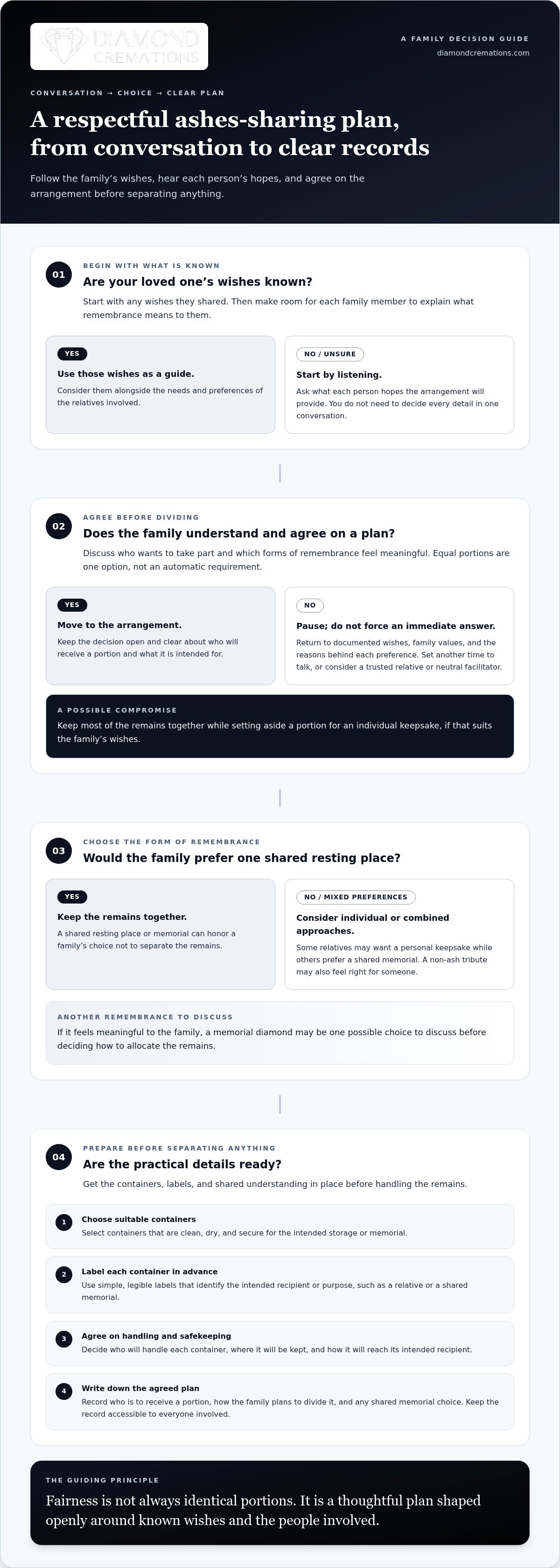
A clear process can help relatives move from different hopes to a decision they understand. Before discussing portions, give everyone space to explain what remembrance means to them. One person may want a small personal keepsake, while another may prefer a shared memorial. Listening first can reveal options the family might not have considered.
For general consumer guidance on funeral arrangements, the Funeral Consumers Alliance offers helpful resources. If there are questions about who should take part in making decisions, agree on that before discussing the details.
How can families discuss who receives a portion?
Try this sequence: gather your loved one’s known wishes, list the relatives who want to take part, discuss remembrance options, agree on an arrangement, then write it down. Keep the first conversation focused on hopes and preferences rather than quantities. A shared memorial, individual keepsakes, or a combination may suit different family members. Equal portions are one possible choice, not an automatic requirement.
If the discussion becomes tense, pause rather than pushing for an immediate answer. Set another time to talk, or invite a trusted relative or neutral facilitator to help keep the conversation calm and ensure each person is heard.
What if family members disagree about dividing ashes?
Disagreement doesn’t mean anyone cares less. Return to any documented wishes, family values, and the reasons behind each preference. Ask what matters most to each person: a portion to keep close, a shared place to visit, or another form of remembrance. Understanding the reason can open the door to a compromise, such as keeping most of the remains together while setting aside a portion for an individual keepsake.
A respectful decision starts with listening, considers each person’s wishes, and records the plan everyone agrees to.
After the conversation, document who is to receive a portion, how the family plans to divide it, and any shared memorial choice. Keep the record accessible to everyone involved. If a memorial diamond feels meaningful, discuss it as one possible remembrance before deciding how to allocate the remains. Memorial diamond options can be part of that family conversation. A thoughtful approach to how to divide ashes between family members leaves room for different forms of connection while giving the family a clear plan to follow.
Practical Steps for Separating and Keeping Ashes Safely
Once your family has agreed on an arrangement, preparation can make the practical part clearer. Choose containers and prepare labels before separating any portions. Decide who will handle each container, where it will be kept, and how it will reach its intended recipient. These details reduce confusion and give everyone a shared understanding of the plan.
How should families prepare portions and containers?
Select clean, dry, secure containers suited to how each portion will be stored or memorialized. Before separating anything, label each container with its intended recipient or purpose. For example, a label might identify a relative or note that a portion is for a shared memorial. Agree on who will handle the containers and where they’ll be kept. Preparing these details in advance supports careful handling without requiring the family to rush.
Keep labels simple and legible. If you plan several portions, make sure each container is easy to distinguish from the others. Consider whether a container is for ongoing storage, a keepsake, or another agreed use, since that can guide your choice. If any part of the plan is still undecided, pause before separating portions so the family can resolve it together.
What should a family record after dividing ashes?
A written record can preserve the agreement and prevent uncertainty later. Keep it factual and accessible to the relatives involved, while respecting the family’s privacy. You might include:
- The date the portions were separated.
- Each container’s label and intended recipient.
- The shared arrangement, if some remains are being kept together.
- Any questions the family hasn’t resolved yet.
Don’t fill gaps with guesses. If the family hasn’t decided what a portion will be used for, note that the decision is still open rather than assigning an intention without agreement. Keep the record somewhere the relevant relatives can find it, and update it if the plan changes.
These simple habits add clarity to how to divide ashes between family members without turning remembrance into a task that must be completed quickly. A label identifies a container; a record captures the family’s understanding. Together, they help keep each portion connected to the care and intention behind the decision.
Shared Keepsakes and Separate Memorials: Choosing What Fits Your Family
Families can remember someone together while choosing different personal keepsakes. One relative may value a shared place to visit; another may prefer a small memento at home. Neither preference needs to define how much each person cared. Focus on what feels meaningful and practical for the family as a whole.
Should ashes be divided equally or kept together?
Equal portions can feel straightforward when relatives want individual keepsakes, but a shared container or memorial may better reflect the family’s wishes. Emotional fairness and mathematical equality aren’t always the same. Discuss who wants to take part and what each person hopes for before separating any material. A combined plan may also work, with most remains kept together and some set aside for individual remembrance.
Option
May suit
Consider together
Keep remains together
Relatives who value a shared memorial or place of remembrance.
Where it will be kept and how family members can take part in remembering.
Share portions
Relatives who would like a personal keepsake or individual memorial.
Recipients, containers, labels, and a clear record of the plan.
Choose separate keepsakes
Family members who prefer a tribute that doesn’t require keeping ashes.
Which keepsakes feel appropriate and whether a shared ritual can bring everyone together.
A shared ritual, photograph, engraved keepsake, or memorial gathering can connect relatives even when their personal choices differ. Remembrance doesn’t require identical objects or arrangements.
Can a memorial diamond be part of a family remembrance plan?
A memorial diamond is one optional keepsake. Carbon is extracted and purified from provided ashes or hair for diamond growth; the finished diamond isn’t necessarily made exclusively from carbon in the remains. Families can discuss whether one diamond feels like a personal or shared tribute before deciding how to allocate remains. There’s no need to assume a specific quantity. If a diamond is part of the conversation, consider preferences such as shape by choosing a memorial diamond shape. Certification, when selected, grades the diamond; it doesn’t establish whose material supplied its carbon.
Choose the arrangement that reflects your family’s priorities, and agree on it before taking practical steps. Fairness comes from a considered shared decision, not a single formula.
A Thoughtful Next Step for Sharing Ashes and Honoring a Loved One
A family plan doesn’t need to be perfect or final before you begin. It needs to reflect the wishes you know, make room for different preferences, and give everyone clarity about what happens next. If some decisions remain open, note them rather than rushing to settle them.
What should families decide before taking action?
Before separating portions, review your loved one’s expressed wishes and confirm who wants a portion, who prefers a shared memorial, and who would rather choose another form of remembrance. No one needs to receive or keep ashes to take part in honoring someone.
A short checklist can help the family move forward with care:
- Revisit any known wishes and meaningful family traditions.
- Agree on recipients and the arrangement for any shared memorial.
- Prepare clear labels for containers before portions are separated.
- Record the plan, including who will maintain it and any questions still unresolved.
Give the plan time to settle. Family needs and perspectives can become clearer as you talk, and it’s reasonable to revisit a decision together. A thoughtful approach to how to divide ashes between family members leaves room for practical clarity and individual ways of remembering.
How can a family explore a memorial diamond thoughtfully?
A memorial diamond is one optional form of remembrance, not a necessary part of sharing ashes. Diamond Cremations creates genuine lab-grown memorial diamonds using carbon extracted and purified from provided ashes or hair. Families can personalize a diamond and its jewelry setting as a personal or shared tribute, then consider whether that choice feels meaningful before deciding how to allocate remains. There’s no need to assume a specific quantity or commit before the family is ready.
Take the next step that feels right for your family, whether that’s documenting a shared plan, choosing individual keepsakes, or continuing the conversation. Memorial diamond options offer one way to explore this form of remembrance at your own pace.
Move Forward With a Plan That Feels Right
A respectful arrangement begins with listening, not measuring. As you decide how to divide ashes between family members, return to your loved one’s wishes, consider what each person finds meaningful, and agree on recipients before preparing labeled containers. Equal portions can be one choice, but a shared memorial or different keepsakes may better reflect your family’s needs.
Keep a written record of the plan, including decisions you may want to revisit. There’s no need for every relative to choose the same form of remembrance. A memorial diamond is one optional way to remember someone. Diamond Cremations creates genuine lab-grown diamonds using purified carbon from provided ashes or hair, with personalization options for diamonds and jewelry.
Take the time your family needs. A thoughtful plan can honor your loved one while leaving room for each person to remember in their own way.
Frequently Asked Questions
How do you divide ashes between family members?
Start by discussing your loved one’s wishes and asking each relative what kind of remembrance they prefer. Agree on who wants a portion, whether any remains will stay together, and how the plan will be recorded. Prepare labeled, clean, dry, secure containers before separating portions, and note each recipient and the date. There’s no single required arrangement, so take time to choose one that feels clear and respectful to your family.
Is it okay to split a loved one’s ashes?
Yes, a family may choose to share portions if that feels appropriate to those involved. Consider any wishes your loved one expressed and traditions that matter to your family. Some relatives may appreciate a personal keepsake, while others may prefer a shared memorial or another tribute. Splitting remains is a practical choice, not a measure of anyone’s love or grief, and no one needs to choose the same form of remembrance.
Can ashes be divided equally among relatives?
Yes, equal portions are one possible arrangement if that’s what the family agrees on. They aren’t an automatic requirement, though. Some families may prefer to keep most of the remains together and set aside portions for individual keepsakes, while others may choose one shared memorial. Discuss what feels fair before anything is separated. Fairness can reflect the family’s agreed wishes, not simply identical amounts for each person.
What is the most respectful way to share cremated ashes?
The most respectful approach is one reached with care for your loved one’s wishes and the preferences of relatives involved. Invite each person to explain what remembrance means to them before discussing portions. A shared memorial, personal keepsakes, or a combination may suit different family members. If emotions rise, pause the conversation and return to it later. Respect doesn’t require everyone to grieve or remember in the same way.
How should divided ashes be stored and labeled?
Use clean, dry, secure containers suited to the family’s intended storage or memorial use. Label each one clearly with the recipient or agreed purpose before separating portions, so containers aren’t confused later. Keep a written record of the date, labels, recipients, and any shared arrangements. Store the plan somewhere the relatives involved can access, while respecting family privacy. If a detail hasn’t been decided, record it as unresolved rather than guessing.
What if family members disagree about who should keep the ashes?
Pause rather than forcing a quick decision. Return to any documented wishes and ask each person to explain the meaning behind their preference. A trusted family member or neutral facilitator can help keep the conversation calm and make space for everyone to speak. Consider whether a shared memorial, individual keepsakes, or another tribute could address different wishes. Disagreement doesn’t make one person’s feelings more valid than another’s.
Can ashes be made into a memorial diamond?
Yes. Diamond Cremations creates genuine lab-grown memorial diamonds using carbon extracted and purified from provided ashes or hair. Families can personalize a diamond and jewelry according to their preferences. A memorial diamond is one optional way to remember someone, not a choice every family needs to make. Certification, when selected, grades the diamond; it doesn’t establish whose material supplied the carbon. Consider whether this remembrance feels meaningful before deciding how to allocate remains.