


What If I Don’t Want an Urn on My Mantle? Meaningful Memorial Alternatives
What if I don't want an urn on my mantle? You can remember someone deeply without keeping their ashes in a visible place at home. An urn may feel too prominent, too formal, or simply unlike the way you want to remember them. That preference is personal, and it deserves respect.
There are thoughtful alternatives, from keeping a memento or creating memorial art to choosing a nature-based tribute or wearable keepsake. Each offers a different balance of privacy, permanence, and connection. If family members have different wishes, understanding what each option means for the ashes and for everyday life can make the conversation more practical. A memorial diamond is one possibility: carbon is extracted and purified from provided ashes or hair to grow a genuine lab-grown diamond, which can be set in jewelry. It offers a personal keepsake, but it isn’t the right choice for every family. The best memorial is one that feels comfortable to you.
Key Takeaways
- If you’re wondering, “what if I don't want an urn on my mantle,” remember that a visible display isn’t the only respectful way to remember someone.
- Compare memorial options by where the ashes remain and whether the tribute feels private, shared, or visible.
- Use privacy, permanence, portability, and family participation to identify what matters most to you.
- Take time to decide whether you want a lasting memorial now or prefer to keep your options open.
- A memorial diamond is one compact keepsake possibility. Consider whether a lasting, wearable tribute feels right for you.
What If You Don’t Want an Urn on Your Mantle? Start With What Feels Right
A mantle display isn’t the only respectful way to remember someone. If an urn at home feels too visible, too formal, or simply out of place, that preference deserves room. It doesn’t measure your love or the importance of the person you’re remembering.
People feel differently for many reasons. You may value privacy, prefer your home to feel separate from memorial objects, share your space with children or housemates, or be navigating family circumstances that make a display complicated. You may not have a clear reason at all. Personal preference is reason enough.
A memorial alternative is a personal way to remember someone without displaying an urn. It may change where ashes are kept, how they’re held, or whether ashes remain part of the tribute. Those are separate decisions, and you don’t need to settle them all at once.
Is it okay not to want ashes displayed at home?
Yes. Wanting privacy, feeling uncertain, or feeling relieved at the thought of not displaying an urn doesn’t mean you care less. Your relationship, not a particular object or its place in your home, is what matters. Some people find comfort in seeing a memorial each day; others remember more freely when their living space doesn’t hold a visible reminder.
If you feel conflicted, try naming what the display brings up without judging the feeling. Is it the urn itself, the attention it draws, a family disagreement, or the sense that your home should feel different? The answer may help you identify what would feel more comfortable, even if you’re not ready to choose an alternative.
What does “not on the mantle” mean for your memorial plan?
It can mean different things. You might want to keep ashes at home but store them privately, choose another form of remembrance, or consider a place or tribute shared with family. Or you may only know that a visible display doesn’t feel right. That’s a useful starting point, not a complete decision.
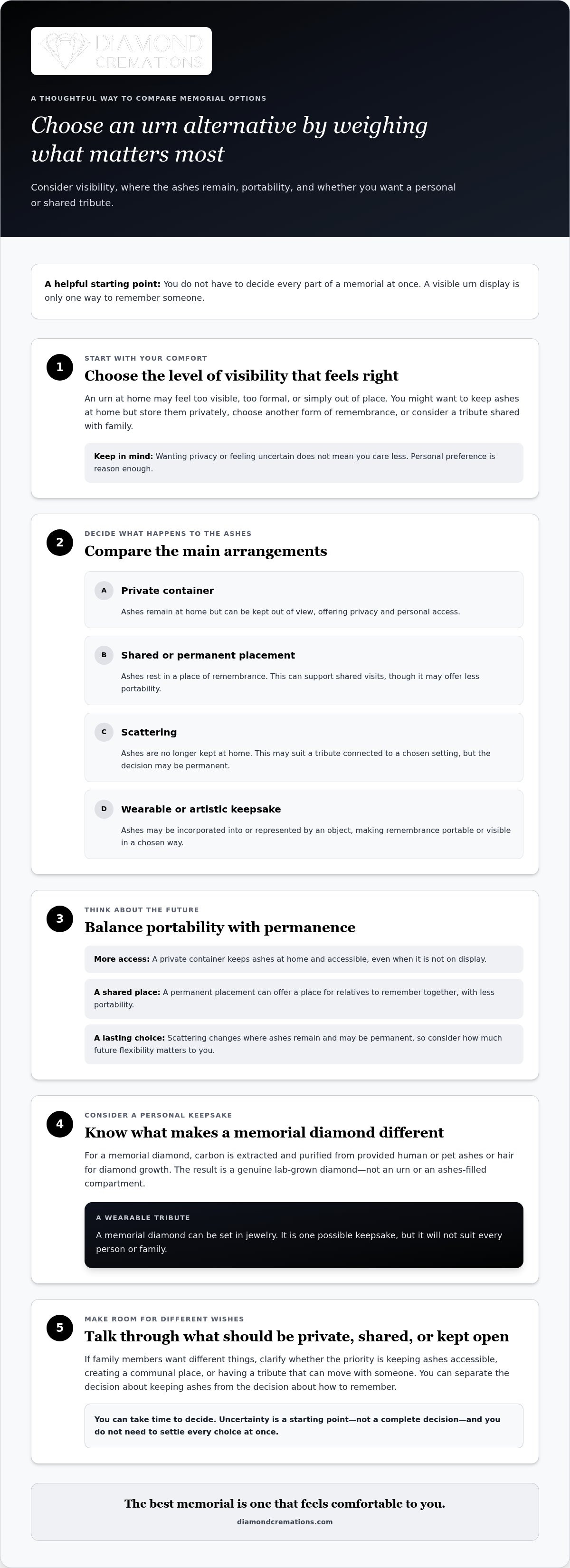
Consider what matters most to you: privacy, permanence, portability, or a shared tribute. A private keepsake may offer personal access without being on display. A permanent placement may feel meaningful but less portable. A shared memorial can involve family, though it may require conversation about different wishes. You can also separate the question of keeping ashes from the question of how to remember someone. One doesn’t automatically determine the other.
For background on common practices and the choices families may consider after cremation, the overview of Cremation offers broader context. Your decision can begin with what feels comfortable in your own home and family. Take time to reflect, talk when you’re ready, and leave room for your preferences to become clearer. There’s no need to turn uncertainty into an immediate choice.
Urn Alternatives: Compare Private, Shared, and Wearable Memorials
Alternatives differ not only in appearance, but in what happens to the ashes and how you relate to the memorial over time. One choice may keep them close but out of sight. Another may create a shared place of remembrance, while some keepsakes make a tribute portable. Compare the practical arrangement as well as the level of visibility that feels right for your household.
What options keep ashes out of everyday view?
A private container can remain at home without being displayed, offering discretion and personal access. A shared or permanent placement can give relatives a place to remember together, though the ashes may be less portable. Scattering is another possible choice, one that changes where the ashes remain. Consider family preferences and how much future flexibility matters to you.
- Private container: Ashes remain at home but can be kept out of view. This offers privacy and access while keeping the memorial part of the household.
- Shared or permanent placement: Ashes rest in a place of remembrance. This can support shared visits, though it may offer less portability.
- Scattering: Ashes are no longer kept at home. This can suit someone who wants a tribute connected to a chosen setting, but the decision may be permanent.
- Wearable or artistic keepsake: Ashes may be incorporated into or represented by an object. This can make remembrance portable or visible in a chosen way.
These are broad distinctions, not rules about what a family should choose. A private container can still be meaningful even if it isn’t on display; a shared placement doesn’t require every relative to remember in the same way. If you’re discussing options together, clarify whether the priority is keeping ashes accessible, creating a communal place, or having a tribute that can move with someone.
How do keepsakes and memorial diamonds offer a different kind of remembrance?
Wearable keepsakes may hold a small portion of ashes, while artistic memorials can incorporate or represent them in a display piece. A memorial diamond is distinct: Diamond Cremations uses carbon extracted and purified from provided human or pet ashes or hair for diamond growth. The result is a genuine lab-grown diamond, not an urn or an ashes-filled compartment. It can be set in memorial jewelry, but it won’t suit every person or family.
If you’re weighing a permanent or personal tribute, take time to consider what feels comfortable and whether relatives want to participate. UCSF Health’s Bereavement Resources and Services also lists support resources for people navigating loss. For a closer look at memorial-diamond options, explore memorial diamonds and consider whether this keepsake aligns with your preferences.
How to Choose an Urn Alternative Without Regret or Family Pressure
A good decision starts with your priorities, not a ranking of memorial options. If you’re asking, “what if I don't want an urn on my mantle,” consider how you want your everyday relationship with the memorial to feel. A less visible tribute can be just as meaningful as one displayed at home. Remembrance isn’t measured by how often other people see it.
Which memorial choice fits your comfort and daily life?
Picture the role you want the memorial to play. Would a private tribute feel reassuring? Would you prefer a shared place to visit, or a keepsake you can carry? Think about your home and routine too. Limited display space, a possible move, or a preference for keeping personal objects private may affect what feels comfortable. These prompts can clarify your priorities, but your judgment matters more than any checklist.
To compare options, consider four qualities:
- Privacy: Would you like the memorial kept out of everyday view, or are you comfortable with it being visible?
- Permanence: Do you want a decision that feels settled, or would you rather retain flexibility?
- Portability: Would it matter to keep the tribute close if you move or your circumstances change?
- Family participation: Is it important to create a shared way to remember, or would an individual tribute feel more natural?
Use these questions to notice what matters, not to force an answer. Matching a memorial to your priorities can make a difficult choice feel clearer without making it less meaningful.
What if relatives want different ways to remember?
Different preferences may reflect different needs. One relative may value a visible gathering place; another may want privacy or a personal keepsake. Before comparing memorial forms, listen for what each person hopes the choice will provide: connection, comfort, continuity, or room to remember in their own way. A respectful conversation can begin with those needs rather than a debate over which object is best.
Families may also choose complementary ways to remember the same person. One person might keep a photograph or create a personal ritual, while relatives honor their loved one through another tribute. This doesn’t require assuming that ashes can be divided or that everyone must choose the same form. It allows for shared love and individual preferences to coexist.
If discussion becomes tense, pause and return to the qualities you’re trying to honor. Ask each person to describe what would feel respectful, then separate that wish from a specific solution. No one should have to prove their love by accepting a display that feels uncomfortable, and no one needs to dismiss another person’s source of comfort. A considered choice can make space for both.
What to Consider Before Choosing a Lasting Memorial
A lasting memorial can feel like a significant commitment, especially when family members are still finding their footing. You don’t have to settle every question at once. Begin by noticing what you know, what remains uncertain, and whether you want to decide now, keep options open, or start planning a permanent tribute. Each is a valid place to begin.
How can you make space to decide at your own pace?
Separate immediate practical arrangements from the choice of a lasting memorial. Those may be related, but they don’t have to become one decision. Before talking with relatives, write down what feels important, what you’re unsure about, and what you’d like to understand. If you’re thinking, “what if I don't want an urn on my mantle,” note what’s behind that preference, such as privacy, portability, or a wish for a different kind of tribute.
Then consider which point best describes you right now:
- I’m not ready to choose: Identify what needs attention in the present and leave the memorial question open for further thought.
- I’m exploring possibilities: Gather options and notice which qualities feel comfortable, without treating interest as a commitment.
- I want to plan something lasting: Clarify the kind of tribute you have in mind and who should be part of the conversation.
There isn’t one universal deadline that determines when a memorial decision is right. A pause can help you understand your preferences; it doesn’t diminish the importance of the person you’re remembering.
What should a shared memorial plan make clear?
Before settling on a form, make the purpose of a shared plan clear. Who wants to participate? What does each person hope the memorial will offer: a place to gather, a private keepsake, or a tribute that can be experienced in daily life? Also consider visibility. A memorial that feels comforting to one relative may feel too prominent to another, so discuss how and where it will be encountered.
A shared tribute doesn’t necessarily mean every person must remember in the same way. Family members may value distinct, complementary expressions of remembrance. Keep the conversation focused on those preferences rather than assuming that ashes will be divided, returned, or handled in a particular way. If a proposal depends on a specific arrangement, discuss that separately before treating the plan as settled.
A simple sequence can help: reflect privately, share what you’ve learned about your own priorities, listen to relatives’ hopes, then compare memorial forms against the needs everyone has named. The aim isn’t to eliminate every difference. It’s to make a considered choice without allowing pressure to stand in for agreement. If plans or feelings change, acknowledge that honestly without assuming every option will remain available.
A Memorial Diamond: A Personal Alternative to an Urn on the Mantle
A memorial diamond offers a different way to keep remembrance personal and discreet. Rather than displaying a container, someone may choose a diamond set in jewelry to wear or keep privately. For readers asking, “what if I don't want an urn on my mantle,” this can be one possible keepsake, not a better or more meaningful choice than other forms of remembrance.
How can a memorial diamond suit someone who prefers privacy?
A diamond is a compact tribute that doesn’t need to occupy a visible place in the home. Diamond Cremations uses purified carbon extracted from provided human or pet ashes or hair for diamond growth. The result is a genuine lab-grown diamond. It may be set in custom memorial jewelry, though the right choice depends on whether a wearable keepsake feels comfortable to you.
In high-pressure, high-temperature (HPHT) diamond growth, specialized equipment recreates the conditions needed for purified carbon to crystallize as diamond. A diamond seed may be used to initiate growth; the seed itself doesn’t come from the loved one. The finished memorial diamond has the fundamental chemical, physical, and optical properties of a lab-grown diamond. Its origin makes it a particular kind of keepsake, but it doesn’t replace the relationship or memories that give remembrance meaning.
What can families personalize in a memorial diamond?
Personalization can include carat size, shape, color, and a jewelry setting. Shape options may include round, princess, oval, cushion, pear, and emerald. Color choices may include colorless or white, blue, yellow, and pink; don’t assume an exact shade. One person may prefer a discreet pendant, while another may choose a different jewelry form or keep the diamond on its own.
These choices can help you consider how the diamond would fit into daily life and personal style. You don’t need to select a design simply because it seems traditional or because another relative prefers it. Think about whether you’d want to wear the memorial, keep it in a private place, or make it part of a shared family conversation.
How should readers explore memorial diamond options?
Diamond Cremations provides secure collection and personalized concierge support, with careful identification, tracking, handling, and documentation of provided material. Professional diamond certification is available depending on your preferences and the selected diamond, but it isn’t automatically included. A grading report evaluates characteristics of the diamond; it doesn’t establish whose carbon was used.
Exploring the details can help you decide whether this lasting keepsake suits your preferences. There’s no obligation to choose it, and another memorial approach may feel more appropriate for you or your family.
Choose a Memorial That Feels Like Yours
The question “what if I don't want an urn on my mantle” can begin a more personal conversation about remembrance. You don’t need to choose an option because it is familiar, visible, or easy for others to understand. Consider how you want your home and daily life to feel, then let that guide your next step. If relatives are part of the decision, share what matters to you and make space for their hopes, too. A thoughtful choice can be simple, private, shared, or lasting. It should feel right to the people who carry the memory, not answer to someone else’s idea of what remembrance must look like.
You can take time to reflect, revisit your questions, and move forward when a direction feels clear. Exploring an option doesn’t obligate you to choose it; it simply gives you more to consider.
There is no single correct way to remember someone. Choose the approach that honors them while respecting what brings you comfort.
Frequently Asked Questions
Is it normal not to want an urn on the mantle?
Yes, not wanting an urn on display is a personal preference, not a measure of affection. If you’re unsure how to explain it, try describing the feeling rather than defending it: “I’d feel more comfortable with a private memorial.” You can also notice whether the concern is about visitors seeing it, the room’s atmosphere, or the object itself. Naming that distinction may help you understand what would feel better.
What can I do with cremated ashes if I do not want them displayed at home?
You can keep ashes in a container stored privately, arrange a memorial that isn’t part of your home, or consider a keepsake or another tribute. Before settling on a choice, clarify whether you want the ashes to remain accessible and whether you’d like a place to revisit. Write down what each option would mean for daily life and future flexibility, rather than choosing based on appearance alone.
Can I wait before deciding what to do with cremated ashes?
Yes. If you aren’t ready to make a lasting choice, keep the current arrangement clear and undisturbed while you think. You might note where the ashes are kept and record any questions you want to discuss with relatives. There’s no need to treat uncertainty as a decision. If the question “what if I don't want an urn on my mantle” keeps returning, use it as a prompt to explore what you’d prefer instead.
Can a memorial be meaningful without keeping ashes in the home?
Yes. A memorial can be built around a person’s stories, values, or traditions rather than their physical remains. For instance, relatives could preserve recordings of family stories, gather around a meaningful activity, or create a collection of written memories. These can be revisited over time and shared with younger family members. Choose something that reflects the person’s life, not simply an object that fills the place an urn might have occupied.
Can family members choose different ways to remember someone who was cremated?
Yes. Family members can each have a personal practice while still agreeing on a shared way to honor the person. For example, relatives might contribute memories to a shared album, while each chooses how to mark a personal anniversary. It can help to agree on what everyone wants to preserve, such as a story, value, or family tradition. That common purpose can bring people together without requiring identical preferences.
Can a memorial diamond be made using hair instead of ashes?
Yes. Hair can be used as source material for memorial diamond creation, so ashes aren’t the only option. This may be worth considering if hair feels more suitable for your circumstances or personal wishes. Diamond Cremations creates memorial diamonds using material from people and pets. The choice between ashes and hair is individual; consider which source feels appropriate to you before exploring the memorial form itself.
Does a memorial diamond certification prove whose ashes were used?
No. Certification concerns the diamond’s grading, not the identity of the person or pet associated with the source material. Treat a grading report as information about the stone, not as proof of its origin. These are separate questions, addressed through different records and processes. Knowing that distinction can help you interpret documentation accurately and understand what certification can and cannot establish.