


Beyond the Urn: Meaningful Ways to Honor Pet Ashes in 2026
What if the most meaningful way to remember your pet wasn't to place them on a shelf, but to carry their light with you? For many, a traditional urn feels less like a tribute and more like a way of hiding a beloved companion away. You might worry about a ceramic vessel breaking. You might feel a sense of disconnection when remains are tucked out of sight. If you're searching for what to do with pet ashes besides an urn, you aren't alone in wanting something permanent. It's natural to desire a memorial that reflects the vibrant life they lived.
This guide explores a curated selection of modern, artistic, and permanent ways to transform remains into a lasting legacy. You'll discover how sophisticated technology now allows for the creation of lab-grown diamonds, memorial reefs, and artisanal glass that offer a sense of peace. We'll walk through the most meaningful options available in 2026, from wearable tributes to living memorials. This journey provides the clarity you need to move beyond simple storage toward a high-quality tribute that honors your bond with dignity and grace.
Key Takeaways
- Understand why modern pet owners are looking for what to do with pet ashes besides an urn to create a more active, personal presence in their daily lives.
- Explore how living tributes, such as biodegradable tree urns or meaningful scattering ceremonies, allow a pet’s legacy to nourish and sustain new life.
- Learn how artistic keepsakes like infused glass sculptures or textured portraits can seamlessly integrate your pet’s memory into the beauty of your home.
- Discover the sophisticated science of memorial diamonds, which use HPHT technology to transform carbon into an enduring, high-quality gemstone.
- Gain clarity on how to choose a memorial path that aligns with your lifestyle and honors your pet’s unique personality and spirit.
The Evolution of Remembrance: Why Pet Owners are Moving Beyond Urns
Memory is a living thing. For decades, the standard response to pet loss was to place remains in a static container, often kept in a quiet corner of the home. Today, that perspective is shifting. The Evolution of Remembrance reflects a deep change in how we process the departure of our animal companions. We no longer view pets as just animals. They're cherished family members who deserve a tribute as vibrant as their lives were. This cultural shift has led many to wonder what to do with pet ashes besides an urn, seeking ways to transform a symbol of loss into a lasting, active presence.
The pet funeral market has grown significantly, valued at approximately $2.1 billion in 2026. This growth isn't just about numbers. It represents a collective desire for more personalized, dignified end-of-life services. Owners are moving away from "storage" and toward "connection." They want memorials that reflect the specific bond they shared. A generic box rarely captures the spirit of a dog who loved the mountains or a cat who spent afternoons in the sun.
The Limitations of Traditional Urns
Traditional urns serve a purpose, yet they carry inherent risks. Ceramic and glass are fragile. Over twenty or thirty years, a single accident can lead to heartbreak. Beyond the physical risk, there's an emotional weight to a clinical vessel. It can feel like the pet is being "hidden" rather than celebrated. For modern families who move homes or travel frequently, a heavy urn isn't always practical. They need a portable legacy. They want a memorial that integrates into their daily lives, moving with them through every life transition without the fear of damage or loss.
The Psychology of Transformation
Choosing what to do with pet ashes besides an urn is often a psychological turning point in the grieving process. It marks a transition from mourning a death to celebrating a life. By extracting carbon from ashes or hair and transforming it into something new, the focus shifts to permanence. This process moves the memorial from a "vessel of loss" to a "symbol of transformation." There's profound comfort in beauty. Instead of a somber box, you might choose a tribute that catches the light. This allows you to honor your pet’s specific personality. It turns a difficult ending into a beautiful, enduring beginning.
Living Tributes and Natural Returns: Returning to the Earth
Returning a pet to the earth offers a sense of completion. It honors the physical connection they had with the natural world. If you're exploring what to do with pet ashes besides an urn, natural returns provide a way to let your pet’s remains nourish the environment. This transition from a vessel to a landscape can be a profound step in Finding the Right Path toward healing. It transforms a moment of silence into a cycle of growth.
Scattering with Intention
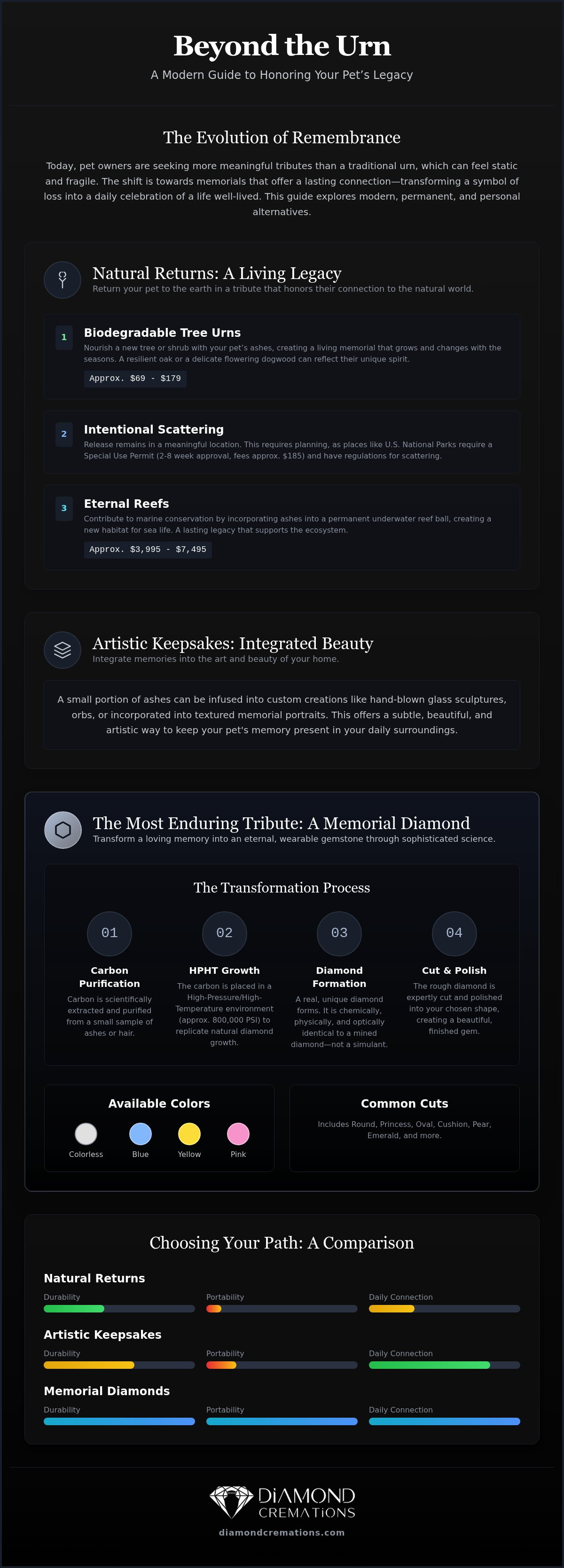
Scattering remains is a traditional choice, yet it requires careful planning in 2026. Many owners choose locations that held meaning, like a favorite hiking trail or a sun-drenched meadow. If you choose a U.S. National Park, you'll need to obtain a Special Use Permit in advance. These permits can take between two and eight weeks for approval. Some locations, such as Arches National Park, may charge a permit fee of approximately $185. Regulations typically require scattering at least 100 to 200 feet away from trails, roads, and water sources. This ensures the ecosystem remains protected while you find a private space for a symbolic release.
Living Memorials and Bio-Urns
Living memorials offer a way to watch a legacy change through the seasons. Biodegradable urns, typically priced between $69 and $179, are designed to nourish a new tree or shrub. You might select a species that matches your pet's spirit. A resilient oak might suit an adventurous dog, while a delicate flowering dogwood could reflect a serene cat. This process allows the carbon from the remains to become part of the plant's structure. Other natural options include:
- Flower Garden Integration: Mixing ashes into the soil of a private memory garden to support seasonal blooms.
- Eternal Reefs: Contributing remains to underwater conservation efforts. Individual reef balls range from $399 to over $4,995. These structures provide a permanent habitat for marine life.
- Memory Forests: Placing remains in protected woodlands where the land is legally conserved.
While these natural returns are beautiful, they are subject to the elements and the passage of time. For those who want a tribute that combines natural beauty with absolute permanence, pet ashes to diamonds offer a way to keep that connection close in a form that never fades.
Artistic Keepsakes: Integrating Memories into Your Home
While some find peace in returning a pet to nature, others prefer to keep a tangible presence within the sanctuary of their home. Traditional memorials can often feel out of place in a modern living space. This has led to a rise in artistic tributes that blend seamlessly with interior design. If you're considering what to do with pet ashes besides an urn, transforming remains into bespoke art offers a way to celebrate your pet’s life through color, texture, and light.
The Art of Glass Infusion
Glass blowing has become a sophisticated medium for memorialization. Artisans take a small amount of remains and suspend them within molten glass at temperatures exceeding 2,000 degrees Fahrenheit. As the glass is shaped, the ashes create unique, swirling patterns that resemble stardust or delicate white clouds. These pieces aren't just containers. They're solid sculptures that capture light in a way that feels vibrant and alive. The play of sunlight through the glass serves as a quiet, beautiful reminder of the joy a pet brought to a home.
Common forms include hand-blown spheres, hearts, and abstract flames. Current market data for 2026 shows that custom, hand-blown glass art pieces incorporating pet ashes typically start around $80. Larger, more intricate designs can reach $375 or more, while wearable glass pendants often cost approximately $265. These objects allow you to place a tribute on a windowsill or mantle where it can reflect the changing light of the day without appearing clinical or somber.
Commemorative Paintings and Sculptures
For those who value a more tactile connection, integrating remains into traditional fine art is a growing trend. Specialized artists can mix a small portion of purified ashes into oil or acrylic paints. This adds a subtle, physical dimension to a custom portrait, allowing the memory to become part of the canvas itself. This method turns a standard painting into a textured tribute that you can touch. Beyond portraits, you might consider:
- Memorial Stones: Casting remains into textured stones for garden paths or indoor displays.
- Home Accents: Small ceramic pieces or holiday ornaments that offer a subtle way to include your pet in family traditions.
- Textured Sculptures: Using remains within the clay or bronze casting process for a permanent, high-end focal point.
Choosing an artistic keepsake ensures that your pet’s memory remains a visible part of your daily life. It transitions the memorial from a hidden object to a celebratory piece of home decor. While glass and paint offer beautiful aesthetics, some seeking the highest level of craftsmanship look toward the ultimate transformation of carbon into a gemstone.
The Most Enduring Tribute: Transforming Ashes into Memorial Diamonds
While glass art and living memorials provide comfort, they remain subject to the elements and the passage of time. For those seeking the ultimate level of permanence when deciding what to do with pet ashes besides an urn, the creation of a memorial diamond offers a sophisticated path forward. This process is not just a commemorative gesture; it is a profound transformation of carbon into the hardest substance known to man. It results in a legacy that can be worn, kept close, and passed down through generations. A diamond represents a bond that is truly unbreakable.
Understanding the HPHT Process
The journey from remains to gemstone begins with the extraction and purification of carbon from pet ashes or hair. This carbon is placed into a specialized growth cell where we use High-Pressure/High-Temperature (HPHT) technology to recreate the intense conditions found deep within the earth's mantle. By applying approximately 800,000 PSI and extreme heat, the carbon begins to crystallize. It is important to clarify that a diamond seed is used to initiate this growth process. While the carbon is purified from the provided remains, the seed provides the necessary foundation for the diamond to form. The result is a real lab-grown diamond. These gemstones possess the same chemical, physical, and optical properties as mined diamonds. They are authentic diamonds with a deeply personal origin, not imitations or simulants.
Personalizing Your Pet’s Brilliance
Transformation allows for a high degree of personalization to reflect your pet’s unique character. You can choose from a palette of colorless, blue, yellow, or pink diamonds. The shape of the stone also serves as a tribute. Options range from the timeless round and princess cuts to the elegant emerald or cushion shape. Each stone is expertly cut to ensure maximum brilliance and clarity. For added assurance, professional certification from gemological laboratories like GIA or IGI is available as an option. It is important to note that while these gemological reports grade the diamond's quality, they do not establish biological identity or prove which specific pet supplied the carbon. This ensures your tribute is as high-quality as it is meaningful while maintaining scientific transparency.
Finding the Right Path: How to Choose Your Pet’s Legacy
Selecting the final form for a companion’s remains is a journey that requires both reflection and foresight. It is a transition from the immediate weight of loss to the creation of a lasting presence. When you're deciding what to do with pet ashes besides an urn, the choice often hinges on how you wish to interact with that memory in the decades to come. Every pet is unique. Their tribute should be a reflection of the specific light they brought into your life, balanced with the practical realities of your own future.
Portability vs. Placement
Many people discover that traditional urns present unexpected challenges during life transitions. An urn is heavy, fragile, and often difficult to transport safely. If you live in an urban environment or anticipate moving homes, a fixed memorial may not be the most resilient choice. A tree planted in a backyard or a garden scattering ceremony offers beauty, but these tributes are tied to a specific piece of land. If you relocate, you may feel a sense of disconnection from the site you left behind.
This is why many modern families are turning toward portable legacies. Wearable tributes, such as memorial diamond jewelry, ensure that your pet’s presence moves with you. Whether you change cities or simply move to a new house, the memorial remains secure and close. It transforms the remains into a high-quality gemstone that is integrated into your daily life rather than being left behind on a shelf or in a landscape. This flexibility provides peace of mind for those who value a constant, physical connection.
A Framework for Decision Making
To find the path that feels most authentic, it's helpful to evaluate your options through a few specific lenses. Consider the following dimensions as you weigh your decision:
- The Pet’s Temperament: Match the tribute to the life they lived. A playful, energetic pet might be best honored by a vibrant blue or yellow diamond. A serene, gentle companion may be better reflected in a colorless stone or a delicate glass sculpture.
- Long-Term Durability: Think about the next thirty or forty years. While art and living tributes are meaningful, they can be subject to breakage or environmental changes. A diamond, as the hardest substance known to man, offers a level of permanence that other mediums cannot match.
- Family Connection: Involving the whole family in the decision-making process helps everyone find closure. It ensures the chosen legacy is a shared symbol of the bond you all held.
Choosing a legacy is not a decision to be rushed. By seeking professional guidance and considering the long-term impact of each option, you can ensure the process is handled with the dignity your pet deserves. Whether you choose a return to nature or a sophisticated transformation into a gemstone, the goal is a sense of continued connection and enduring peace.
Creating an Enduring Legacy for Your Companion
Deciding what to do with pet ashes besides an urn is a deeply personal choice that shifts the focus from loss to a celebration of life. Whether you choose the natural cycle of a living memorial or the vibrant light of an artistic keepsake, you're creating a tribute that honors the specific bond you shared. Modern options in 2026 provide the flexibility to keep your pet’s memory close, ensuring their legacy remains a source of peace rather than a hidden vessel. You deserve a memorial that is as resilient and beautiful as the love you shared.
For those who desire the ultimate level of permanence, transforming carbon into a certified lab-grown diamond offers a sophisticated and portable way to carry your pet's light with you. These gemstones are available in bespoke colors and shapes, allowing you to personalize a tribute that reflects your pet’s unique character. Our nationwide secure concierge service ensures this entire process is handled with the transparency and dignity you expect. It's a journey of transformation that turns a difficult departure into a lasting symbol of brilliance.
Take the time you need to find the memorial that resonates most deeply with your heart. Your pet’s story doesn't end here; it simply takes a new, beautiful form that will stay with you forever.
Frequently Asked Questions
How much of my pet’s ashes are needed to create a memorial diamond?
Approximately a half cup (or 100 grams) of remains is typically required to begin the transformation process. This amount provides a sufficient source of carbon for extraction and purification. If you have a smaller pet or only a portion of the ashes, we can also use hair or fur to supplement the carbon source. This flexibility ensures that every pet, regardless of size, can be honored through a lasting and brilliant legacy.
Can I use pet hair instead of ashes for a diamond transformation?
Yes, pet hair or fur is an excellent source of carbon for creating a memorial diamond. Many families choose this option if they have already scattered the ashes or if they want to create a tribute while their pet is still living. The carbon extraction process is identical whether we use hair or ashes. We purify the carbon to a high degree before placing it into the growth cell to initiate the transformation into a gemstone.
Are memorial diamonds real diamonds or just glass?
Memorial diamonds are real lab-grown diamonds with the same chemical, physical, and optical properties as mined diamonds. They are not glass, simulants, or imitations. These stones are composed of pure carbon crystallized under extreme conditions. Because they possess identical hardness and brilliance to traditional diamonds, they offer a permanent and high-quality alternative for those seeking what to do with pet ashes besides an urn. Each stone is a genuine gemstone that will last for generations.
Is it possible to combine ashes from multiple pets into one memorial?
You can certainly combine remains from multiple pets into a single diamond. This is a meaningful way to honor the bond shared between animal companions who were inseparable during their lives. We extract and purify the carbon from all provided sources before the growth process begins. This ensures that the final gemstone represents a collective legacy. It is a sophisticated way to keep all your beloved companions together in one beautiful, enduring tribute.
What happens to the ashes that are not used in the creation process?
We treat all remains with the highest level of respect and transparency throughout the entire process. Any portion of the ashes or hair that is not utilized during the carbon extraction and purification stage is handled according to our strict dignity protocols. We understand the emotional weight of these remains and ensure they are managed with care. Our nationwide concierge service is available to discuss the specific logistics of your pet's journey and provide clarity on every step.
How do I know the diamond actually contains my pet’s carbon?
We maintain a rigorous chain of custody and a transparent purification process to ensure the integrity of your tribute. While carbon is extracted and purified from your pet's remains, it is important to understand that a diamond seed is used to initiate growth. Professional gemological reports from organizations like GIA or IGI are available to grade the diamond's quality. While these reports don't establish biological identity, our meticulous laboratory standards ensure that your pet's carbon is the foundation of the gemstone.
Can I have a memorial diamond set into jewelry like a ring or pendant?
Yes, you can have your memorial diamond set into a variety of custom jewelry pieces, including rings and pendants. We offer a selection of settings designed to showcase the brilliance of the stone while keeping your pet close to your heart. You can choose from shapes like round, princess, cushion, or emerald to suit your style. This transforms the diamond into a wearable legacy that integrates seamlessly into your daily life and moves with you through every transition.
How long does the process of turning ashes into a diamond typically take?
The process of transforming remains into a diamond typically takes between three and eight months. This timeline reflects the sophisticated nature of the HPHT growth process, where we recreate the earth’s natural conditions using approximately 800,000 PSI. Growing a high-quality gemstone requires patience and precision to ensure the final diamond meets our exacting standards. We keep you informed throughout this transformation, providing a steady and respectful rhythm as your pet’s legacy is carefully crafted.