


Cremation Diamond vs. Burial: Understanding Your Memorial Options
Could a family choose burial and still create a memorial diamond? Often, these options serve different purposes rather than compete: burial is a choice about final disposition, while a memorial diamond is one way to remember someone. Understanding the difference can make the question of cremation diamond vs burial feel less like an either-or decision.
It’s natural to weigh personal beliefs, family traditions, practical needs, and the wishes your loved one expressed. A memorial diamond is created using carbon extracted and purified from provided ashes or hair. It can be considered alongside other ways of saying goodbye, rather than as a replacement for decisions about disposition.
This article explains what burial and memorial diamonds each involve, how disposition differs from memorialization, and which practical and personal considerations can help guide your family. You’ll also learn how Diamond Cremations creates genuine lab-grown diamonds from provided material. There’s no single choice that honors every life best. A helpful starting point is to identify what your loved one wanted and what will feel meaningful to those who cherish their memory.
Key Takeaways
- In the cremation diamond vs burial comparison, first consider what each option is for, then decide whether they could fit together.
- Clarify whether burial means interment of a body or cremated remains, as these are distinct arrangements.
- Compare what matters to your family, such as having a place to visit, a portable keepsake, or options for personalization.
- Begin with your loved one’s expressed wishes, then consider disposition separately from lasting remembrance.
- A memorial diamond is created using carbon extracted and purified from provided ashes or hair. Its size, shape, color, and jewelry setting can be personalized.
Cremation Diamond vs. Burial: Two Different Choices to Understand
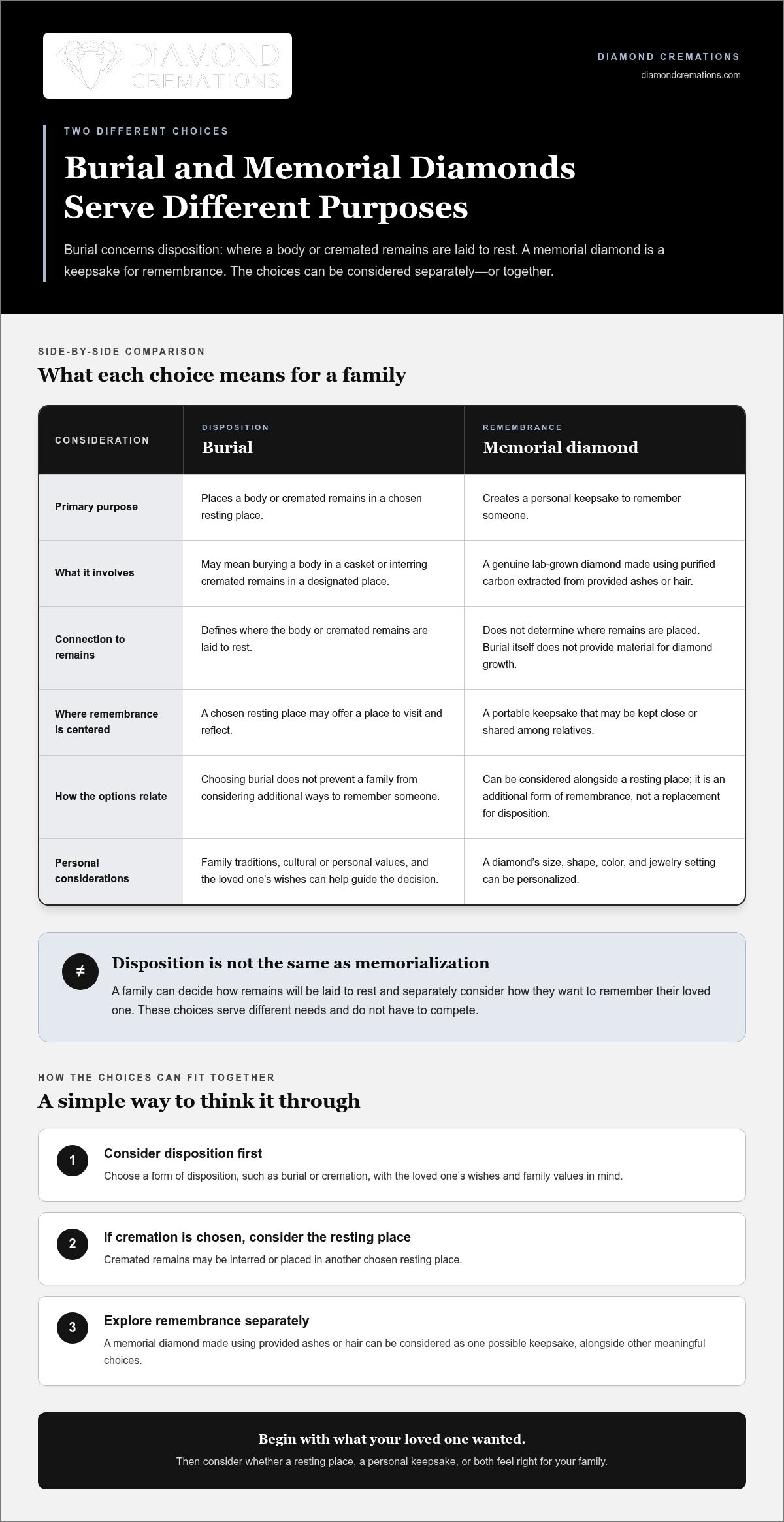
Burial and a memorial diamond answer different questions. Burial concerns disposition: where a person’s body or cremated remains are laid to rest. A memorial diamond is a keepsake created for remembrance. For families considering cremation diamond vs burial, this distinction matters because choosing a way to remember someone doesn’t automatically determine how their remains are handled.
What does burial mean in this comparison?
Here, burial means placing remains in a chosen resting place. That may mean burying a body in a casket or interring cremated remains in a designated place. These are different forms of disposition, and families may mark them in different ways. A gathering, ceremony, or other observance may accompany the decision, but practices vary across families and traditions.
The word “burial” can therefore refer to more than one arrangement. Choosing cremation doesn’t rule out interment of the ashes later. Likewise, burial of the body doesn’t prevent a family from choosing additional ways to remember the person. The right combination depends on the loved one’s wishes, family preferences, and cultural or personal values.
What is a cremation memorial diamond?
A memorial diamond is a genuine lab-grown diamond created using purified carbon extracted from provided ashes or hair. The carbon is prepared for diamond growth in specialized equipment. A diamond seed may be used to initiate crystal formation, but the seed doesn’t come from the loved one. You can learn more about the concept in the Memorial diamond Wikipedia article.
A memorial diamond is a lab-grown keepsake made using purified carbon extracted from a loved one’s provided ashes or hair, not a burial arrangement. This wording describes the role of purified carbon in the growth process. It doesn’t mean that every carbon atom in the finished diamond comes exclusively from the provided material.
A memorial diamond doesn’t determine where remains are placed. It offers a personal form of remembrance that can be considered separately from disposition and other memorial choices.
That separation can make the decision clearer. A family might first consider whether burial or cremation reflects the loved one’s wishes, then explore meaningful ways to remember them. Others may make these choices at different times. They don’t have to be treated as competing answers when they serve distinct purposes.
How Burial, Cremation, and Memorial Diamonds Relate
These choices can be part of one family’s remembrance, but they belong to different stages and serve different purposes. Disposition addresses what happens to the body or cremated remains. Memorialization is how loved ones choose to remember the person, through a gathering, a resting place, a keepsake, or a combination of meaningful gestures.
Disposition determines how remains are laid to rest; memorialization shapes how a loved one is remembered. Keeping that distinction in view can make the cremation diamond vs burial question easier to consider. It isn’t necessarily a choice between two competing arrangements.
A family’s decisions might unfold in this order:
- Choose a form of disposition, such as burial or cremation.
- If cremation is chosen, decide what to do with the cremated remains. Some families choose interment or another resting place.
- Consider remembrance options, which may include a memorial diamond made using provided ashes or hair.
Where does cremation fit?
Cremation is a disposition process, not a memorial object or jewelry choice. It produces cremated remains, often called ashes, which may be used in memorial-diamond creation. Diamond Cremations also works with provided hair. For a general discussion of the science and motivations behind this option, see Discover Magazine on cremation diamonds.
Burial itself doesn’t provide material for diamond growth. A memorial diamond is made using provided ashes or hair, not through burial. This distinction helps separate the practical decision about disposition from a later choice to create a personal keepsake.
Can remembrance include more than one form?
Yes. A family might value a particular resting place for visits and reflection while also finding meaning in a keepsake that can be kept close or shared among relatives. These forms of remembrance answer different needs. A memorial diamond is an additional option, not a requirement or a substitute for a family’s other choices.
For example, relatives may choose interment for cremated remains and separately consider whether a diamond feels right for their family. Another family may prefer one form of remembrance. Neither approach is universal. Personal wishes, family traditions, and individual comfort can guide the decision.
If you’re considering a diamond as part of a broader remembrance plan, you can explore memorial diamond options at your own pace. The aim isn’t to choose between honoring a resting place and keeping a personal memento. It’s to understand what each choice means and decide whether either, or both, reflects your loved one’s wishes.
Burial vs. Memorial Diamond: Compare What Matters to Your Family
Burial and a memorial diamond offer different ways to honor a loved one. One centers remembrance in a chosen resting place; the other creates a portable keepsake. Neither carries a universal meaning or greater emotional value. A useful comparison looks at what each involves and how it fits your family’s wishes and everyday life.
Which practical differences should you weigh?
Start by considering how your family prefers to remember someone. A resting place may matter to relatives who value having a specific location to visit. A diamond may suit those who appreciate a keepsake that can be worn or kept at home. Some families value both; others feel most connected to one approach.
Personalization differs, too. Burial decisions may reflect family tradition, cultural practices, and the loved one’s expressed wishes. A memorial diamond offers choices such as size, shape, color, and jewelry setting. Consider which details feel meaningful and which are simply practical preferences. For instance, think about whether you’d prefer a piece to wear or display, and which design choices feel appropriate to your family.
Cost can also be part of the discussion, but it varies with the arrangements and selections involved. Avoid assuming one option is always less expensive. Instead, compare the specific plans your family is considering and the priorities behind them. Emotional significance, environmental impact, and suitability are personal considerations, not qualities that can be ranked for every family.
What can certification tell you?
Diamond certification relates to grading the diamond, not identifying whose ashes or hair supplied the carbon used in its growth. Diamond Cremations offers certification depending on customer preferences and the selected diamond; it isn’t automatically included with every diamond. Grading and material identification are separate questions and serve different purposes.
As you compare cremation diamond vs burial, start with the loved one’s wishes, then consider how each option fits your family’s traditions, practical needs, and preferred way of remembering. If a diamond feels relevant, explore the choices thoughtfully and give yourself time to decide.
A Thoughtful Decision Framework for Families
There may be more than one meaningful way to honor someone, and relatives may have different views about what feels right. A calm process can help the family consider the cremation diamond vs burial question without treating it as a contest or expecting everyone to reach the same conclusion at once. Begin with what your loved one wanted, then separate disposition from remembrance.
Start with wishes, values, and family conversation
Consider any preferences your loved one clearly expressed, including cultural, spiritual, or personal values that matter to them. Those wishes can guide the conversation while leaving room to acknowledge that relatives may interpret them differently or have their own needs. There’s no need to settle every detail in one discussion. Listening first can help everyone understand what each choice represents to the others.
Focus on meaning rather than persuasion. Instead of asking, “Which option is best?” ask what would feel respectful, comforting, or consistent with the person’s values. Make space for uncertainty, too. A decision can take shape over time.
Separate the decision into manageable questions
Work through one question at a time. First, discuss disposition. Then consider how your family would like to remember the person. This keeps practical arrangements distinct from the separate question of whether a lasting keepsake feels meaningful.
- Begin with their wishes. What did your loved one express about disposition or remembrance? Which values should guide the family’s choices?
- Clarify what remains undecided. Has the family chosen burial or cremation, or does that question still need thoughtful discussion?
- Consider the form of remembrance. Would a place to visit, a personal keepsake, both, or another approach feel meaningful to your family?
- Talk through practical preferences. Is it important to have a dedicated place, a portable item, or a choice that can be personalized? What details would help relatives feel informed?
- Allow for different perspectives. Which concerns are shared, and which are personal? Can each person explain what matters without being asked to endorse the same option?
Family traditions and individual preferences don’t always align neatly. One relative may value a place for visits, while another feels drawn to a keepsake that can be kept close. Naming these differences respectfully can help the family discuss options without diminishing anyone’s connection or asking one person to speak for everyone.
Before deciding on a memorial option, make a short list of details the family wants to understand. For a memorial diamond, that might include available personalization choices and what certification can tell you about the diamond. For any choice, consider whether it reflects the loved one’s wishes and feels manageable for those who will carry it forward.
Explore a Memorial Diamond with Diamond Cremations
For families who decide a personal keepsake feels right, Diamond Cremations creates memorial diamonds from carbon extracted and purified from provided human or pet ashes or hair. Families across the United States can explore a custom remembrance while keeping disposition decisions separate. Careful identification, tracking, handling, and documentation of customer-provided material are important parts of the process.
What to expect from a personalized memorial diamond
A memorial diamond is a lasting keepsake, and deciding whether it suits your family is a personal choice. Diamond Cremations provides a personalized service, with choices shaped around the selected diamond and how the family hopes to remember their loved one. You can take time to consider what feels meaningful rather than treating a diamond as a necessary part of remembrance.
Professional diamond certification is available depending on customer preferences and the selected diamond. Certification concerns the diamond’s grading, not the identity of the source material. This distinction can help families decide what documentation they value as they consider their options.
Consider shape and setting as part of remembrance
The diamond’s shape and jewelry setting can influence how a keepsake looks and whether it is worn or displayed. If you’re weighing different forms, this guide to choosing a memorial diamond shape can help you reflect on which style feels appropriate to your loved one and your family.
There’s no single design that carries the same meaning for everyone. Consider what feels comfortable, what reflects the person you’re remembering, and whether you’d prefer a piece to wear or keep in a particular place. Exploring these choices can be a gentle next step, with no need to rush a decision.
Explore memorial diamond options
Let Your Next Step Reflect What Matters Most
The question of cremation diamond vs burial doesn’t need to be settled by choosing one way to honor someone over another. Give yourself room to consider what feels meaningful, what your loved one valued, and what your family is ready to decide. A thoughtful next step can be as simple as writing down an unanswered question or sharing what matters most with someone you trust.
If a memorial diamond feels worth exploring, approach it as a personal choice, not an obligation. Take time to consider the possibilities and decide whether this form of remembrance belongs in your family’s story. There’s no need to have every answer today.
Explore memorial diamond options
May the path you choose bring your family comfort and honor the person you hold dear.
Frequently Asked Questions
Can a family choose cremation and still hold a funeral or memorial service?
Yes. Cremation and a service are separate decisions, so a family can hold a gathering before or after cremation. It might include personal stories, music, or a shared meal, depending on the loved one’s wishes and what feels appropriate to those attending. A service doesn’t have to follow one format. Families can shape the gathering around their traditions and decide whether it’s private, formal, or more informal.
Can a memorial diamond be made from hair instead of cremation ashes?
Yes. Diamond Cremations can use provided hair as well as ashes. Carbon is extracted and purified from the material for diamond growth, so families may consider hair if it better reflects their wishes. The amount of material involved can vary, so a single quantity shouldn’t be assumed for every choice. A memorial diamond made this way is a genuine lab-grown diamond.
Does a memorial diamond replace a burial or cemetery memorial?
No. A memorial diamond is a personal keepsake, not a burial arrangement or cemetery marker. It doesn’t establish a place to visit or determine where remains are laid to rest. Families can consider these choices separately: a cemetery memorial may serve as a designated location, while a diamond offers a keepsake that can be kept close. Neither choice requires a family to give up the other.
Is a memorial diamond suitable for someone who wants a traditional remembrance?
It can be, if the family views it as a personal addition rather than a replacement for familiar customs. Relatives might keep a customary gathering or observance and also create a keepsake for someone who wants a personal reminder. Traditions differ among families, so a memorial diamond’s place in remembrance depends on individual wishes and whether it feels consistent with the meaning the family wants to preserve.
Can a memorial diamond be worn every day?
A memorial diamond can be set in jewelry, such as a ring or pendant, and may be worn regularly if that suits the owner’s routine and preferences. Think about whether wearing the piece daily feels comfortable or whether keeping it for particular occasions feels more meaningful. There’s no single right way to live with a keepsake. It can be worn often, occasionally, or kept in a chosen place.
How can relatives make a memorial decision when they disagree?
Begin by asking each person what they hope a choice will honor, then distinguish decisions that need attention now from remembrance ideas that can wait. One relative might value a familiar gathering, while another prefers a personal keepsake. Naming those priorities can reveal shared values without requiring everyone to feel exactly the same. If agreement takes time, pausing the discussion can be more respectful than pressing for an immediate answer.
What does certification of a memorial diamond prove?
Certification provides a record of the diamond’s graded characteristics, which can help the owner keep track of details about the selected stone. It does not establish whose ashes or hair supplied the carbon. Families can consider whether a grading record matters to them when choosing a memorial diamond. Certification availability depends on customer preferences and the selected diamond.