


Cremation Diamonds: Are Diamonds Made From Ashes Real?
When honoring a loved one, families seek a tribute that is both meaningful and permanent. Memorial diamonds, created from the carbon in cremated remains or hair, offer a profound way to keep a part of that person close. A common and important question arises during this consideration: are diamonds made from ashes real diamonds? The answer is yes, and understanding the science behind their creation and the significance of their color can provide comfort and clarity.
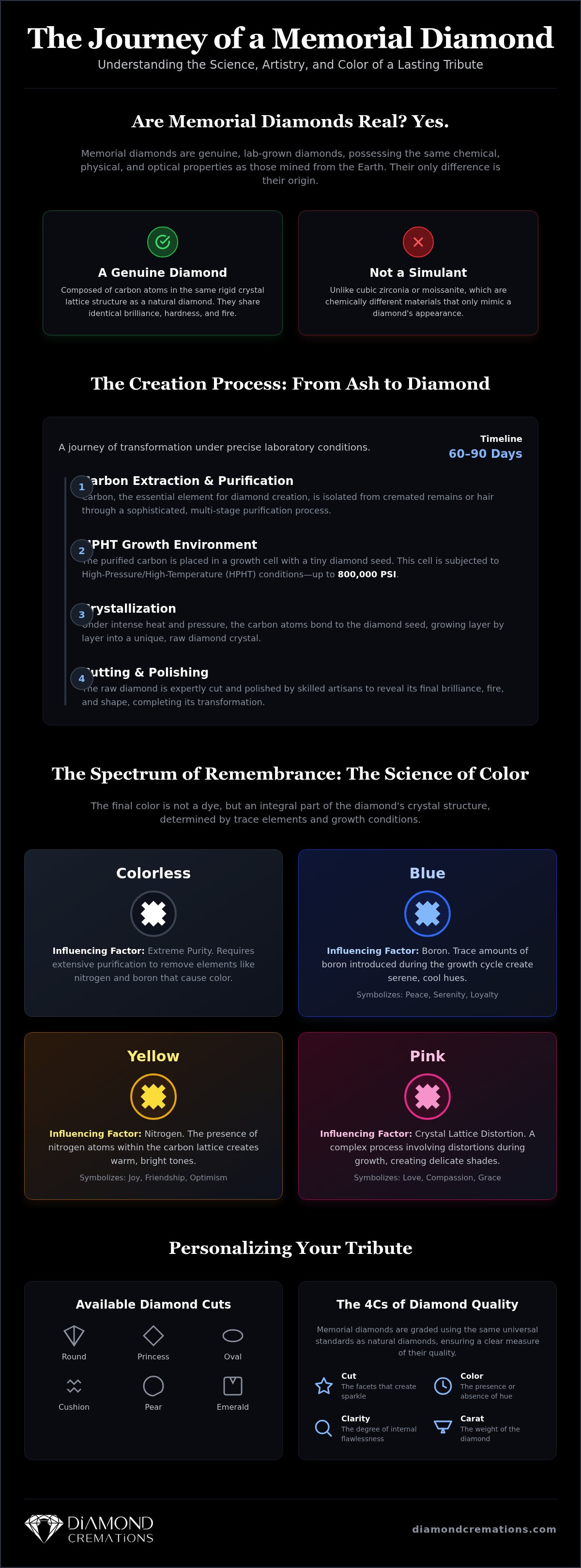
These are not imitations or simulants like cubic zirconia. They are genuine lab-grown diamonds, possessing essentially the same chemical composition, crystal structure, and physical and optical characteristics as diamonds formed deep within the Earth. The only difference is their origin. Choosing to create a memorial diamond is a deeply personal decision, and this guide explains the science, artistry, and meaning behind these unique tributes, with a focus on how their distinct colors are achieved.
The Spectrum of Remembrance: Understanding Cremation Diamonds
A memorial diamond is a lab-grown diamond created using carbon extracted and purified from cremated remains or hair. This process results in a stone that is physically and chemically a diamond, offering a tangible connection to a cherished memory. The color of the diamond can further personalize this tribute, reflecting the unique life it represents. It is not a surface coating or dye; the color is an integral part of the diamond's crystal structure, formed during its growth.
At Diamond Cremations, we coordinate this sensitive process for families across the United States, offering a compassionate and transparent path to creating a lasting memorial. We understand the importance of trust and clarity when making such a significant choice.
Are Cremation Diamonds Real Diamonds?
Yes, cremation diamonds are real diamonds. They should not be confused with diamond simulants, such as cubic zirconia or moissanite, which are chemically different and only mimic a diamond's appearance. A memorial diamond is composed of carbon atoms arranged in the same rigid crystal lattice structure found in natural diamonds. As a result, they share the same brilliance, fire, and hardness that make diamonds so valued. They are graded using the same "4Cs" (Cut, Color, Clarity, and Carat) as any other diamond, providing a clear measure of their quality.
The Significance of Choosing a Hue
Color has a powerful emotional impact, often tied to memory, personality, and feeling. The choice of a hue for a memorial diamond is a way to honor the individual character of a loved one. Each diamond created is unique, and its final shade is a result of the specific conditions during its formation. We offer a focused palette of colors—colorless, blue, yellow, and pink—each with its own symbolic resonance and scientific origin.
The Science of Color: How Carbon Becomes a Diamond
The transformation from carbon to diamond is a remarkable scientific achievement. It takes place through a process known as High-Pressure/High-Temperature (HPHT), which creates the intense conditions necessary for diamond crystallization. In a highly controlled laboratory environment, a diamond seed—a tiny, pre-existing diamond crystal—is placed in a growth cell with the purified carbon from the provided ashes or hair.
The cell is subjected to immense pressure, sometimes around 800,000 PSI, and extreme heat. This environment encourages the purified carbon atoms to bond to the diamond seed, growing layer by layer into a new, larger raw diamond. While carbon is carefully extracted from the remains, the seed itself is a separate component that provides the structural template for growth. The entire process, from receiving the remains to the final cutting and polishing, takes approximately 60–90 days.
The Role of Trace Elements and Growth Conditions
The final color of a memorial diamond is influenced by the presence of trace elements and the specific conditions during the HPHT process. For example:
- Yellow diamonds often get their warm tones from the presence of nitrogen atoms within the carbon lattice.
- Blue diamonds can be created when trace amounts of boron are introduced during the growth cycle, resulting in serene, cool hues.
- Colorless diamonds require an extensive purification process to remove elements like nitrogen and boron that can cause color. The goal is to create a pure carbon crystal structure that allows light to pass through without absorbing specific color wavelengths.
- Pink diamonds are particularly complex. Their delicate color can result from distortions in the crystal lattice that occurred during growth, sometimes combined with post-growth treatments.
The final shade is a unique outcome of the specific carbon source and the controlled laboratory environment.
Carbon Extraction and Purity
The first step in creating a memorial diamond is isolating carbon from the cremated remains or hair. Through our laboratory partners, the material undergoes a sophisticated, multi-stage process to extract and purify this essential element. This ensures that the carbon used in the growth chamber is of a quality suitable for diamond synthesis. The HPHT environment then provides the necessary energy and pressure to compel these carbon atoms to form the strong, stable bonds that define a diamond.
Comparing the Palette: From Natural Hues to Colorless Brilliance
Each cremation diamond color offers a different way to capture and reflect a memory. The choice between a colored or colorless stone is a matter of personal preference and symbolism. No two diamonds will ever have the exact same saturation or shade, making each one a truly individual tribute.
Below is a comparison of the available colors and their symbolic meanings.
| Color | Influencing Factor | Symbolic Meaning |
|---|---|---|
| Blue | Boron | Peace, serenity, loyalty, and tranquility. Evokes the sky or ocean. |
| Yellow | Nitrogen | Joy, friendship, happiness, and optimism. Represents a bright, warm life. |
| Colorless | High Carbon Purity | Clarity, purity, eternity, and enduring love. A classic and timeless choice. |
| Pink | Crystal Lattice Distortion / Treatment | Love, grace, and compassion. A gentle and unique tribute. |
The Elegance of Colorless and Blue
Colorless and blue diamonds are often chosen for their classic and serene appearance. A colorless diamond, symbolizing purity and timelessness, offers a classic look that is versatile for any jewelry setting, such as a personalized cremation jewelry piece. Blue diamonds evoke a sense of peace and calm, reminiscent of the sky or a tranquil sea. Their cool, deep tones are often associated with devotion and eternity, making them a poignant choice for a memorial.
The Warmth of Yellow and Pink
Yellow and pink diamonds provide a sense of warmth and gentle remembrance. A yellow diamond, with its bright and sunny hue, can represent a life filled with joy, optimism, and friendship. It is a vibrant tribute that celebrates a cheerful personality. Pink diamonds are among the most unique, often chosen for their soft, delicate beauty. They symbolize love, grace, and tenderness, offering a gentle and heartfelt homage.
Personalizing Your Tribute: Selecting the Right Shade and Shape
Choosing a color is just one part of the personalization process. The diamond's cut, or shape, also plays a crucial role in its final appearance, influencing how it interacts with light and showcases its color. We encourage families to take their time with these decisions, reflecting on the personality and preferences of their loved one.
Diamond Cremations offers six classic shapes: round, princess, oval, cushion, pear, and emerald. Each cut is designed to highlight different aspects of the stone's beauty.
Matching Cuts to Colors
- Round and Princess Cuts: These brilliant cuts feature many facets designed to maximize light return and sparkle, making them excellent choices for colorless diamonds.
- Emerald and Cushion Cuts: These step-cuts and soft-cornered shapes have large, open facets that emphasize a diamond's clarity and color saturation. They are particularly well-suited for showcasing the deep, rich tones of blue or yellow diamonds.
- Pear and Oval Cuts: These elongated shapes offer a sophisticated and unique appearance. They can make the diamond appear larger and are a wonderful choice for pendants and rings.
Creating a Legacy in Jewelry
Once your memorial diamond is cut and polished, it can be set into a piece of jewelry to be worn and treasured. The choice of metal—such as yellow gold, white gold, or platinum—can complement or contrast with the diamond's color, further personalizing the final piece. A well-designed setting not only protects the diamond but also enhances its beauty, creating a wearable memorial that serves as a constant, comforting reminder.
Beyond the Sparkle: Certification and Craftsmanship
Transparency and trust are fundamental to the service we provide. To that end, an independent gemological report is an available option for every memorial diamond. This report, which can be provided by respected institutions like the Gemological Institute of America (GIA) or the International Gemological Institute (IGI), offers an impartial assessment of the diamond's qualities.
Throughout the process, from the secure collection of remains via our nationwide concierge service to the final delivery of the diamond, every step is handled with dignity and care. Diamond Cremations coordinates this entire journey, working with specialized laboratory partners to ensure the highest standards of craftsmanship.
The Importance of Gemological Reports
A GIA or IGI report provides a detailed analysis of your diamond's 4Cs—its carat weight, color grade, clarity, and cut quality. This documentation verifies that your stone is a real lab-grown diamond with specific, measurable characteristics. It is important to understand what these reports do and do not confirm. They grade the finished gemstone based on its physical properties; they do not establish biological identity or authenticate the carbon's origin. This distinction is a key part of our commitment to transparency.
A Commitment to Transparency and Trust
Creating a memorial diamond is a journey of trust. At Diamond Cremations, we are committed to clear and honest communication from start to finish. We believe in explaining the science behind human ashes to diamond creation without embellishment, allowing you to make an informed decision with confidence. The transformation of carbon from a loved one into a beautiful, lasting diamond is a testament to an enduring connection, creating a permanent tribute to a life that continues to shine.
Frequently Asked Questions About Cremation Diamond Colors
- What causes the different colors in cremation diamonds?
- The colors are a result of trace elements and specific conditions during the diamond's growth. For instance, nitrogen can contribute to yellow hues, while boron can create blue shades. Colorless diamonds are the result of a highly purified carbon environment. The final color depends on a combination of factors, including growth conditions, impurities, and sometimes post-growth treatments.
- Are colored memorial diamonds real diamonds or synthetic imitations?
- Colored memorial diamonds are real lab-grown diamonds. They have essentially the same chemical and physical properties as natural diamonds and are not simulants like cubic zirconia. Their color is an integral part of their crystal structure.
- Can I choose the exact saturation or shade of my memorial diamond?
- While you can choose the base color (e.g., blue, yellow), the exact saturation and shade are unique to each diamond. The specific carbon composition and the nuanced conditions of the growth process mean that no two memorial diamonds are ever completely identical, making each one a truly personal tribute.
- Does the amount of ashes or hair provided affect the final diamond color?
- The final color is determined primarily by the purification process, the presence of specific trace elements, and the controlled conditions during growth, rather than the quantity of ashes or hair submitted. A sufficient amount of carbon is needed to grow the diamond, but beyond that, the color is guided by the scientific process.
- Is a colorless diamond more difficult to produce than a yellow or blue one?
- Creating a colorless diamond requires an additional, extensive purification step to remove nearly all trace elements that could impart color, such as nitrogen. This makes the process for colorless diamonds more intensive and controlled compared to some colored diamonds where trace elements are intentionally included or remain.
- Can I get a GIA or IGI certificate for a fancy colored cremation diamond?
- Yes, obtaining a gemological report from an independent laboratory like GIA or IGI is an available option. This certificate will grade your diamond's quality based on the 4Cs and confirm its identity as a lab-grown diamond. It is important to remember that the report does not verify the carbon's source.
- What is the most popular color for a memorial diamond tribute?
- The choice of color is deeply personal, and there isn't one "most popular" option. Families select a color based on the personality, preferences, or favorite color of the person being honored. Some choose blue for its serene quality, yellow for its joyful warmth, or colorless for its classic elegance.
- Will the color of my memorial diamond fade over time?
- The color of a memorial diamond is generally stable and is not expected to fade under ordinary conditions of wear and storage. Because the color originates from the diamond's atomic structure or stable treatments, it is considered a permanent feature of the gemstone.
Choosing a memorial diamond is a significant act of remembrance. Whether you are drawn to the peaceful depth of a blue diamond or the classic brilliance of a colorless one, you are creating a lasting tribute that is as real and unique as the bond it represents.
Explore our memorial diamond color options and shapes to learn more about creating a personal and lasting tribute for your loved one.