


Human Ashes to Diamond: The Science and Art of Eternal Remembrance
Human Ashes to Diamond: An Authoritative Guide
The question is often asked with a blend of curiosity and skepticism: is it truly possible to transform human ashes into a diamond? The answer is yes. Modern science allows for the isolation of carbon from cremated remains, which can then be used to grow a genuine, certified diamond in a highly controlled laboratory setting. This is not an act of symbolism; it is a physical transformation that creates a lasting, tangible connection to a loved one.
Unlike traditional memorials that are stationary, a memorial diamond offers a personal and portable form of remembrance that can be held, worn, and passed down through generations. This guide provides an authoritative overview of the science, authenticity, and personalization options involved in creating a diamond from human ashes, addressing the most common questions with clarity and respect.
Is a Diamond from Ashes a Real Diamond?
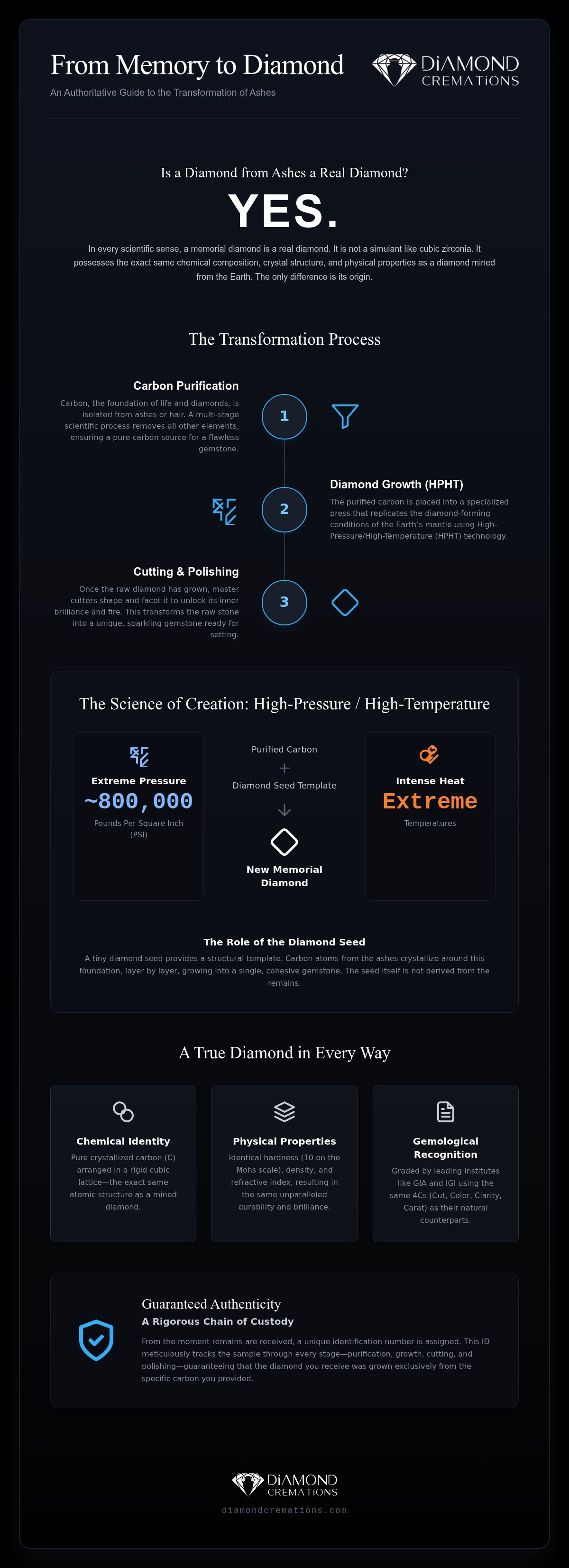
One of the most critical questions families have concerns authenticity. A memorial diamond created from the carbon in human ashes is, in every scientific sense, a real diamond. It is not a simulant like cubic zirconia or moissanite, which are chemically different materials designed to look like diamonds. Instead, it possesses the exact same chemical composition, crystal structure, and physical properties as a diamond mined from the earth.
- Chemical Identity: It is crystallized carbon (C), with atoms arranged in a rigid cubic lattice. This structure is what gives a diamond its unparalleled hardness and durability.
- Physical and Optical Properties: It shares the same hardness (10 on the Mohs scale), density, and refractive index as a natural diamond. This means it reflects and refracts light with the same fire and scintillation.
- Gemological Recognition: Leading gemological institutes like the Gemological Institute of America (GIA) and the International Gemological Institute (IGI) grade lab-grown diamonds using the same standards—the 4Cs (Cut, Color, Clarity, and Carat)—as they do for mined diamonds.
The only difference between a memorial diamond and a mined diamond is its origin. One is formed deep within the Earth's mantle over billions of years, while the other is grown in a laboratory environment that replicates those same conditions of extreme heat and pressure. For a deeper exploration of their identical properties, you can read about whether cremation diamonds are real diamonds.
The Carbon Transformation: From Ashes to Elemental Purity
The foundation of every diamond is carbon. While human cremated remains are composed of various elements, carbon is a primary component. The first and most critical step in creating a memorial diamond is to isolate this essential element.
The process begins with a sample of ashes or, alternatively, hair. Hair is a particularly rich source of carbon and can be used on its own or in combination with ashes. A specialized scientific process is used to purify the material, removing all other elements—such as calcium, phosphates, and carbonates—until only pure carbon remains. This multi-stage purification is essential because the quality and integrity of the final diamond depend on the purity of the source carbon.
This refined carbon, which originated from the loved one, becomes the fundamental building block for the diamond. The meticulous nature of this extraction and purification process ensures that the final gemstone is formed from the unique carbon of the individual being honored.
The Science of Creation: How Carbon Becomes a Diamond
Once the carbon has been purified, it is ready for the diamond growth phase. This is achieved using a technology known as HPHT (High-Pressure/High-Temperature). As the name suggests, this method simulates the natural diamond-forming conditions found in the Earth’s mantle.
The purified carbon is placed inside a specialized press capable of exerting immense pressure—approximately 800,000 pounds per square inch (PSI)—while simultaneously heating the material to extreme temperatures. Inside this intense environment, the carbon atoms begin to dissolve and then recrystallize into the iconic diamond lattice structure.
The Role of the Diamond Seed
To initiate and guide this crystallization, a tiny diamond seed is placed in the growth cell with the purified carbon. This seed acts as a template, or a foundation, upon which the carbon atoms from the ashes bond. Layer by layer, the new diamond grows around this seed, forming a single, new gemstone. It is important to understand that the diamond seed itself is not derived from the remains; its purpose is purely structural, providing the blueprint for the carbon to follow as it transforms.
The entire growth process is carefully controlled and monitored. Factors like temperature, pressure, and time are precisely managed to influence the final size, color, and quality of the diamond. For those interested in a more detailed technical explanation, our guide on how cremation diamonds are made offers a comprehensive look at the HPHT process.
Ensuring Authenticity: Chain of Custody and Verification
Beyond the scientific validity of the diamond itself, the most personal concern is ensuring the carbon in the final gemstone truly comes from the provided ashes. This assurance is maintained not by a chemical test of the final diamond, but through a rigorous chain-of-custody protocol.
From the moment the ashes are received, they are assigned a unique identification number that follows them through every stage of the process: purification, growth, cutting, and polishing. This meticulous tracking system guarantees that the carbon from one individual is never mixed with another and that the diamond you receive was grown from the specific remains you provided. This documented and controlled process is the cornerstone of trust in creating a memorial diamond.
Understanding Diamond Certification
As an optional step, a finished memorial diamond can be sent to a third-party gemological laboratory, such as the GIA or IGI, for an independent grading report. This certificate provides an expert assessment of the diamond's quality characteristics—its carat weight, color, clarity, and cut. It serves as official verification that the gemstone is a real diamond and documents its specific qualities.
It is crucial to distinguish between the roles of certification and the chain of custody. A gemological report verifies the diamond's identity and quality as a gemstone. It does not and cannot establish a biological link to the carbon's source. The assurance that the diamond is from your loved one comes from the provider's strict, documented chain-of-custody procedures.
Personalization: Designing a Unique Memorial
Creating a diamond from human ashes is a deeply personal act, and the final gemstone can be customized to reflect the unique individual it represents. The choices of color, cut, and size allow families to create a tribute that feels truly fitting.
Color and Its Significance
The color of a memorial diamond is determined by the specific chemical elements present during its growth. By carefully controlling the laboratory environment, a range of beautiful colors can be achieved.
- Colorless (White): Achieved by removing nearly all trace elements from the carbon, resulting in a classic, brilliant diamond.
- Blue: The presence of the element boron during the growth process creates varying shades of blue, from a light sky blue to a deep, serene hue.
- Yellow: Naturally occurring nitrogen within the carbon from the remains can result in warm yellow, amber, or golden tones.
- Pink: A delicate pink is created through specific structural changes in the crystal lattice during a post-growth treatment process.
The choice of color can be a meaningful way to honor a memory—perhaps reflecting a favorite color, a birthstone, or an aspect of their personality.
Cut and Carat Weight
The cut of a diamond refers to its shape and the precision of its facets, which determine how it interacts with light. Each shape offers a different aesthetic and style.
- Available Cuts: Popular options include Round, Princess, Oval, Cushion, Pear, and Emerald. The Round Brilliant is the most popular due to its exceptional light performance, while shapes like the Emerald offer a more understated, elegant appearance.
Carat weight is a measure of the diamond's size. The final carat weight depends on the duration of the growth process. Families can select a target size that fits their vision, whether it's a subtle stone for a delicate pendant or a larger centerpiece for a ring.
The Process with Diamond Cremations
The process of creating a memorial diamond is designed to be clear, respectful, and supportive. It typically involves a few key steps:
- Consultation: The first step is a conversation to discuss your wishes. This includes selecting the desired carat size, color, and cut of the diamond, as well as any plans for a final jewelry setting.
- Secure Collection: You will receive a secure collection kit to send a small portion of the ashes or hair. The amount needed is typically modest, and any unused material is respectfully returned with the finished diamond. Every step is handled with care and tracked to ensure security.
- Creation and Crafting: Once the material is received at the laboratory, the purification and growth process begins. The standard delivery target is approximately 60–90 days, though this can vary depending on the specific characteristics of the diamond being grown. You will receive updates during this time.
- Return: The finished diamond, along with any optional certification and unused ashes, is securely returned to you, ready to be set into a piece of jewelry or kept as a precious heirloom.
This service provides a meaningful way to create something of enduring beauty from the final elements of a loved one. If you are considering this unique form of remembrance, we are here to provide the information and guidance you need.
Begin your tribute today by visiting Diamond Cremations.
Frequently Asked Questions
How much ash is needed to make a diamond?
A relatively small amount of cremated remains is typically required. Your chosen provider will give you specific instructions, but it is generally not necessary to send all the ashes. Hair can also be used as a carbon source.
Can you turn hair into a diamond as well?
Yes. Hair is rich in carbon and is an excellent source material for creating a memorial diamond, either on its own or combined with ashes.
Are memorial diamonds real diamonds?
Yes. They are physically, chemically, and optically identical to diamonds that are mined from the earth. They are composed of crystallized carbon and are recognized as real diamonds by gemological experts.
How long does the process of turning ashes into a diamond take?
The entire process, from receiving the ashes to delivering the final diamond, generally takes about 60 to 90 days. The exact time can depend on the specific size and color of the diamond being created.
What colors can a memorial diamond be?
Standard color options include colorless (white), blue, yellow, and pink. The color is achieved by controlling the elemental composition and conditions during the diamond's growth.
Is the diamond seed made from the ashes?
No. The diamond seed is a small diamond crystal used to provide a structural foundation for the purified carbon from the ashes to crystallize upon. It is not made from the remains.
Does the diamond certificate prove the DNA of my loved one?
No. A gemological certificate from an institute like GIA or IGI verifies the diamond's quality (the 4Cs) but does not analyze its elemental origin or provide biological identification. The link to your loved one is guaranteed by the provider’s strict chain-of-custody and tracking procedures.
Can I make a diamond from pet ashes?
Yes, the process for creating a diamond from the ashes or fur of a pet is the same as it is for humans. It is a beautiful way to honor the memory of a beloved animal companion. For more information, you can explore creating a keepsake from a pet's fur.