


How Much Ash for a Diamond? 2026 Preparation Guide
What if the right question isn’t simply how much ash is needed for a diamond, but how the carbon is carefully prepared and accounted for along the way? It’s understandable to worry about sending too little, especially when the material represents someone you love. Requirements can vary, so guessing isn’t necessary.
This guide will help you understand what to confirm before sending ashes or hair, how carbon is extracted and purified, and how that carbon is prepared for diamond growth. You’ll also learn what to ask about identification and documentation, so you can feel more informed about the care of the material in your keeping.
Diamond Cremations offers an Ashes Collection Kit to help you prepare the appropriate material, along with compassionate concierge guidance through the technical requirements. From there, the article explains how specialized equipment recreates the high-pressure, high-temperature conditions used to grow a real lab-grown diamond, and why careful handling matters at each stage. Clear information can make the first step feel more manageable.
Key Takeaways
- Learn why how much ash is needed for a diamond depends on the carbon preparation process, and how Diamond Cremations’ Ashes Collection Kit can help guide what to send.
- Explore whether ashes, hair, or a combination may suit your memorial diamond plans.
- See how HPHT technology creates the conditions needed for carbon to crystallize into a real lab-grown diamond.
- Understand what careful identification, tracking, handling, and documentation can tell you about the chain of custody.
- Consider the available diamond shapes and memorial jewelry options as you plan your next steps.
Understanding the Carbon Requirement for Memorial Diamonds
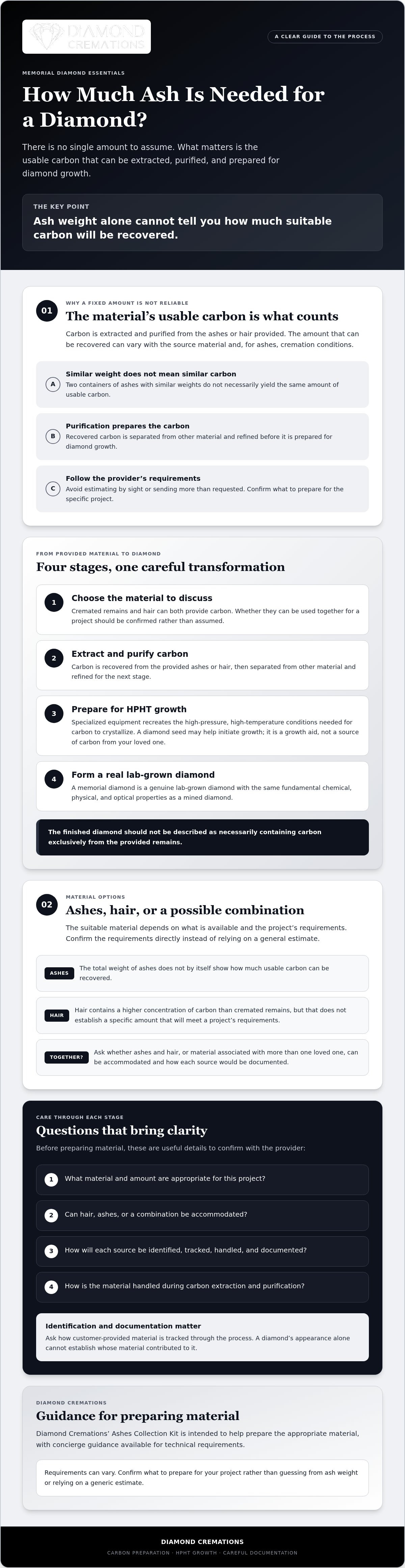
A memorial diamond begins with carbon. During the process, carbon is extracted and purified from the ashes or hair provided, then prepared for diamond growth. That means the key consideration isn’t simply the total weight of the remains. It’s how much suitable carbon can be recovered and prepared from them.
This distinction helps answer how much ash is needed for a diamond: the requirement depends on the provider’s process and the material’s usable carbon, so a fixed amount shouldn’t be assumed. In many cases, the material sent is a portion rather than all of the ashes. Diamond Cremations’ Ashes Collection Kit is intended to help you prepare the appropriate amount, and its concierge service can guide you through the technical requirements. The overview of Memorial diamonds also explains how ashes or hair may serve as a carbon source.
The resulting stone is a genuine lab-grown diamond, with the same fundamental chemical, physical, and optical properties as a mined diamond. It isn’t a look-alike stone. The transformation comes through preparing carbon for crystallization under controlled conditions.
Why Carbon Density Matters More Than Weight
Cremation involves high heat, which can affect how much carbon remains in the material afterward. The amount that can be extracted may therefore vary with the source material and cremation conditions. Two containers of ashes with similar weights don’t necessarily yield the same amount of usable carbon.
Purification is essential. Carbon recovered from ashes or hair must be separated from other material and refined for diamond growth. The laboratory preparation, not the ash weight alone, determines whether the carbon is suitable for the next stage. For that reason, follow the provider’s guidance rather than estimating by sight or sending more than requested.
The Role of the Diamond Seed
A diamond seed is a small diamond crystal that can provide a starting surface for growth. It helps initiate crystallization as purified carbon is prepared under high-pressure, high-temperature conditions. The seed is a growth aid, not a source of carbon from your loved one.
Being clear about the materials matters. Carbon is extracted and purified from the ashes or hair provided, while the seed and specialized growth equipment play separate roles in forming the stone. The finished diamond shouldn’t be described as necessarily containing carbon exclusively from the remains. Ask the provider to explain how customer material is identified, tracked, and documented through the process.
Material Requirements: Ashes, Hair, or a Combination
Cremated remains and hair can both provide carbon for a memorial diamond. The right material depends on what you have available and the diamond project’s requirements. If you’re asking how much ash is needed for a diamond, don’t rely on a general estimate: requirements can vary, and Diamond Cremations’ Ashes Collection Kit and concierge guidance can help you confirm what to prepare.
Hair can be an alternative when ashes aren’t available, or a possible supplementary source to ask about. Hair contains a higher concentration of carbon than cremated remains, but that doesn’t mean any particular amount will automatically meet a project’s requirements. Carbon still needs to be extracted and purified before it can be prepared for diamond growth.
Using Hair for Carbon Extraction
If a family chose burial, hair may offer another way to explore a memorial diamond without relying on cremated remains. The amount requested can depend on the provider and the diamond specifications, so confirm the requirement directly rather than using a generic figure. Diamond Cremations offers hair-to-diamond services; its concierge can help explain the material requirements for your plans.
Hair may also be considered alongside ashes. If you’re interested in using both, ask whether the sources can be accommodated together for your project and how each will be identified and documented. Don’t assume that a particular combination is automatically available.
Combining Remains for a Shared Memorial
A diamond made using material associated with more than one loved one may feel like a meaningful way to create a shared keepsake. Families might ask about combining hair from relatives, or using hair and ashes together. Whether a specific blend is possible depends on the provider’s process and should be confirmed before preparing material.
Clear handling matters. Ask how each source would be identified, tracked, and documented, and how the carbon would be handled during purification. These questions can help you understand the process without assuming that a finished diamond can independently prove whose material contributed to it. For background on jewelry terminology and consumer information, the Jewelers Vigilance Committee explains the FTC guidelines for jewelry.
The same careful questions apply to pet memorial diamonds. Diamond Cremations offers options involving pet ashes or hair, but the material requirements should be confirmed for the specific project rather than assumed to match those for a person. You can explore Diamond Cremations’ memorial diamond options and ask its concierge for guidance on the material you have.
The Science of Transformation: From Carbon to Brilliance
Once carbon has been extracted and purified from the provided ashes or hair, it can be prepared for diamond growth. In HPHT, or high-pressure, high-temperature growth, specialized equipment recreates key conditions found deep within the Earth. This controlled process turns prepared carbon into a crystal, rather than simply shaping or coating another material.
For readers wondering how much ash is needed for a diamond, the science helps explain why a fixed weight may not tell the whole story. The amount of usable carbon depends on the source material and extraction, while the diamond’s planned specifications also matter. A science overview from IFLScience explains the process and the role of HPHT in creating diamonds from cremated remains.
The HPHT Growth Chamber
In HPHT growth, purified carbon is prepared for crystallization, often in graphite form, and placed in specialized equipment with a diamond seed that may initiate growth. Pressure can reach approximately 800,000 PSI, alongside intense heat. Together, these conditions allow carbon atoms to arrange into a diamond crystal.
Growth takes place under carefully controlled conditions. Time is one factor in the process, but it doesn’t determine carat size on its own; the selected specifications, available prepared carbon, and growth conditions also matter. The resulting memorial diamond is a real lab-grown diamond with the same fundamental chemical, physical, and optical properties as a mined diamond.
Choosing a Shape and Color
Diamond Cremations offers memorial diamonds in shapes that may include round, princess, oval, cushion, pear, and emerald. Color options may include colorless or white, blue, yellow, and pink. The available selection can depend on current offerings and the diamond chosen, so confirm options as you plan.
Color can be influenced by trace elements and other factors in the growth process. The source material’s carbon profile may contribute to variation, but it can’t guarantee an exact shade. Each color choice should be understood as an option, not a promise of a particular result.
Shape affects the diamond’s appearance and how it may fit into a piece of memorial jewelry. To compare the available cuts, explore how to choose a memorial diamond shape.
Secure Collection and the Chain of Custody
Sending ashes or hair for a memorial diamond is a personal step. Clear identification and documentation can help you understand how the material is accounted for as it moves from collection through carbon preparation and diamond growth. Diamond Cremations emphasizes secure collection and careful handling, with concierge guidance to help answer questions about the process.
Ask how customer-provided material is identified, tracked, and documented at each stage. A transparent chain of custody helps connect the material received with the work being carried out, though it’s distinct from a gemological certificate, which evaluates the finished diamond rather than proving who supplied its carbon.
Preparing Material with the Ashes Collection Kit
Diamond Cremations offers an Ashes Collection Kit to help you prepare the appropriate material. Since kit contents and instructions aren’t specified here, use the directions provided with your kit rather than relying on generic packing steps. If anything is unclear, the concierge can guide you through the technical requirements before you prepare the ashes or hair.
- Review the supplied instructions before handling the material.
- Use the kit’s stated guidance to determine what to prepare.
- Follow the provided directions for identification, documentation, and return or collection arrangements.
- Contact the concierge if you’re unsure about an instruction or how much ash is needed for a diamond.
The kit is intended to help ensure the appropriate amount is provided, without requiring you to estimate by sight or send more than requested. Keep any records or identification details provided as part of the process, and ask how the material will be tracked after collection.
What Diamond Certification Can Confirm
Certification may be available depending on your preferences and the diamond selected. A gemological report can describe the stone’s characteristics, including the 4Cs: cut, color, clarity, and carat weight. It helps assess the diamond itself, not the identity of the person or pet associated with the supplied material.
For reassurance about personal origin, ask separately about identification and chain-of-custody documentation. These serve different purposes: tracking relates to the handling of the submitted material, while grading describes the finished gem. Knowing the distinction can help you make an informed choice about the records and certification that matter to you.
Beginning Your Journey with Diamond Cremations
Once you understand the material and growth process, the next step is to discuss your preferences with a memorial diamond specialist. A conversation with Diamond Cremations’ concierge can help clarify technical questions, including what material to prepare and how much ash is needed for a diamond. You can also ask about the options available for your chosen diamond and what to expect at each stage.
Memorial diamond creation involves carbon preparation and specialized growth, followed by the finishing choices that shape the final piece. Timing can vary with the diamond’s specifications and production requirements, so ask what factors may affect your project rather than relying on a general estimate. If you’re planning ahead, you may also wish to record your preferences and share them with family; those coordinating broader end-of-life arrangements can learn more about Sunnyside Cremation and Funeral for guidance on organizing funeral and memorial services. For personal or estate planning, consult an appropriately qualified professional about how to document those wishes.
Bespoke Jewelry Settings
A finished diamond can be set in memorial jewelry, such as a ring or pendant. Consider how you’d like to wear or keep the piece, then ask which settings can accommodate the diamond’s selected shape and size. Precious-metal options and setting details should be confirmed with Diamond Cremations, as availability can vary. The aim is a piece that feels personal and suited to the way you want to remember your loved one.
It can help to think through practical preferences before discussing a setting: whether the jewelry will be worn often, whether you prefer a subtle or prominent design, and which shape feels right. These choices can guide a more focused conversation about available memorial jewelry.
Guidance Through the Process
The concierge service can help you work through technical questions with care. You might ask how the material is prepared, how it is identified and documented, what production updates may be available, and which choices need to be made before growth begins. Clear answers can make each decision easier to approach at your own pace.
Diamond Cremations offers an Ashes Collection Kit to help you prepare the appropriate material. Ask the concierge how to request the kit and what instructions will accompany it. Before sending ashes or hair, review those instructions and raise any questions about preparation or documentation. A considered beginning, with clear information and a setting chosen to suit your wishes, helps shape the memorial diamond journey around what matters to you.
Take the Next Step Toward a Personal Memorial
The answer to how much ash is needed for a diamond depends on the material and the carbon preparation process, so confirm requirements before sending anything. The essential point is that ashes or hair provide carbon that is extracted and purified for diamond growth. You don’t need to make that decision alone.
Diamond Cremations offers an Ashes Collection Kit to help you prepare the appropriate material, with nationwide U.S. concierge support to guide you through the technical questions. Careful identification, tracking, and documentation support the chain of custody. Certified lab-grown diamonds are available, with certification options depending on your preferences and the diamond selected. A grading report describes the gem, while chain-of-custody records address the submitted material.
When you feel ready, take the next step at a pace that feels right for you.
With clear guidance and thoughtful preparation, you can begin creating a lasting memorial that reflects the connection you wish to honor.
Frequently Asked Questions
How much ash is actually needed to make one diamond?
There isn’t one ash amount that applies to every memorial diamond. The answer to how much ash is needed for a diamond depends on the material and the diamond’s specifications, since usable carbon is extracted and purified from the remains. Diamond Cremations’ Ashes Collection Kit can help you prepare the appropriate amount. Follow the kit’s instructions or ask the concierge for guidance rather than relying on a general estimate.
Can I use hair instead of ashes for a memorial diamond?
Yes. Hair can be used as a carbon source for a memorial diamond, either instead of ashes or, if confirmed for your project, alongside them. Carbon is extracted and purified from the provided hair before diamond growth. The amount needed can vary, so ask for guidance based on your plans. Hair may also be an option for families who chose burial and want to explore a diamond memorial.
What happens if there is not enough carbon in the remains?
If you’re concerned there may not be enough usable carbon, contact the provider before preparing or sending material. The carbon available for diamond growth depends on what can be extracted and purified, so the total weight of ashes alone can’t answer the question. Ask what options may suit your project and whether hair or another source can be considered. Diamond Cremations’ concierge can help clarify the material requirements.
Can I combine ashes from two different people into one diamond?
Ask Diamond Cremations whether combining material from two people can be accommodated for your project. Before preparing anything, clarify how each person’s material would be identified, tracked, and documented. If you’re hoping to create a shared memorial, you can also ask whether hair from multiple loved ones, or a combination of hair and ashes, may be considered. The available approach depends on the project and should be confirmed in advance.
Is a cremation diamond a real diamond?
Yes. A memorial diamond is a real lab-grown diamond, with the same fundamental chemical, physical, and optical properties as a mined diamond. To create one, carbon extracted and purified from ashes or hair is prepared for diamond growth using specialized equipment. Certification may be available depending on your preferences and the diamond selected. A grading report evaluates the gem; it doesn’t establish whose material supplied the carbon.
How long does the process of turning ashes into a diamond take?
The time required can vary with the diamond’s specifications and production requirements. Ask Diamond Cremations for current guidance based on the options you’re considering, and confirm what factors may affect your project’s schedule. You can also ask what stages are involved and whether updates are available. Since timing is specific to the project, it’s best to get details directly rather than plan around a general estimate.
What colors can a memorial diamond be?
Memorial diamond colors may include colorless or white, blue, yellow, and pink. Options can depend on current availability and the diamond selected, so confirm them with Diamond Cremations as you plan. A color choice doesn’t guarantee an exact shade, as the final appearance can vary. If color is important to you, ask which options are available for your project and what to expect from the finished diamond.
Are pet ashes also suitable for making memorial diamonds?
Yes. Diamond Cremations offers memorial diamonds made using carbon extracted from pet ashes or hair. The material must be prepared for diamond growth, and requirements can vary by project. Ask the concierge what to prepare and how the material will be identified, tracked, and documented during collection and handling. If you have limited ashes or would prefer to use hair, discuss those circumstances before sending material so you can understand the options.