


Memorial Diamond Carat Sizes: A Guide to Selecting Your Eternal Tribute
Choosing a memorial diamond is a deeply personal decision, one that balances the desire for a significant tribute with the practicalities of creating a piece of jewelry for daily remembrance. Among the most important considerations is the diamond’s carat size, a factor that influences its visual presence, its setting, and its role as a permanent legacy. This guide provides a clear framework for understanding memorial diamond carat sizes, helping you select a tribute that feels both appropriate and meaningful.
Selecting a carat size is not just about numbers; it's about translating a feeling of love and memory into a tangible, beautiful form. Whether you envision a subtle ring or a prominent pendant, this guide will help you make an informed and confident choice for your eternal tribute.
Understanding Carat Weight in Memorial Diamonds
The first step in choosing the right size for your memorial diamond is understanding what "carat" truly means. It’s a term often associated with size, but it is fundamentally a measure of weight.
- A Unit of Weight, Not Size: One carat is a standardized unit of mass equal to 0.2 grams (200 milligrams). While a heavier diamond is generally larger, the stone’s dimensions are also influenced by its shape and cut.
- Genuine, Lab-Grown Diamonds: Memorial diamonds are not imitations or substitutes. They are real diamonds, possessing the exact same chemical, physical, and optical properties as those mined from the earth. The carbon source is simply different—derived from the cremated ashes or hair of a loved one.
- The Industry Standard: Carat weight is the universal standard used to grade, value, and describe diamonds. It provides a consistent metric for comparing stones, which is why it remains the primary focus in the selection process.
- Visual Size vs. Actual Weight: A diamond’s “face-up” size—how large it appears when viewed from above—can vary significantly between two diamonds of the same carat weight. This is due to the way different shapes and cutting styles distribute that weight.
The Origin of the Carat Standard
The concept of the carat has ancient roots. Historically, gem traders used the small, uniform seeds of the carob tree as counterweights to measure the mass of precious stones. This organic system provided a surprisingly consistent standard for centuries.
In 1913, the system was standardized with the adoption of the metric carat. Today, one carat is precisely 0.2 grams. While this weight is standardized, the final millimeter (mm) dimensions of a cut diamond are what truly determine how it will fit into a piece of memorial jewelry, making both measurements important for your final decision.
Carat vs. Total Carat Weight (TCW)
When exploring jewelry settings, you may encounter the term "Total Carat Weight" (TCW). It’s crucial to understand the distinction between the carat weight of a single stone and the TCW of a finished piece.
- Single Stone (Carat Weight): This refers to the weight of the central memorial diamond. This is the primary stone that holds the most significance and is the focus of your selection.
- Total Carat Weight (TCW): This is the combined weight of all diamonds in a piece of jewelry, including the center stone and any smaller side or accent stones.
When choosing your memorial diamond, your focus will be on the carat weight of the center stone. Accent stones in a setting, such as a halo or pavé band, can be used to complement and enhance the main diamond, often making it appear larger and more brilliant without altering the central tribute itself.
The Science of Growth: How Carat Size is Determined
A memorial diamond begins its journey as purified carbon extracted from cremated ashes or hair. This carbon is placed in a highly advanced laboratory environment designed to replicate the immense forces found deep within the earth. The primary method used is High-Pressure/High-Temperature (HPHT).
- The HPHT Process: In the HPHT process, the purified carbon is subjected to extreme conditions. This includes immense pressure, sometimes approximating 800,000 pounds per square inch (PSI), and very high temperatures.
- The Role of the Diamond Seed: To initiate the crystallization process, the carbon is placed with a tiny diamond seed. This seed acts as a template, allowing the carbon atoms to bond to it and arrange themselves into the classic diamond crystal lattice. Disclaimer: The diamond seed is a necessary component for growth and is not derived from the provided ashes or hair.
- Duration and Growth: The final carat weight of the rough, uncut diamond is influenced by the amount of time it spends in this controlled growth environment. The duration of the process varies depending on the specific characteristics of each individual order.
The Influence of Carbon Extraction
Before the growth phase can begin, carbon must be extracted and purified from the provided ashes or hair. This is a meticulous scientific process that ensures the carbon is ready for crystallization.
- Purification Process: The ashes or hair undergo a multi-stage process to isolate the carbon and remove other elements. The resulting carbon is a fine powder, ready for the HPHT chamber.
- Sample Requirements: The amount of ashes or hair needed for the process can vary. Diamond Cremations provides a secure ashes collection kit with detailed instructions tailored to each order, ensuring the correct amount is provided for the creation of your diamond. The amount of carbon provided does not strictly limit the final diamond size, as the growth is managed within the laboratory environment.
Master Cutting and Carat Retention
Once the rough diamond has formed, it moves to the hands of a master diamond cutter. This is where artistry meets precision, and the final carat weight and visual beauty are determined. The goal is to maximize the stone's brilliance, fire, and size from the rough crystal.
- Planning the Cut: The rough diamond is carefully analyzed to plan the best possible cut. This plan aims to retain as much carat weight as possible while achieving the desired shape and maximizing light performance.
- Visual Size Trade-Offs: The cutter must balance different factors. A "deep" cut might retain more weight but make the diamond appear smaller from the top. A "shallow" or "wide" cut can create a larger face-up appearance but may sacrifice some brilliance.
- The Final Weight: Your memorial diamond’s final, certified carat weight is determined only after it has been fully cut and polished. This is the weight that will be recorded on its gemological certificate.
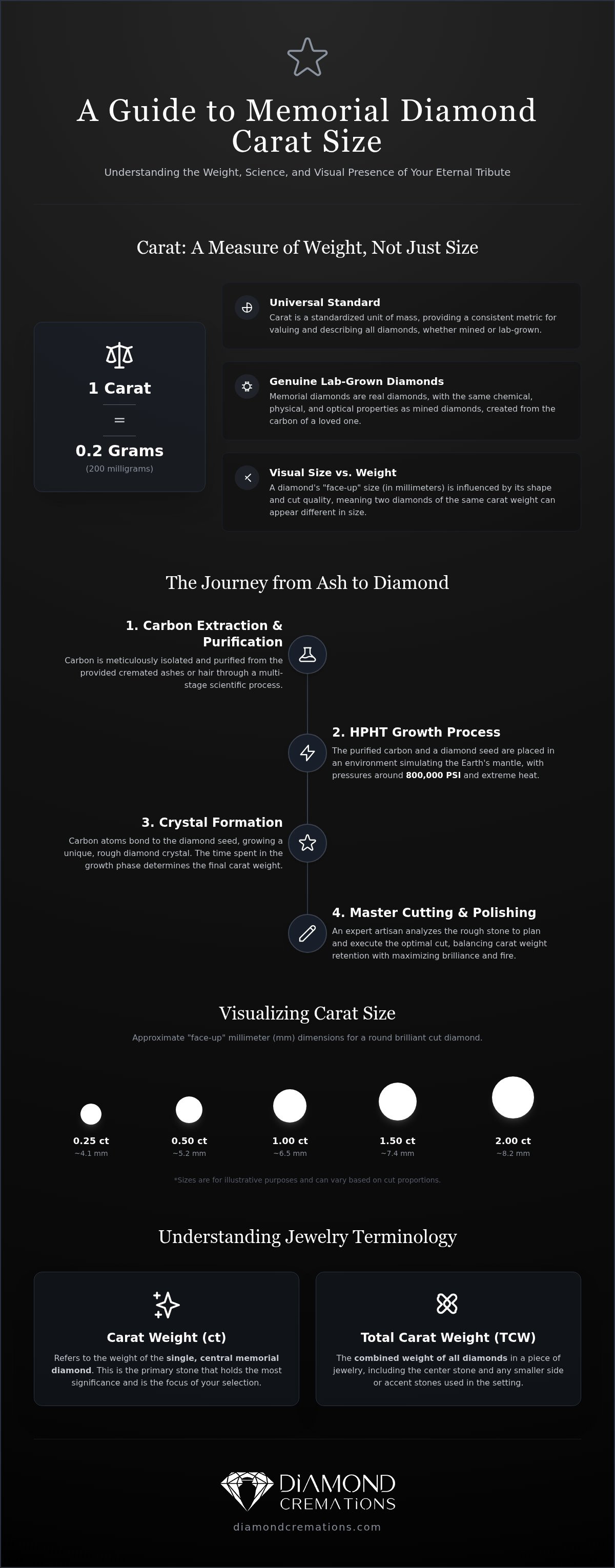
Visualizing Your Legacy: Carat Sizes vs. Millimeter Dimensions
To truly understand what a carat size will look like, it’s helpful to connect the weight (carats) to the physical dimensions (millimeters). This is especially important because different diamond shapes distribute their weight in unique ways, affecting their face-up appearance.
- Shape and Weight Distribution: A 1-carat round brilliant diamond will have different dimensions than a 1-carat oval or emerald cut. Elongated shapes like oval, pear, and marquise tend to have a larger surface area, which can make them appear bigger than a round diamond of the same carat weight.
- Diameter and Setting: The diameter of a diamond is a key measurement for jewelers. When selecting a setting for your memorial diamond, its millimeter dimensions are just as important as its carat weight to ensure a secure and beautiful fit.
- "Face-Up" Size: For the person wearing the jewelry, the most important metric is the face-up size—the surface area you see when looking down at the stone. This is why comparing millimeter dimensions is a practical way to visualize your tribute.
Dimensions for Common Memorial Shapes
While every diamond is unique, industry standards provide a reliable approximation of the millimeter dimensions for well-cut diamonds at various carat weights. The chart below offers a general guide for round brilliant diamonds, the most common shape.
Approximate Dimensions for Round Brilliant Diamonds:
- 0.25 Carat: ~4.1 mm
- 0.50 Carat: ~5.2 mm
- 0.75 Carat: ~5.9 mm
- 1.00 Carat: ~6.5 mm
- 1.50 Carat: ~7.4 mm
- 2.00 Carat: ~8.2 mm
Shapes like cushion and emerald cuts carry their weight differently. A 1-carat cushion cut might have a surface area of 5.5mm x 5.5mm, while a 1-carat emerald cut could be closer to 7mm x 5mm. The elongated shape of the emerald cut can create the illusion of a larger size on the finger. Additionally, the thickness of a diamond’s “girdle” (its widest edge) can trap weight that isn’t visible from the top, affecting its perceived size.
The Impact of Color on Visual Size
The color of your memorial diamond can also influence how its size is perceived. Diamond Cremations offers a range of beautiful colors, including colorless, blue, yellow, and pink.
- Colorless vs. Fancy Colors: A colorless (white) diamond is prized for its classic brilliance and fire. Its bright, neutral appearance allows it to reflect maximum light, which can contribute to a perception of size.
- The Prominence of Color: Fancy colored diamonds, such as a vivid blue or a warm yellow, draw the eye in a different way. Their unique hue can make them stand out, creating a prominent and distinctive look in any setting, regardless of carat size. The contrast of a colored diamond against the skin or a metal setting can sometimes make it appear more substantial.
How to Choose the Right Carat for Your Memorial Jewelry
The ideal carat size for your memorial diamond often depends on the type of jewelry you plan to create. A size that is perfect for a pendant may feel different in a ring worn every day. Here are some practical considerations for common memorial jewelry pieces.
- Memorial Rings: Consider the balance between visibility and comfort for daily wear.
- Memorial Pendants: Necklaces can often accommodate larger carat weights, as they don't experience the same daily impact as rings.
- Memorial Earrings: The key is selecting a matched pair of diamonds that are balanced and comfortable for the wearer. For more on this, see our guide to memorial diamond earrings.
- Metal Choice: The metal of the setting—such as yellow gold, white gold, or platinum—can influence the appearance of the diamond’s size. A white metal can sometimes blend with a colorless diamond, while a yellow gold setting can create a striking contrast.
Rings: The Daily Connection
A memorial ring is a constant, tangible connection to a loved one. When selecting a carat size, think about the wearer’s lifestyle and hand size.
- Subtle and Elegant: Carat sizes such as 0.25 ct to 0.50 ct are often chosen for understated rings that are comfortable for everyday activities. They offer a beautiful sparkle without feeling obtrusive.
- Enhancing with a Setting: A "halo" setting, which encircles the center stone with smaller diamonds, is a popular way to make a memorial diamond appear significantly larger and more brilliant.
- Proportion: Consider the wearer’s hand and finger size. A larger carat weight might look perfectly balanced on a larger hand, while a more delicate stone might be better suited for a smaller hand.
Pendants: Keeping Them Near Your Heart
A pendant rests close to the heart, making it a poignant choice for a memorial tribute. Because they are less exposed to daily wear and tear, pendants offer more flexibility in size.
- Statement Pieces: Pendants can beautifully showcase larger carat weights, such as 0.75 ct and above, creating a noticeable and significant tribute.
- Comfort and Wearability: While larger stones are an option, consider the overall weight of the pendant and its chain for comfortable daily wear.
- Elegant Shapes: Elongated shapes like pear or oval can create a graceful, flattering look when worn as a pendant, drawing the eye downward and complementing the neckline.
Personalizing Your Diamond Cremations Tribute
Choosing a carat size is just one part of creating a completely personal memorial. At Diamond Cremations, our concierge service is here to provide guidance at every step, ensuring your final tribute is a perfect reflection of your vision and your loved one’s memory.
- Personalized Guidance: Our specialists can help you visualize different carat sizes and shapes, answering any questions you have to ensure you feel confident in your choice.
- Professional Certification: For ultimate assurance, memorial diamonds can be accompanied by a professional certification from a leading gemological laboratory like GIA or IGI.
- Shapes and Colors: Beyond carat size, you can personalize your tribute by choosing from a variety of shapes and colors to create a truly one-of-a-kind diamond.
- Beginning the Process: When you are ready, we provide a secure collection kit and guide you through the next steps of this meaningful journey.
Certification and Quality Assurance
Transparency and trust are paramount in the creation of a memorial diamond. Professional certification provides independent, third-party verification of your diamond’s quality.
- Verifying the 4Cs: A gemological report from an institute like the Gemological Institute of America (GIA) or the International Gemological Institute (IGI) authoritatively grades the diamond's 4Cs: Cut, Color, Clarity, and Carat Weight. This confirms that your memorial diamond meets the same quality standards as any high-quality mined diamond.
- Understanding the Scope of Certification: It is important to clarify that a gemological certificate verifies the diamond’s physical and optical characteristics. It does not and cannot establish the biological identity or origin of the carbon source.
- Our Commitment to Transparency: Diamond Cremations is committed to a transparent process, providing you with peace of mind and assurance from the moment you entrust us with your loved one’s ashes.
Crafting Your Bespoke Memorial
- Available Shapes: We offer a full range of classic and modern shapes to suit your personal style, including Round, Princess, Oval, Cushion, Pear, and Emerald.
- A Permanent Legacy: Unlike other forms of memorial, a diamond is timeless. It is the hardest known natural substance, ensuring that your tribute will endure forever.
If you are ready to explore the options for creating a lasting tribute, we invite you to contact a specialist for a personalized, no-obligation consultation. We are here to help you honor your loved one with the dignity, beauty, and permanence they deserve.