


Memorial Diamond vs. Natural Diamond: A Guide to Meaning and Origin
A diamond formed in a laboratory is just as real as one pulled from the earth, but its story is fundamentally different. When you compare a memorial diamond vs natural diamond, the choice isn't about chemical purity or brilliance. It's about where that light begins. You may feel overwhelmed by technical jargon or the fear of being misled while you're still navigating the weight of loss. It's understandable to seek certainty and transparency when every decision feels heavy and final.
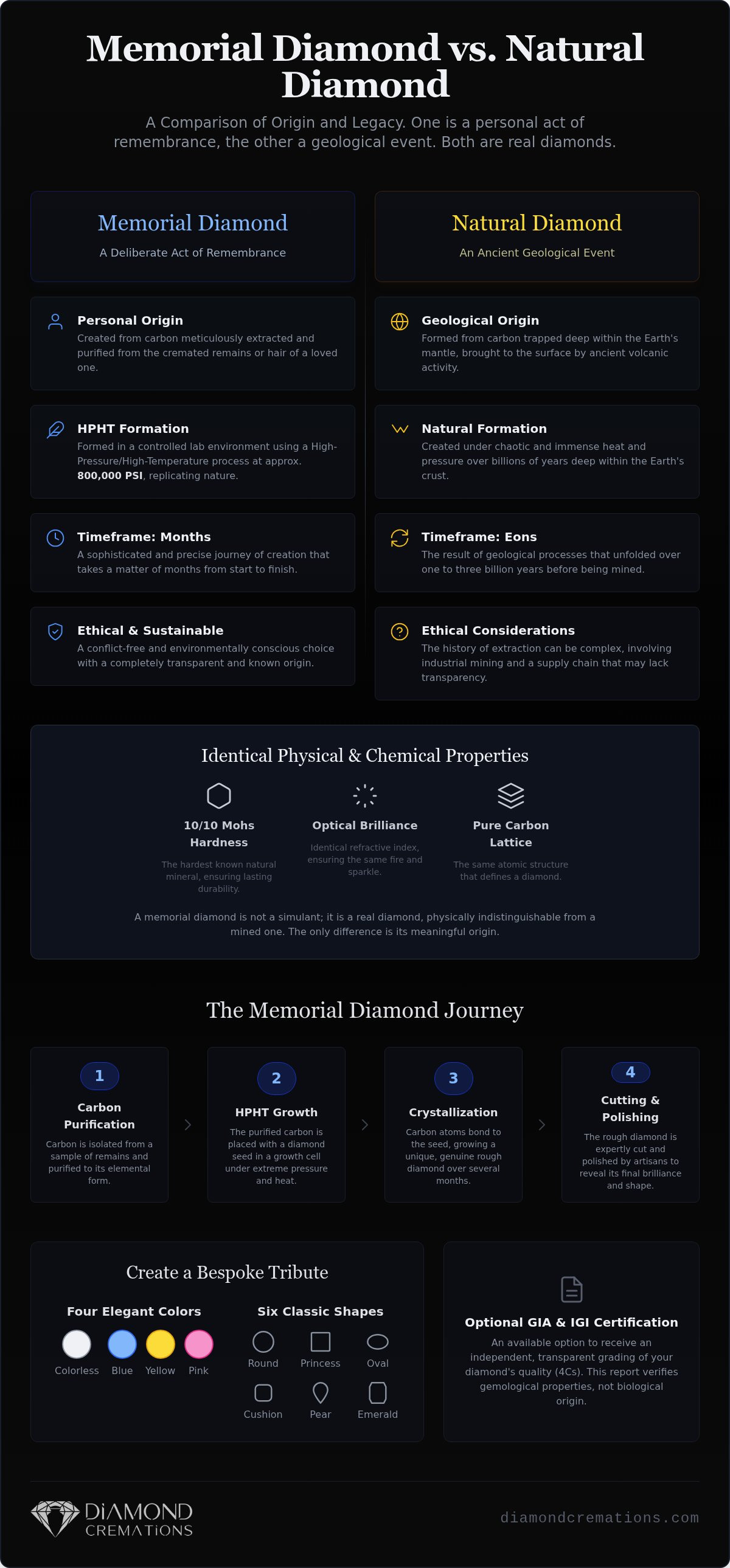
This guide will provide that clarity by explaining the scientific similarities and the profound emotional differences between these two origins. You'll discover how a memorial diamond is a genuine lab-grown stone, sharing the exact physical and optical properties of a mined diamond. We'll walk through the HPHT process, which uses approximately 800,000 PSI to create a lasting tribute, and clarify how certification honors the quality of your selection. By understanding both the science and the sentiment, you can feel confident in choosing the right legacy for your loved one.
Key Takeaways
- Understand why the choice between a memorial diamond vs natural diamond is a decision of origin rather than physical properties, as both share the same carbon structure.
- Learn how the HPHT process uses approximately 800,000 PSI to transform carbon into a genuine lab-grown diamond that's chemically identical to a mined stone.
- Explore the sophisticated options for personalization, including four elegant colors and six classic shapes, to create a bespoke and meaningful tribute.
- Gain clarity on how optional certification through the GIA or IGI provides transparent grading of your diamond's quality and the 4Cs.
- Discover the ethical and sustainable benefits of choosing a laboratory-grown stone as a peaceful and conflict-free alternative to traditional mining.
What is a Memorial Diamond vs. a Natural Diamond?
A natural diamond is a geological event. It began billions of years ago deep within the Earth's mantle, where intense heat and pressure forced carbon atoms to bond into a crystalline lattice. These stones remained hidden until volcanic activity brought them closer to the surface. In contrast, a Memorial diamond is a modern, purposeful creation. It's a genuine lab-grown diamond, but its source is deeply personal. It begins with carbon extracted and purified from a loved one's hair or cremated remains, rather than carbon found in the earth's crust.
When you weigh the choice of a memorial diamond vs natural diamond, you're looking at two paths to the same destination. Both stones are composed of a pure carbon lattice structure. They're identical in every physical sense. The only true distinction is the story of origin; one is a result of ancient geological forces, while the other is a deliberate act of remembrance and craftsmanship.
The Scientific Reality of Lab-Grown Memorial Diamonds
Lab-grown memorial stones are real diamonds. They shouldn't be confused with simulants like cubic zirconia or moissanite, which are entirely different minerals. Because these stones are grown in a controlled environment that mimics the earth's natural conditions, they possess the exact same physical, chemical, and optical properties as mined diamonds. They're not imitations or substitutes; they are the physical equivalent of stones found in nature. A memorial diamond is a 10/10 on the Mohs scale of hardness. This enduring strength ensures that your tribute remains as permanent and brilliant as the memory it represents, capable of being passed down through generations without losing its luster.
Why Origin Matters in Modern Remembrance
For many families, a mined diamond can feel anonymous. It carries a history of industrial extraction and geological chance. In 2026, a significant shift has occurred in how we approach jewelry and mourning. There's a growing preference for sustainable, ethical, and deeply personal choices. A memorial diamond offers a connection that a traditional stone cannot provide. It transforms a period of loss into a serene process of creation. Diamond Cremations acts as a steady guide during this transition, prioritizing transparency and individual care. By choosing a stone with a known, personal origin, you're creating a legacy that is as unique as the life it honors. This path replaces the impersonal nature of mining with a bespoke, artisanal journey that feels both modern and timeless.
The Science of Formation: HPHT vs. Geological Growth
Nature takes its time. Deep within the Earth's mantle, carbon atoms endure temperatures exceeding 2,000 degrees Fahrenheit to form a crystalline structure. This geological process occurs over billions of years, driven by chaotic environmental shifts. When comparing a memorial diamond vs natural diamond, the scientific method used to mirror these conditions is known as HPHT, or High-Pressure/High-Temperature growth. This sophisticated technology replicates the intense environment of the Earth's crust within a controlled laboratory setting.
To initiate growth, the laboratory environment is pressurized to approximately 800,000 PSI. This immense force, combined with precise thermal regulation, allows carbon to crystallize into a genuine diamond. You can explore the technical nuances of HPHT and CVD diamond growth through the Gemological Institute of America to see how these methods have revolutionized modern gemology. Before this growth begins, the carbon must be meticulously refined. Impurities such as nitrogen or boron are removed to ensure the resulting stone reaches the desired clarity and hue.
From Ashes to Carbon: The Purification Process
The journey begins by isolating carbon from a small sample of hair or cremated remains. This artisanal process involves a multi-stage purification that reduces the material to its elemental form. It's important to understand that a tiny diamond seed is placed within the growth chamber to act as a foundation for the new crystal. While the purified carbon from your loved one provides the source material for the growth, the seed initiates the lattice structure. We maintain transparency regarding this process; while the essence of the provided material is preserved within the stone, not every individual carbon atom in the final gem is guaranteed to be exclusively from the remains. If you have questions about this transition, our personalized concierge service is available to provide clarity and support.
Timeframes: Billions of Years vs. Months
Geological growth is a random, eons-long event. In contrast, the creation of a memorial diamond is a deliberate and steady process that spans several months. This timeline isn't rushed. The HPHT environment must be maintained with absolute precision for weeks at a time to ensure the diamond grows without structural flaws. This period of quiet transformation requires patience. It reflects the care and craftsmanship involved in creating a bespoke tribute. While the earth takes billions of years to produce a stone by chance, the laboratory creates one with purpose, moving at a pace that respects both the science and the emotional weight of the journey.
Comparing the 4Cs: Quality and Certification
When you compare a memorial diamond vs natural diamond, the universal language of quality remains the 4Cs: Cut, Color, Clarity, and Carat. These standards, developed by the GIA, apply to every diamond regardless of its origin. Memorial stones are real diamonds, meaning they're subjected to the same rigorous scrutiny as any stone found in a high-end jewelry store. This ensures that the tribute you create isn't just meaningful, but also meets the highest gemological standards. Every stone we produce is a 10/10 on the Mohs scale of hardness, guaranteeing its permanence.
The cut of a diamond determines its brilliance and fire. While natural diamonds are often cut to maximize the yield from a raw crystal, a memorial stone is cut with intention. We offer six classic shapes: round, princess, oval, cushion, pear, and emerald. Each shape carries its own aesthetic weight, allowing you to choose a memorial diamond shape that resonates with the personality of your loved one. Whether you prefer the timeless sparkle of a round cut or the vintage elegance of an emerald cut, the craftsmanship is identical to that of a mined stone.
Color is another area where the path of memorial diamonds diverges from geological chance. While natural diamonds are most commonly found in varying degrees of white or yellow, our high-pressure, high-temperature (HPHT) process can produce stones in four specific, elegant hues: colorless, blue, yellow, and pink. Selecting a color can be a deeply personal choice. It might reflect a favorite shade or a specific trait of the person being honored. This level of choice is a primary consideration in the memorial diamond vs natural diamond decision.
The Role of Gemological Certification
Transparency is the foundation of trust. For those seeking third-party verification, certification through the GIA or IGI is an available option. These gemological reports provide an objective analysis of the 4Cs, confirming the stone's quality and authenticity as a lab-grown diamond. It's vital to clarify that while these reports grade the physical attributes of the stone, they don't establish biological identity or prove the source of the carbon. They serve as a testament to the diamond's excellence, ensuring you have a clear record of its value and quality.
Customization vs. Geological Chance
Choosing a natural diamond often involves accepting what nature provides. It's a matter of searching for a stone that fits your criteria. Memorial diamonds flip this dynamic. Instead of relying on the luck of the draw, you're involved in a bespoke creation process. This shift from chance to customization allows you to create a piece of jewelry that is purposefully designed. Every specification is a conscious decision. This intentionality transforms the diamond from a simple gemstone into a curated legacy that honors a life with precision and care.
Sustainability and Ethical Considerations
In 2026, the decision between a memorial diamond vs natural diamond often rests on the legacy we leave for the planet. Traditional diamond mining, while historically significant, requires extensive land disruption and industrial intervention. Choosing a laboratory-grown stone offers a serene alternative. It allows you to create a beautiful tribute without the environmental footprint associated with deep-earth extraction. This modern approach positions the diamond as a living legacy, one that respects the earth while honoring a life.
Ethical clarity is a cornerstone of this choice. Memorial diamonds are inherently conflict-free. Because the entire growth process occurs within a secure, transparent laboratory setting, there's no ambiguity regarding the stone's origin or the conditions of its creation. This transparency provides peace of mind during a sensitive time. It replaces the complex global supply chains of mined stones with a direct, artisanal journey. Furthermore, this path helps families move away from more generic funeral options. Instead of a standard memorial, you're creating a bespoke piece of jewelry that is as purposeful as it is permanent.
The Emotional Value of a Living Legacy
A diamond offers a sense of hopeful transformation that static memorials often lack. While traditional urns or burial sites are tied to a single location, a diamond provides portable remembrance. It allows you to keep a loved one close, integrated into your daily life rather than set apart. The brilliance of the stone serves as a constant, bright reflection of a shared history. It's an enduring tribute that stays with you, offering comfort through its physical presence and timeless beauty. This transition from mourning to a wearable legacy represents a significant shift in modern remembrance.
Comparing Long-Term Value and Heirloom Status
Both natural and memorial diamonds are designed to last for generations. They share the same physical durability, making them ideal family heirlooms. However, a memorial diamond carries a unique form of value that isn't found in a jewelry store. The known biological connection to a loved one makes the stone priceless to the family who holds it. In 2026, modern families are increasingly preferring this personalized approach. They value the combination of high-end craftsmanship and deep personal significance. A memorial diamond isn't just an asset; it's a storied heirloom that carries a name and a legacy forward with unmatched clarity.
The Diamond Cremations Journey: A Serene Path to Remembrance
The choice between a memorial diamond vs natural diamond is a deeply personal decision about legacy and origin. Once you've chosen to honor a loved one through the purposeful creation of a laboratory stone, the path forward should be as steady and serene as the diamond itself. At Diamond Cremations, we provide a personalized concierge service designed to support families across the United States. This isn't a standard transaction; it's a careful transition managed with the highest level of professional care.
Our journey begins with a secure collection process for ashes or hair. We provide a specialized kit to ensure the material is handled with dignity and security from the moment it leaves your hands. Every stone is treated as a bespoke work of art. Our artisans use the HPHT process, maintaining pressures of approximately 800,000 PSI to grow a genuine lab-grown diamond. Once the growth cycle is complete, the raw crystal is hand-cut and polished by experts who understand the emotional weight of their task. This artisanal approach ensures the finished gem possesses the same brilliance and fire as any high-end mined stone.
Bespoke Jewelry Settings
A diamond of such significance deserves a setting that reflects its dignity. We offer the ability to set your stone in custom memorial diamond jewelry, including rings and pendants. Whether you seek a minimalist solitaire or an intricate design, the setting serves as the final frame for your tribute. It's important that the metal and style match the permanence of the stone. You can explore the Diamond Cremations landing page for design inspiration and to see how others have chosen to wear their legacy.
A Compassionate Guide Through the Process
We understand that this journey takes place during a time of profound reflection. Our commitment is to act as a compassionate guide, providing transparency at every stage of the growth and certification process. We maintain a non-pressuring, respectful tone, ensuring you feel supported rather than sold to. Our concierge team is available to answer questions with clarity and empathy, helping you navigate the technical details of HPHT growth and the 4Cs. We invite you to contact us to begin a conversation about creating an eternal tribute that honors a life with the brilliance it deserves.
Choosing a Legacy of Light and Love
Deciding between a memorial diamond vs natural diamond is ultimately a choice of origin. Both stones are chemically, physically, and optically identical, reaching a 10/10 on the Mohs scale of hardness. While natural diamonds represent a geological event from billions of years ago, a memorial diamond is a deliberate act of remembrance. It transforms carbon from a loved one into an enduring heirloom through high-tech precision and artisanal care. This path replaces the impersonal nature of industrial mining with a bespoke, purposeful journey.
This transition provides a serene and sustainable alternative to traditional funeral options. You can choose from six classic shapes and four elegant colors to reflect a unique personality and shared history. With a secure nationwide concierge service and optional GIA or IGI certification, you can move forward with confidence. You're not just selecting a gemstone; you're preserving a story of love in a form that will never fade. It's a way to keep a presence close, integrated into your daily life with grace and permanence.
Your choice creates a lasting connection that stays with you forever, ensuring that a beautiful life continues to shine with unmatched brilliance and dignity.
Frequently Asked Questions
Is a memorial diamond a real diamond?
A memorial diamond is a real, lab-grown diamond that's chemically, physically, and optically identical to a mined stone. It reaches a 10/10 on the Mohs scale of hardness, ensuring it's just as durable as any natural diamond found in the earth. Unlike simulants or imitations, these stones are composed of a pure carbon lattice structure. When you compare a memorial diamond vs natural diamond, the only difference is the origin of the carbon source.
How is carbon extracted from ashes to make a diamond?
The extraction process involves a sophisticated multi-stage purification that isolates carbon from the provided hair or cremated remains. This artisanal refinement reduces the material to its elemental form, ensuring a high degree of purity before growth begins. Once purified, the carbon is placed into a growth chamber where it's subjected to intense heat and pressure. This careful preparation is vital to creating a stone that possesses the brilliance and clarity expected of a high-end diamond.
Can you make a diamond from hair instead of ashes?
Yes, hair is an excellent source of carbon for creating a memorial diamond. Many families choose this option when ashes aren't available or if they prefer a tribute made from a lock of hair. The purification process is similar to that used for ashes, reducing the hair to the elemental carbon required for growth. This flexibility allows for a deeply personal remembrance that fits the specific needs and preferences of each individual family across the country.
What colors are available for memorial diamonds?
We offer four specific and elegant color options for your tribute. You can choose from colorless, blue, yellow, or pink diamonds. These hues are achieved through precise regulation of the growth environment, allowing you to select a shade that best reflects the personality of your loved one. Each color is permanent and won't fade over time, ensuring that the finished stone remains a vibrant and lasting legacy for generations to come, passed down as a cherished heirloom.
Do memorial diamonds come with a certificate of authenticity?
Certification through independent laboratories like the GIA or IGI is an available option for every stone we create. These gemological reports provide an objective analysis of the diamond's quality, including its cut, color, clarity, and carat weight. It's important to understand that while these certificates grade the physical attributes of the stone, they don't establish biological identity. They serve as a transparent record of the diamond's excellence and its status as a genuine lab-grown stone.
How much ash is required to create a memorial diamond?
The amount of material required can vary depending on the specific size and number of diamonds you wish to create. Generally, only a small portion of hair or cremated remains is necessary to extract the carbon needed for the growth process. Our concierge team provides clear guidance on the collection process to ensure you have all the information you need. We prioritize the secure handling of your loved one's remains throughout every stage of the journey, from collection to completion.
Is the HPHT process the same for natural and memorial diamonds?
The HPHT process used for memorial diamonds replicates the intense heat and pressure found deep within the Earth's mantle. By maintaining pressures of approximately 800,000 PSI, we mirror the geological conditions that form natural diamonds over billions of years. The primary difference is the controlled environment of the laboratory, which allows for a purposeful and artisanal creation process. This scientific method ensures the memorial diamond vs natural diamond comparison remains one of origin rather than physical quality or brilliance.
Are memorial diamonds more expensive than natural diamonds?
Pricing for memorial diamonds reflects the bespoke, artisanal nature of the single-growth process. Unlike natural diamonds, which are sourced through industrial mining, each memorial stone requires a dedicated and complex carbon extraction cycle. This individualized approach involves specialized technology and high-touch concierge service that isn't present in the traditional jewelry market. While standard lab-grown stones are often mass-produced, a memorial diamond is a unique, custom tribute that carries a deeply personal value beyond its physical attributes.