


Positive Ways to Remember a Loved One: Meaningful Ideas That Last
What if the most meaningful way to remember someone isn’t a grand tribute, but a small part of life that keeps their influence close? Finding a positive way to remember a loved one doesn’t mean leaving grief behind or committing to a permanent ritual. It can mean making room for their stories, values, and presence in a way that feels true to you.
You may want to honor who they were but feel unsure which idea will feel personal rather than obligatory. That uncertainty is understandable. There’s no single right way to remember someone, and your choice can change as your feelings do.
This guide shares practical ideas for honoring a loved one through stories, routines, acts of kindness, and personal keepsakes. Choose what suits their personality and feels manageable for you, whether that means a quiet daily practice, gathering with others, or considering a memorial diamond as one tangible form of remembrance. The best tribute is one that helps their influence remain part of your life.
Key Takeaways
- A positive way to remember a loved one can include sadness, gratitude, laughter, or reflection. Meaning comes from the connection, not from how you grieve.
- Small rituals, familiar songs, favorite dishes, and shared stories can keep memories present in ways that suit you.
- Creative tributes, acts of service, and personal keepsakes offer different ways to honor someone’s interests and values.
- Choose an idea by considering what mattered to them, what feels manageable to you, and whether you prefer a private or shared remembrance.
- A memorial diamond is one tangible option. Carbon is extracted and purified from provided ashes or hair for diamond growth.
What Makes a Positive Way to Remember a Loved One Feel Meaningful?
Remembrance can hold sadness, gratitude, laughter, or quiet reflection. It doesn’t need to make you feel cheerful to be positive. A story may bring a smile one day and tears the next. Both responses can belong.
Remembrance is a personal way of keeping someone’s life and influence present that reflects your relationship. It isn’t a measure of how much you grieve, how often you think of them, or how well you’re coping. Mourning customs and expressions differ across cultures and individuals; Mourning practices offers a broad overview of this variety.
Some forms of remembrance are private, such as taking a few moments to revisit a memory. Others are shared traditions, like gathering with family on a meaningful date. A lasting physical keepsake can also offer a tangible reminder. None is automatically more meaningful than another. What matters is whether it feels connected to the person and comfortable for you.
Can remembrance feel positive when you still feel sad?
Yes. Tenderness, sadness, and appreciation can exist together, sometimes in the same moment. A ritual doesn’t have to resolve grief or create a particular feeling. Its value may simply be that it makes space for a connection that still matters.
You might revisit a story about them or prepare a meal they loved. If either feels difficult on a certain day, you can pause or choose something else. Remembrance doesn’t need to follow a schedule.
How can you choose an idea that feels personal?
Start with the details that made the person themselves: their interests, values, relationships, and everyday habits. Think about what they enjoyed sharing, what they cared about, or which small routine brings them to mind. You don’t have to represent every part of their life in a single tribute.
Then consider what feels comfortable: private or shared, creative or reflective, temporary or lasting. A handwritten note, a conversation with someone who knew them, or another simple gesture may feel more authentic than an elaborate plan. A positive way to remember a loved one can be small, flexible, and entirely your own.
Everyday Rituals and Shared Stories That Keep Their Memory Present
Remembering someone doesn’t have to be reserved for a particular day. A familiar song might bring them to mind during an ordinary drive. You could prepare a dish they enjoyed, look through photographs, or mark a meaningful date in a way that feels comfortable. These acts can create a sense of connection without requiring a special occasion or a particular mood.
Simple remembrance rituals for ordinary days
A small ritual can fit into an existing routine or reflect a season the person loved. Listen to a favorite song while making breakfast, take a walk along a familiar route, or pause to remember them on a birthday. You can also choose not to observe a date. Adapt the practice, set it aside, or return to it later as your circumstances and feelings change.
Small rituals can keep a connection present without asking for your attention every day. The practice should feel like an invitation, not an obligation.
Ways to share stories across family and friends
Stories preserve the details that made a person distinct: a saying they often used, a skill they shared, or a moment that still makes people laugh. Invite relatives or friends to contribute only if they’d like to. Some may welcome a group conversation, while others may prefer to remember privately.
- Start a shared notebook where people can add a short memory in their own time.
- Record a conversation with someone who knew them, with everyone’s consent.
- Gather photographs and note the names, places, or stories connected to them.
Keep the format simple and respect privacy. Not every memory needs to be shared beyond the people who hold it. For broader ideas about honoring someone through community and lasting acts, see Mental Health First Aid’s suggestions for ways to honor a loved one.
Stories and rituals may be enough on their own. If a tangible keepsake feels more fitting over time, you can explore memorial diamond options as one possible form of remembrance.
Creative, Charitable, and Living-Legacy Ways to Honor Someone
A remembrance can reflect what someone cared about without becoming a project you have to maintain. Creative expression, an act of service, a community tradition, or a keepsake can each offer a different balance of time, visibility, and personal meaning. Choose what fits your relationship and circumstances. No single tribute needs to represent the whole family.
Creative tributes inspired by their interests
Start with an interest they genuinely enjoyed, then choose a version that feels manageable. If they loved gardening, tend a few plants or spend time outdoors. A music lover’s memory could inspire a playlist; someone who enjoyed cooking might be honored by making a familiar recipe. If they treasured hobbies like vintage collectibles or comic books, you might preserve their favorite pieces or discover Memorabilia Brokers to explore the value and history of what they gathered. Writing a short reflection or creating a small piece of art can also be meaningful, even if you don’t consider yourself especially creative. Participation is an invitation, not a test of devotion.
Acts of service and traditions that carry values forward
Sometimes the most fitting tribute is an action that reflects a value they lived by. If they were generous, you might offer practical help to someone nearby. If they valued curiosity, share a book or skill with another person. Community or charitable activities are options, too. Mental Health First Aid offers examples of ways to honor someone through a lasting legacy, but a tribute doesn’t need to be public or large in scale. Let your time, resources, and energy guide your choice.
Use this comparison as a starting point, not a set of expectations:
| Idea | Who it may suit | A gentle first step |
|---|---|---|
| Creative activity | Someone who wants a personal, flexible expression | Choose one small project inspired by an interest they enjoyed |
| Act of service | Someone drawn to putting a loved one’s values into practice | Offer one manageable act of care or generosity |
| Community tradition | Those who find comfort in shared participation | Ask a few willing people whether they’d like to take part |
| Personal keepsake | Someone who prefers a private, tangible reminder | Consider an object or written piece that holds personal significance |
Keep the commitment sustainable. A one-time gesture can matter as much as a recurring activity, and changing or stopping a practice doesn’t diminish what it meant. The right positive way to remember a loved one reflects their interests or values while leaving room for your own needs.
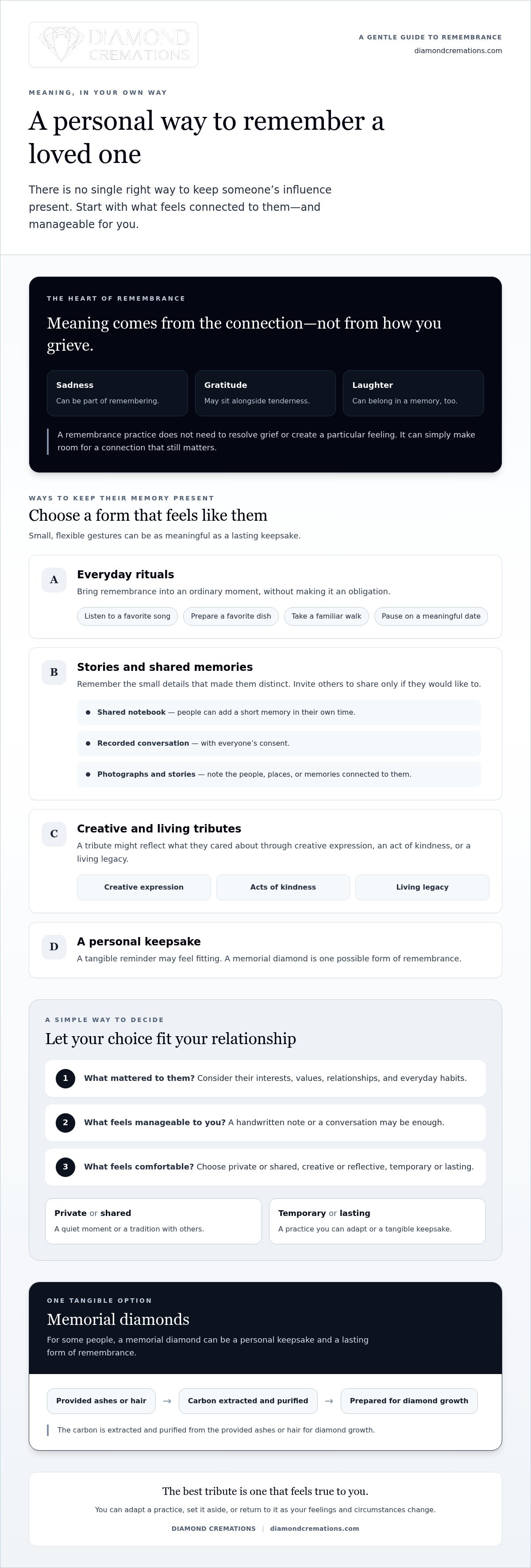
How to Choose a Remembrance Idea That Fits Your Relationship
You don’t need to find the perfect tribute all at once. Begin with what mattered to the person, consider what feels manageable for you now, and choose one idea to try. A tribute can honor someone without making your loss seem smaller. Remembering them with warmth or gratitude doesn’t cancel sadness, and you don’t have to feel a certain way for the gesture to count.
Think about the form you prefer. A private act can offer room for reflection; a shared one can help family or friends take part. A temporary practice leaves room to change, while a lasting keepsake provides a physical reminder. Active gestures, such as creating something or helping others, suit some people. Quiet reflection may feel more comfortable to someone else.
Questions to ask before choosing a tribute
- Does it reflect something genuine? Consider a quality, interest, or part of your relationship that feels true to the person, rather than choosing an idea because it seems expected.
- How would you like to remember? You might prefer a private moment, company, or the flexibility to choose differently on different days.
- Does it feel manageable now? Ask whether you can try it without pressure to make a permanent decision or take on an ongoing commitment.
If you’re uncertain, start small. Write a note, try a simple activity, or invite one trusted person to join you. Notice how it feels without judging your response. You can change course, pause, or let the idea go. A positive way to remember a loved one should leave room for an honest response, not require you to prove anything.
When a tangible keepsake feels right
A keepsake can serve as a physical reminder, but it isn’t more meaningful than a ritual, story, or act of care. Memorial jewelry is one option for someone who wants a tangible form of remembrance; it may not suit every person or relationship. If you’re considering a memorial diamond, this guide to choosing a memorial diamond shape can help you explore one aspect of that choice.
Let the decision take the time it needs. You can consider memorial diamond options without treating them as the only way to honor someone.
A Memorial Diamond Can Be One Personal Way to Remember a Loved One
Among rituals, stories, creative tributes, and acts of service, a memorial diamond is one tangible keepsake some people choose. It can serve as a personal reminder of someone they love, but it isn’t the right choice for everyone. A simple routine or shared memory can be just as meaningful. The form of remembrance matters less than whether it feels fitting to you.
What a memorial diamond may mean as a keepsake
Diamond Cremations creates genuine lab-grown diamonds using carbon extracted and purified from provided human or pet ashes or hair. That carbon is prepared for diamond growth using specialized equipment that recreates the high-pressure and high-temperature conditions needed for crystallization. A memorial diamond is a physical keepsake that someone may choose to associate with remembrance. It is a personal form of remembrance, not proof of the biological identity of the person or pet whose material was provided.
For some, the appeal is having a lasting object they can wear or keep close. Others may feel more connected through a story, a tradition, or an act of care. Neither choice is more devoted or meaningful. A keepsake can complement other forms of remembrance, or it can be one option to consider without deciding immediately.
Explore the option at your own pace
If a memorial diamond feels worth exploring, personalization can help shape the keepsake around individual preferences. Available choices may include carat sizes, shapes, colors, and jewelry settings. Options can vary, so review current selections before making a decision. Certification may be available depending on the diamond selected and personal preferences; it grades the diamond rather than verifying the identity of the person or pet associated with the provided material.
Give yourself permission to learn first and choose later. Consider whether you would prefer a diamond worn as jewelry or kept in another setting, and what shape or color feels most appropriate to you. There’s no need to compare your choice with anyone else’s or settle on a keepsake before you’re ready.
If you’d like to learn more, you can explore Diamond Cremations and review memorial diamond options at your own pace.
Choose a Remembrance That Feels True to You
A meaningful tribute doesn’t need to be elaborate or cheerful. It can be a private ritual, a story shared with family, an act that carries someone’s values forward, or a keepsake you choose because it feels personal. The right positive way to remember a loved one reflects your relationship and leaves room for your feelings to change.
If you’re drawn to a tangible remembrance, Diamond Cremations creates genuine lab-grown memorial diamonds using carbon extracted and purified from provided human or pet ashes or hair. Personalization options include diamond shapes, colors, carat sizes, and jewelry settings. A memorial diamond is one possible choice, not a measure of how much someone mattered.
Take the time you need. Whether you choose a small everyday practice or a lasting keepsake, remembrance can grow and change with you. There is no single right way to keep someone’s influence present.
Frequently Asked Questions
What is a positive way to remember a loved one?
A positive way to remember a loved one is a personal act that reflects what mattered in your relationship. You might share a story, prepare a familiar recipe, support a cause they cared about, or keep a meaningful object nearby. Positive doesn’t have to mean cheerful. Choose something that feels honest and manageable, and allow it to change as your needs and feelings shift.
Can you remember someone positively while grieving?
Yes. Remembering someone positively doesn’t require setting sadness aside. A memory may bring comfort, longing, laughter, or several feelings at once. You might share a story or take a quiet moment when it feels welcome, then skip the ritual on another day. There’s no single correct emotional response, and remembrance doesn’t have to follow a schedule or create a particular feeling.
How can I honor a loved one on their birthday?
Choose something personal rather than following an expectation. Tell someone close a favorite story, make a dish your loved one enjoyed, revisit an activity they cared about, or take a quiet moment alone. A birthday can be marked privately or with others, and you can keep it simple. It’s also okay to choose another day or another form of remembrance.
What are meaningful ways to preserve someone’s stories?
Write down a memory, invite relatives or friends to contribute, or collect photographs with notes about the people and places in them. A shared notebook or a conversation can be an easy starting point. Keep the format comfortable to maintain, and ask permission before recording or sharing someone else’s personal memories. A private collection can be just as meaningful as one shared widely.
Is a memorial keepsake necessary to remember someone?
No. A keepsake may suit someone who values a physical reminder, but it isn’t required to honor a loved one. Stories, traditions, creative activities, and actions inspired by their values can also carry meaning. The right choice depends on the person, your relationship, and what feels comfortable to you. Love and care aren’t measured by whether you choose a tangible object.
Can ashes or hair be made into a memorial diamond?
Yes. Diamond Cremations creates genuine lab-grown memorial diamonds using carbon extracted and purified from provided ashes or hair, then prepared for diamond growth. This doesn’t mean every carbon atom in the finished diamond came exclusively from that material. Personalization options may include shapes, colors, carat sizes, and jewelry settings. Certification availability depends on the selected diamond and customer preferences; it grades the diamond, not biological identity.
How do I choose a remembrance idea that feels right?
Start by considering what you want the remembrance to reflect, such as a shared interest, a value, a story, or the importance of your relationship. Then decide whether you’d prefer something private or shared, lasting or occasional, active or reflective. Try a small, flexible version first. If it feels uncomfortable or no longer suits you, changing course doesn’t diminish your love or the meaning of your choice.