


Ashes to Diamonds: Secure Collection Process Guide
The Foundation of Transformation: Why the Collection Process Matters
Beginning the journey of creating a memorial diamond is a significant decision, and the first step—the ashes collection process—is the most fundamental. This initial phase sets the foundation for the entire transformation, establishing a clear and secure path from remembrance to a tangible, lasting tribute. It is a meticulous process designed to handle a loved one’s remains with the utmost respect and care.
The integrity of the final diamond depends entirely on the purity and handling of the carbon source from the very beginning. For families navigating this path, understanding the security protocols and transparent procedures in place can provide reassurance. This guide details every step, from how the materials are gathered to the documented chain of custody that follows them, ensuring a process defined by precision, respect, and peace of mind.
The Significance of Carbon in Remembrance
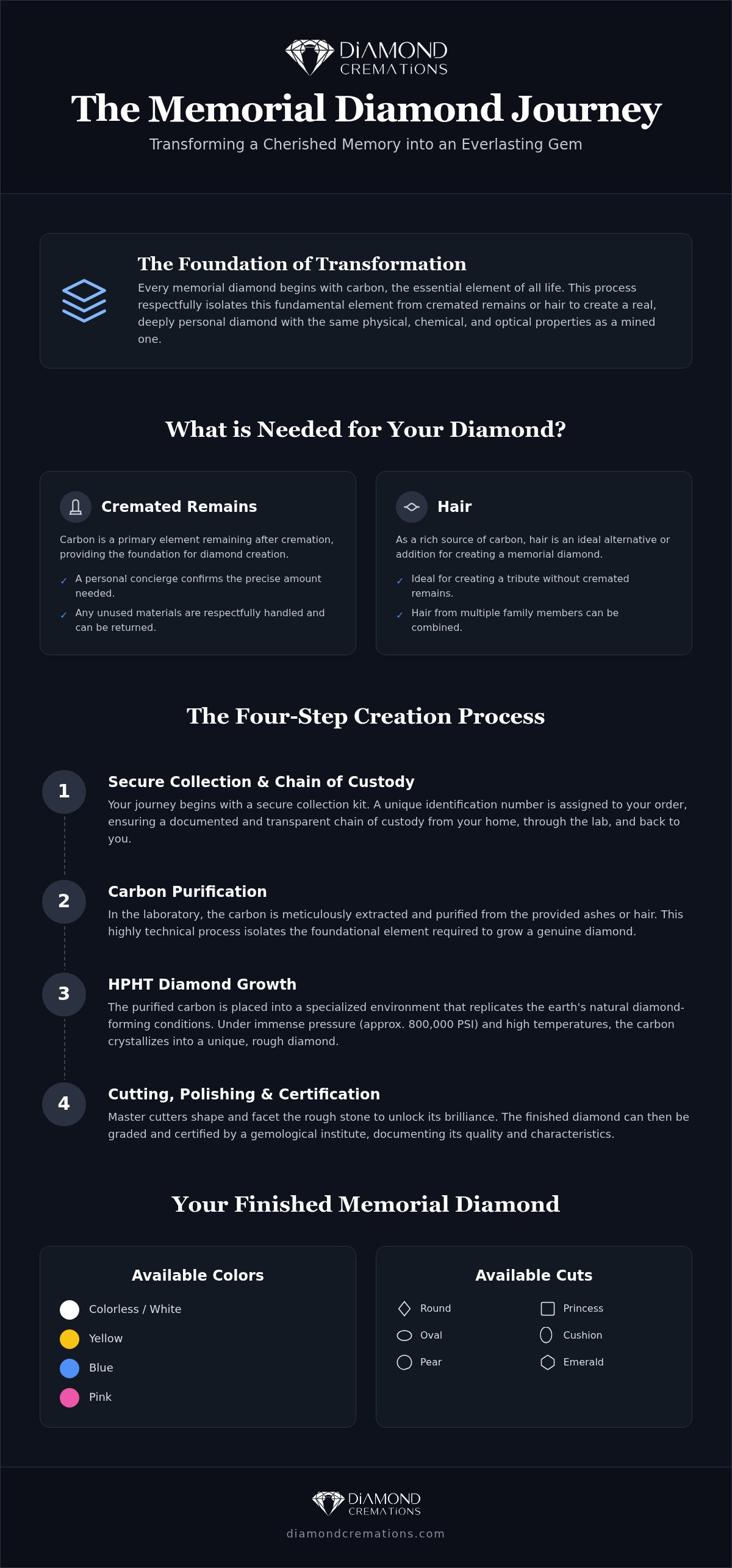
The ability to create a diamond from cremated remains or hair is rooted in a simple, profound fact: carbon is the essential element of all life and the building block of every diamond. After cremation, carbon is one of the primary elements that remain in the bone fragments. Similarly, hair is a rich source of carbon. By isolating this element, it becomes possible to replicate the natural diamond-growing process in a controlled laboratory environment.
- Carbon's Role: Carbon is the second most abundant element in the human body and is essential for forming a genuine diamond. The collection process is designed to respectfully gather this foundational element.
- A Personal Connection: Unlike other memorials, a diamond grown from a loved one’s physical essence offers a deeply personal and enduring connection, transforming an element of their being into an object of lasting beauty.
- An Alternative to Tradition: For those seeking a more personal way to honor a memory than a traditional urn or burial, the science of turning ashes into a diamond provides a modern, meaningful alternative.
Establishing a Secure Chain of Custody
A primary concern for families is ensuring that the remains they provide are handled securely and that the resulting diamond is unequivocally linked to their order. This is achieved through a rigorous chain of custody—a chronological documentation trail showing the seizure, custody, control, transfer, analysis, and disposition of physical evidence. In the context of memorial diamonds, this system ensures accountability and integrity at every stage.
The process begins the moment a collection kit is requested. A unique identification number is assigned to your order, and this number follows the remains from your home to the laboratory and through every phase of purification and growth. This maintains a documented connection between the material you provide and your individual order throughout processing and production. Documented verification and cross-checks at each critical point in the laboratory process ensure that every order is handled with individual care and precision.
Determining Requirements: How Much Ash or Hair is Needed?
One of the first practical questions families ask is about the amount of material required for the ashes collection process for a diamond. While the idea of providing remains can feel daunting, the process is designed to be straightforward, and the quantity needed is often less than people expect. The specific amount can vary depending on the laboratory's processes and the desired characteristics of the diamond.
Hair is also a viable and equally meaningful source of carbon for creating a memorial diamond. This is a common choice for families who may not have access to cremated remains or who wish to create a tribute from a living person. It is also possible to combine carbon sources, such as ashes from one loved one and hair from another, to create a single, unified family memorial.
Quantity Guidelines for Cremated Remains
The exact quantity of cremated remains needed for diamond creation is not a universal standard; it depends on the specific laboratory equipment and purification techniques used. The carbon concentration within the ashes can also vary, which may influence the required amount.
- Personalized Confirmation: Before any materials are sent, a concierge will confirm the precise amount of cremated remains required for your specific order. This ensures you provide the correct quantity for a successful transformation.
- Carat Size Considerations: While the process is highly efficient, creating a larger carat diamond may sometimes require a slightly larger starting amount of carbon. This will be clarified during your initial consultation.
- Unused Materials: Any cremated remains not used in the carbon purification process are handled with respect. Families can typically request to have the unused portion returned along with their finished memorial diamond.
Using Hair as a Carbon Source
Hair offers a powerful alternative for creating a memorial diamond, as it is a rich and readily available source of carbon. This option is ideal for memorializing someone without cremated remains or for creating a living tribute that celebrates an enduring bond with family members or beloved pets.
- Required Amount: Similar to ashes, the specific amount of hair needed varies. Your personal concierge will provide clear instructions on the required quantity based on your order.
- Combining Sources: Hair from multiple family members, or even a combination of hair and ashes, can be used to create a single diamond. This allows for the creation of a deeply symbolic stone that represents the unity of a family. For more information on this option, explore our guide to creating a diamond from hair.
The Secure Collection Kit: A Step-by-Step Packing Guide
To make the ashes collection process for a diamond as secure and stress-free as possible, a dedicated collection kit is provided. This kit contains all the necessary components and clear instructions to help you respectfully prepare and package the cremated remains or hair. Requesting your kit is the first active step in the journey, and its design prioritizes security, identification, and ease of use.
Once you receive the kit, you will find containers for the remains, tools to assist with transfer, and documentation to formalize the chain of custody. Following the step-by-step guide ensures that the material is sealed, labeled, and ready for its journey to the laboratory, with its unique identity protected from start to finish.
Anatomy of a Professional Collection Kit
The collection kit is thoughtfully assembled to address the practical and emotional aspects of handling a loved one’s remains. Every component is chosen to ensure the security and integrity of the contents during transit.
- Secure Containers: The kit includes a secure container designed to hold the ashes or hair safely.
- Unique Identification: A unique identification number is assigned to your order and is a critical part of the kit. This ID is used on all labels and documents to track your order throughout the entire process.
- Instructions and Materials: You will receive clear, step-by-step instructions for placing the remains into the container, sealing it, and applying the identification labels. The kit also includes identification materials to help you prepare the shipment.
Mailing and Tracking Your Loved One’s Journey
Shipping cremated remains requires adherence to specific protocols to ensure they are handled with care and respect. In the United States, the United States Postal Service (USPS) has specific requirements for the domestic shipment of cremated remains. This is the only legal method for shipping remains, and it includes requirements for packaging and tracking.
- Preparing for Shipment: Customers receive instructions and appropriate materials to help prepare the shipment in accordance with applicable USPS shipping requirements. This includes using specific mail classes that offer tracking and signature confirmation.
- Tracking and Notification: Once shipped, the package is tracked from its point of departure to its arrival at the laboratory. You will receive a notification as soon as the kit has been safely received, providing confirmation and peace of mind.
For families who need additional support with international logistics or specialized transport of remains, click here to explore the services offered by SpeedLink Repatriation.
The Laboratory Transition: Carbon Purification and HPHT Growth
Upon arrival at the laboratory, the secure collection kit is opened in a controlled environment, and the contents are verified against the chain-of-custody documentation. This marks the beginning of the scientific transformation, where the elemental carbon from the ashes or hair is isolated and prepared for its new form. This multi-stage process involves advanced technology and meticulous attention to detail.
The core of the transformation lies in carbon purification and the High-Pressure/High-Temperature (HPHT) growth process. This technology replicates the conditions deep within the Earth where natural diamonds form. By subjecting the purified carbon to extreme heat and pressure, it crystallizes atom-by-atom into a genuine diamond, a process that is both a scientific achievement and a deeply meaningful tribute.
From Ash to Graphite: The Purification Phase
The first step in the lab is to extract pure carbon from the provided remains. Cremated remains and hair contain carbon, but they also consist of many other elements that must be removed. This purification process is critical to growing a high-quality diamond.
- Isolating Carbon: The remains are placed in a specialized environment and subjected to a multi-step chemical and physical process to isolate the carbon and remove impurities. The goal is to achieve a carbon purity level of 99.9% or higher.
- Graphite Conversion: This highly purified carbon powder is then converted into graphite, a stable and structured form of carbon that is ready for diamond growth.
- Preventing Cross-Contamination: Each order is processed individually in a strictly controlled setting. Meticulous laboratory protocols and the unique identification system ensure there is no possibility of cross-contamination between different memorial orders.
The Growth Cycle: Mimicking the Earth’s Natural Process
With the purified carbon prepared, the final and most dramatic phase begins: the diamond growth cycle. The graphite is placed inside a specialized HPHT press, a machine capable of generating immense pressure and heat.
- The HPHT Chamber: The carbon source is placed in the growth chamber along with a tiny diamond seed. This seed acts as a template, providing a foundation upon which the carbon atoms can bond and crystallize.
- Atom-by-Atom Growth: The chamber is subjected to pressures of approximately 800,000 PSI and extreme heat. Under these conditions, the carbon melts and begins to deposit onto the diamond seed, growing layer by layer over several weeks or months.
- The Science of Color: The final color of the diamond—whether colorless, blue, yellow, or pink—is influenced by growth conditions, trace elements, crystal defects, and in some cases post-growth treatment. For example, trace amounts of nitrogen can result in a yellow hue, while boron can create a blue diamond.
Certification and the Path to a Finished Memorial
After the growth cycle is complete, the raw diamond is carefully extracted from the HPHT press. It is then ready for the final stages of its journey: cutting, polishing, and verification. Expert diamond cutters shape and facet the stone to reveal its brilliance and beauty, transforming it from a rough crystal into a sparkling gem. This artistic process requires immense skill and precision to unlock the diamond's full potential.
Once the diamond is cut and polished, it can be set in a piece of custom jewelry, such as a ring or pendant, to create a wearable tribute. The final step is the secure return of the finished memorial diamond, completing a journey that began with the simple act of collection.
Authenticating Your Memorial Diamond
A memorial diamond is a real, lab-grown diamond with the same chemical, optical, and physical properties as a stone mined from the earth. To verify its quality, the finished diamond may undergo professional inspection and independent grading, depending on the selected service. Organizations like the Gemological Institute of America (GIA) or the International Gemological Institute (IGI) provide reports that assess a diamond’s characteristics.
- Understanding Grading Reports: It is important to clarify that these reports measure the diamond’s quality based on the 4Cs (cut, color, clarity, and carat), but they do not and cannot verify the biological origin of the carbon. The chain-of-custody documentation serves as the link back to the source.
- Choosing a Shape: The diamond can be cut into various timeless shapes, including round, princess, cushion, and more. Each shape interacts with light differently, offering a unique aesthetic. You can learn more in this guide to choosing the perfect memorial diamond shape.
Designing a Lasting Tribute
The final step is to create a piece of jewelry that reflects the unique memory of a loved one. This is a collaborative process where you can choose the diamond's color and select a setting that matches your personal style. The result is more than just a piece of jewelry; it is a personal and profound symbol of a life and a bond that endures.
- A Spectrum of Colors: Memorial diamonds are available in a curated selection of colors, including colorless, blue, yellow, and pink, allowing for further personalization.
- Bespoke Settings: Work with artisans to design a custom ring or pendant that will hold your memorial diamond. This ensures the final piece is a perfect and fitting tribute.
- The Final Delivery: Your finished memorial diamond, set in its new home, is securely delivered to you, completing its journey and beginning a new one as a cherished heirloom for generations to come.