


Cremation Diamond Cuts and Shapes: A Guide to Choosing a Lasting Legacy
Choosing a memorial for a loved one is a deeply personal journey. In a time of reflection, many seek a tribute that is more than a static object—they search for a lasting, tangible connection that can be held close and passed through generations. A memorial diamond, created from the carbon within cremation ashes or hair, offers this profound connection. It transforms an elemental part of a cherished life into a brilliant emblem of remembrance.
However, the journey doesn’t end with the decision to create a diamond. The final, most personal step is selecting the cut and shape—the very form that will capture and reflect light, symbolizing a unique story. Discover how to select the perfect diamond cut and shape to transform a loved one's ashes into a brilliant, personalized memorial.
The Art of Selection: Why Cremation Diamond Cuts and Shapes Matter
The choice of a diamond's cut is the final, artistic step in personalizing a physical legacy. While the diamond itself is a product of advanced science, its final form is a testament to human artistry. This decision bridges the gap between the scientific process and the deeply personal act of remembrance, ensuring the final tribute is a true reflection of an individual life.
- The Final Personalization: The cut is the last touch that defines the diamond's character, turning a beautiful stone into a bespoke heirloom.
- Light and Brilliance: How a diamond interacts with light—its sparkle, fire, and brilliance—is determined by its shape and the precision of its facets. Different cuts offer different visual experiences.
- Honoring the Carbon: A skilled lapidary applies their craft to honor the extracted carbon, using precision faceting to unlock the diamond's full potential for beauty.
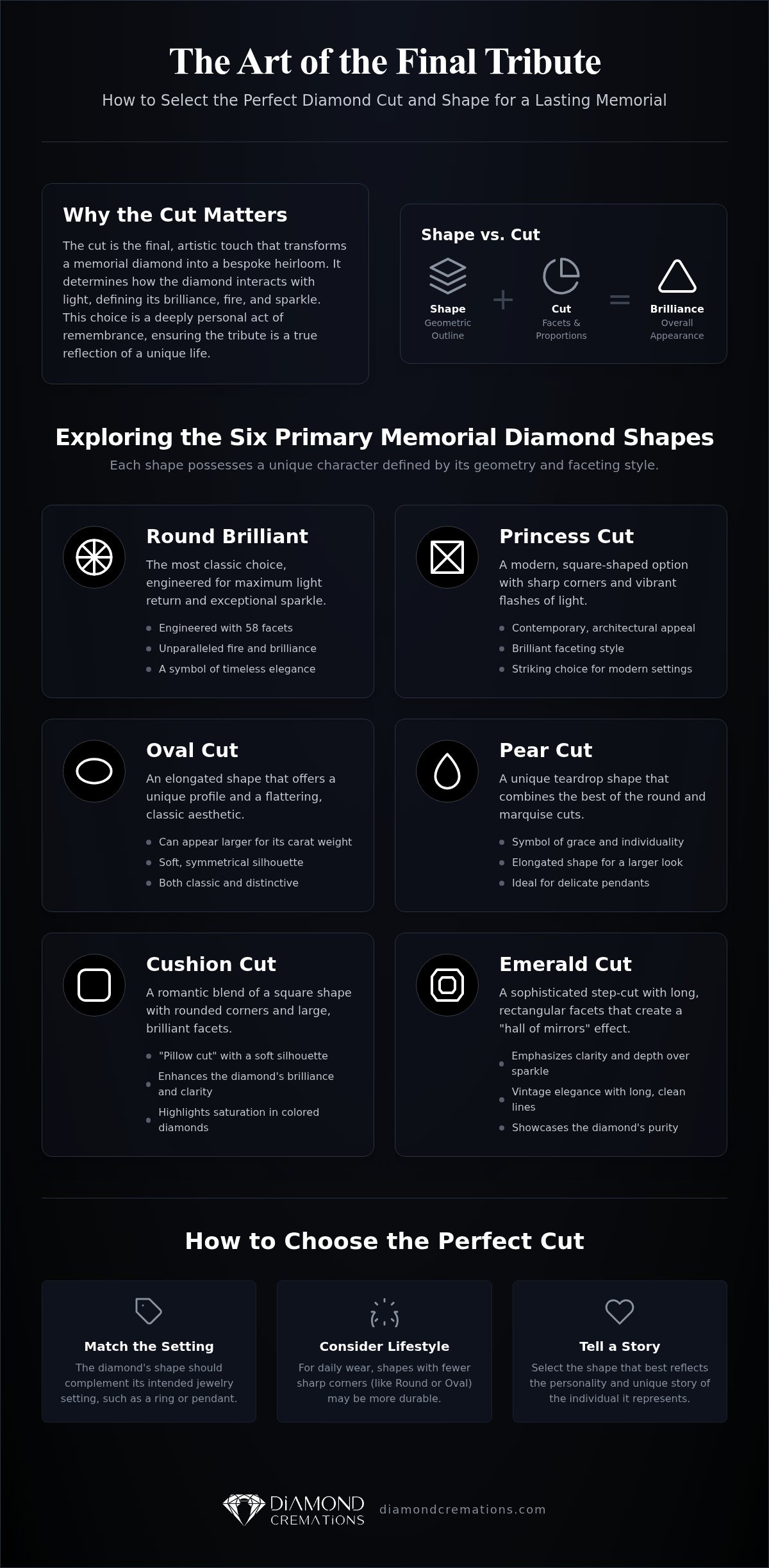
- Shape vs. Cut: It's important to distinguish between a diamond's 'shape' (its geometric outline, like round or square) and its 'cut' (the proportions, symmetry, and polish of its facets), which together create its stunning appearance.
A Lasting Tribute Beyond Traditional Urns
For many, a memorial diamond offers a comforting alternative to traditional urns. It provides a way to keep a loved one’s memory present in daily life in a form that is both portable and permanent. This transition from a contemplative state to creating a tangible heirloom can be a powerful part of the healing process. The diamond's inherent brilliance serves as a hopeful symbol of transformation and enduring light, a reminder of a bond that continues.
The Significance of Personalization in Remembrance
The act of personalizing a tribute is a meaningful way to honor a unique life. Moving beyond one-size-fits-all memorial options allows for a deeper, more authentic expression of love and memory. Participating in the design of a loved one's final tribute can offer a sense of connection and purpose. By carefully selecting a shape that feels right, you ensure the memorial diamond reflects the distinct character of the individual or pet it represents.
Exploring the Six Primary Memorial Diamond Shapes
Each diamond shape possesses a unique character defined by its geometry and faceting style. Understanding these differences is the first step in making a choice that feels authentic and beautiful. Diamond Cremations offers six timeless shapes, each with its own way of capturing and returning light.
- Round Brilliant: The most classic choice, engineered with 58 facets to achieve maximum light return and exceptional sparkle. - Princess Cut: A modern, square-shaped option with sharp corners and a brilliant faceting style that creates intense, vibrant flashes of light. - Oval and Pear: These elongated shapes offer a unique profile and a flattering aesthetic that can make the diamond appear larger for its carat weight. - Cushion Cut: A romantic blend of a square shape with rounded corners, this cut features large facets that enhance the diamond's brilliance and clarity. - Emerald Cut: A sophisticated "step-cut" with long, rectangular facets that create a "hall of mirrors" effect, emphasizing the diamond’s clarity and depth over sparkle.
The Classics: Round and Princess Cuts
The Round Brilliant is often considered the gold standard for diamond fire and brilliance. Its circular shape and meticulously angled facets are designed to capture light from all directions and reflect it back to the eye, creating an unparalleled sparkle. For those who appreciate timeless elegance, the round cut is a perfect choice. In contrast, the Princess Cut offers a contemporary, architectural appeal. Its sharp lines and brilliant faceting make it a striking choice for modern jewelry settings, maximizing the visual impact of the chosen carat size.
Sophisticated Profiles: Oval, Pear, and Emerald
Elongated cuts like the Oval and Pear are celebrated for their ability to make a diamond appear larger than its actual carat weight. The Oval cut offers a soft, symmetrical silhouette that is both classic and distinctive. The Pear cut, with its unique teardrop shape, is often seen as a symbol of grace and individuality. For those who prioritize clarity and a sense of calm depth, the Emerald cut provides a vintage elegance. Its long, clean lines draw the eye inward, showcasing the diamond's purity.
The Softened Geometry of the Cushion Cut
The Cushion cut, sometimes called a "pillow cut," bridges the gap between classic and modern styles. Its square or rectangular shape with soft, rounded corners has been beloved for centuries. The large facets of a cushion cut are particularly well-suited for highlighting the rich saturation of colored memorial diamonds, such as blue, yellow, or pink. Technically, the cushion cut is a brilliant-style cut, but with larger facets and rounded corners that create a soft, distinctive pattern of light return.
How to Choose the Perfect Cut for Your Memorial Jewelry
Selecting a diamond shape is not just an aesthetic decision; it's also a practical one. The final choice should align with the intended jewelry setting, the wearer's lifestyle, and the personal story you wish to tell. Considering these factors will help you create a tribute that is both beautiful and enduring.
- Match the Setting: The diamond's geometry should complement its intended setting. A pendant might showcase a delicate pear shape, while a ring for daily wear may benefit from a more durable round or cushion cut.
- Reflect a Spirit: While shapes don't have inherent personalities, a family may associate a particular style with their loved one—the timelessness of a round cut or the modern edge of a princess cut can feel like a fitting tribute.
- Consider Durability: For rings worn every day, shapes with sharp corners like the princess cut may be more vulnerable to chipping. Settings like a bezel can offer extra protection.
- Consult a Concierge: A dedicated concierge can provide guidance on how different shapes will look with various metals and setting designs, helping you visualize the final piece.
Designing for the Heart: Pendants and Rings
The choice of jewelry often guides the selection of the diamond shape. For memorial diamond pendants, shapes like Round, Oval, and Pear are popular because they hang beautifully and allow light to enter from all sides. When designing memorial diamond rings, durability becomes a key consideration. Round and Cushion cuts, which lack sharp points, are excellent choices for longevity. The setting itself also plays a crucial role; a prong setting exposes more of the diamond, while a bezel setting encases the edge, offering maximum protection.
Reflecting Personality Through Shape
The process of choosing a shape can be a creative and meaningful way to tell a story. You might associate the classic, brilliant Round cut with a timeless and traditional spirit, or the bold, clean lines of a Princess cut with a modern and direct personality. The calm, transparent depths of an Emerald cut may feel right for someone who was serene and clear-headed. Ultimately, using memorial diamond shapes as a form of expression allows you to participate actively in creating a tribute that feels deeply personal and true.
| Shape | Best For | Overall Aesthetic |
|---|---|---|
| Round Brilliant | Maximum brilliance, classic rings and pendants | Classic and timeless |
| Princess | Modern settings, high sparkle | Modern and geometric |
| Oval | Elongating the finger, unique pendants | Elegant and elongated |
| Pear | Distinctive pendants and rings | Graceful and distinctive |
| Cushion | Vintage-style settings, colored diamonds | Soft and romantic |
| Emerald | Highlighting clarity, sophisticated jewelry | Refined and architectural |
The Science of Transformation: From HPHT Growth to the Final Cut
Creating a memorial diamond is a remarkable synthesis of nature, science, and art. The process begins with purifying carbon from the provided ashes or hair and concludes with a skilled lapidary cutting and polishing the finished gem. Understanding this journey can deepen one's appreciation for the final tribute.
- The HPHT Environment: The purified carbon is placed in a High-Pressure/High-Temperature (HPHT) environment, which replicates the extreme conditions under which diamonds form deep within the Earth.
- The Diamond Seed: A tiny diamond seed is used to provide the structural template upon which the carbon atoms from the remains crystallize and grow.
- Genuine Diamond Growth: Under extremely high pressure and temperature, the purified carbon bonds to the seed, growing into a genuine, unique lab-grown diamond.
- From Rough to Polished: The diamond emerges from the growth cell as a "rough" stone. It is then passed to a skilled cutter who transforms it into a polished, faceted gem.
Growing the Rough Diamond
The carbon extracted from cremation remains is fundamentally carbon, the same element that forms all diamonds, whether mined or lab-grown. This purified carbon is the building block of the memorial diamond. In the HPHT chamber, technical precision is required to maintain the stable conditions necessary for the growth cycle. The diamond seed provides a crystalline foundation, guiding the carbon atoms to arrange themselves into the strong, beautiful lattice structure that defines a diamond. It is important to note that the seed is a structural template for growth and is not derived from the remains.
The Skilled Lapidary’s Role
Once the rough diamond has formed, the artistry begins. A skilled diamond cutter evaluates the unique rough stone to determine the best possible shape and cut that will maximize its size, clarity, and beauty. This is a critical stage where expertise and intuition intersect. The cutter's goal is to achieve carefully controlled symmetry and polish, as these elements are crucial for unlocking the diamond's brilliance. This meticulous faceting process ensures the physical integrity of the diamond while revealing its innermost fire.
Finalizing Your Tribute with Diamond Cremations
The final steps of the journey involve making choices about color, certification, and setting, all while being guided by a dedicated concierge. This supportive process helps ensure the final piece is a perfect and lasting tribute that can be passed down through generations.
- Color Accents: In addition to classic colorless diamonds, you can choose to create a tribute in a shade of blue, yellow, or pink.
- Independent Certification: For additional documentation, you can opt for a gemological report from an independent laboratory like GIA or IGI.
- Guided Process: A dedicated concierge navigates you through the secure collection and transformation process, offering support and clarity at every step.
- A Lasting Legacy: The finished diamond is more than a piece of jewelry; it is a permanent heirloom that carries a profound personal story.
- Next Steps: To begin the journey of creating your memorial diamond, you can connect with our team to discuss your vision.
Certification and Authenticity
A common question is whether cremation diamonds are "real." Memorial diamonds are genuine lab-grown diamonds, possessing the same physical, chemical, and optical properties as those formed in the earth. To provide formal documentation of the diamond's quality, independent gemological certification is available as an option. It is important to understand that these reports grade the diamond's characteristics (the 4Cs: carat, cut, color, and clarity) but do not verify its biological origin. This independent certification provides peace of mind and confirms the authenticity and quality of your tribute.
The Concierge Experience
Navigating the decisions involved in creating a memorial diamond can feel overwhelming. The concierge experience is designed to provide personalized support and make the process clear and manageable. Your concierge offers transparency into the carbon extraction and purification steps and helps you finalize the details, from the diamond's shape to the jewelry setting that will house the finished gem. This guided support helps families make thoughtful, informed decisions during a sensitive time.
Frequently Asked Questions About Cremation Diamond Cuts and Shapes
- Are cremation diamonds real diamonds or just simulants?
- Memorial diamonds are genuine lab-grown diamonds, not simulants such as cubic zirconia or moissanite. A lab-grown diamond has the same fundamental carbon crystal structure and physical and optical properties associated with diamond.
- What are the most popular cremation diamond cuts and shapes?
- While every choice is deeply personal, the Round Brilliant cut is a classic and enduring option known for its exceptional brilliance. Other available shapes, such as Princess, Oval, Cushion, Pear, and Emerald, each provide a different and beautiful aesthetic to suit individual preferences and jewelry designs.
- How much ash or hair is required to create a diamond?
- Typically, about one cup of cremation ashes or a small amount of hair is sufficient to provide the necessary carbon. A Diamond Cremations concierge can provide specific details and guide you through the secure collection process.
- Can you make colored diamonds from ashes and hair?
- Yes. In addition to colorless (white) diamonds, Diamond Cremations offers memorial diamonds in shades of blue, yellow, and pink. The specific color is achieved by controlling trace elements within the growth environment.
- Does the choice of diamond shape affect the cost?
- Pricing depends on the specifications of the individual memorial diamond, including factors such as carat size, color, and selected services. Your Diamond Cremations concierge will provide clear pricing for the available shape and design options for your specific order.
- Is a diamond seed used in the growth process?
- Yes, a small diamond seed is used in the HPHT process. It provides the crystalline foundation, or structural template, upon which the purified carbon from the ashes or hair crystallizes to form the new, larger diamond.
- How long does the entire process take from collection to finished diamond?
- The creation of a memorial diamond is a meticulous and unhurried process. The timeline can vary depending on the specific characteristics of the diamond being created. Your concierge will provide a more precise timeline for your unique order.
- Is the diamond's quality certified by an independent laboratory?
- Yes, independent certification from respected gemological institutes like GIA or IGI is available as an option. This report provides an objective assessment of the diamond's quality characteristics, such as carat weight, cut, color, and clarity, offering formal documentation for your investment.
- Expertly crafted lab-grown diamonds
- Dedicated personalized concierge service
- Nationwide secure collection process