


Keep a Loved One Close After Death: The Science and Art of Modern Memorials
The desire to keep a loved one close after death is a profound and deeply human impulse. In the quiet moments that follow a loss, the need for a tangible connection can feel as vital as the memories we hold. This is not about refusing to let go, but about finding a new way to hold on—a way that brings comfort, honors a unique life, and creates a legacy that endures. While memories live in the mind and heart, many find solace in a physical touchstone, an object that can be held, worn, and carried through life’s continuing journey.
Modern science, combined with timeless artistry, now offers a meaningful way to fulfill this need. It is possible to transform the very element of life—carbon—into a lasting tribute that is both beautiful and deeply personal. This guide explores the psychology behind our need for physical connection, compares traditional and modern memorials, and explains the transparent science of creating a real diamond from the carbon of a loved one. It is a path to creating a permanent, portable legacy that keeps their presence near, always.
The Psychology of Physical Connection After Loss
Grief is not a linear process of detachment but an ongoing relationship with memory. Modern grief psychology has moved beyond the idea that healing requires “letting go,” embracing instead the concept of “continuing bonds.” This theory suggests that it is healthy and normal to maintain a connection with the deceased, integrating their memory and influence into our lives as we move forward. The desire to keep a loved one close is a valid and essential part of this process.
While remembering is a mental and emotional act, “keeping close” often involves a physical, tangible dimension. For many, a physical object serves as an anchor for memory and a source of comfort during bereavement. It validates the search for a physical presence, transforming an abstract feeling of loss into a concrete symbol of an enduring bond.
The Role of Transitional Objects in Mourning
In psychology, a transitional object provides comfort in the absence of a loved one. For a grieving adult, a keepsake can serve a similar purpose, acting as a bridge between the life that was shared and the future that lies ahead. These objects—a piece of jewelry, a favorite book, or a cherished photograph—ground us in moments of sorrow and allow us to feel a continued sense of proximity.
Over time, many people seek to transition from temporary rituals, like lighting a candle, to a more permanent physical legacy. The ideal memorial becomes something that is not only lasting but also portable. In a world where people often move for work or family, a memorial that can travel with you ensures that this connection is never left behind, offering consistent comfort regardless of location.
Moving Beyond the Stationary Memorial
Traditional memorials, such as gravesites and monuments, provide a valuable, designated place for reflection and remembrance. They offer a sense of history and a physical location for communities to gather and pay respects. However, they can also present limitations. For those who live far away, visiting a stationary site can be difficult, leading to feelings of distance and disconnection.
Modern technology has created new possibilities for personalized, mobile remembrance. The ability to carry a memorial with you provides a unique emotional freedom. It allows for private moments of connection—on an anniversary, during a difficult day, or in a moment of joy. This shift from a stationary place to a portable presence empowers individuals to honor their loved ones in a way that aligns with a contemporary, mobile lifestyle.
Traditional vs. Modern Memorial Options: A Comparison
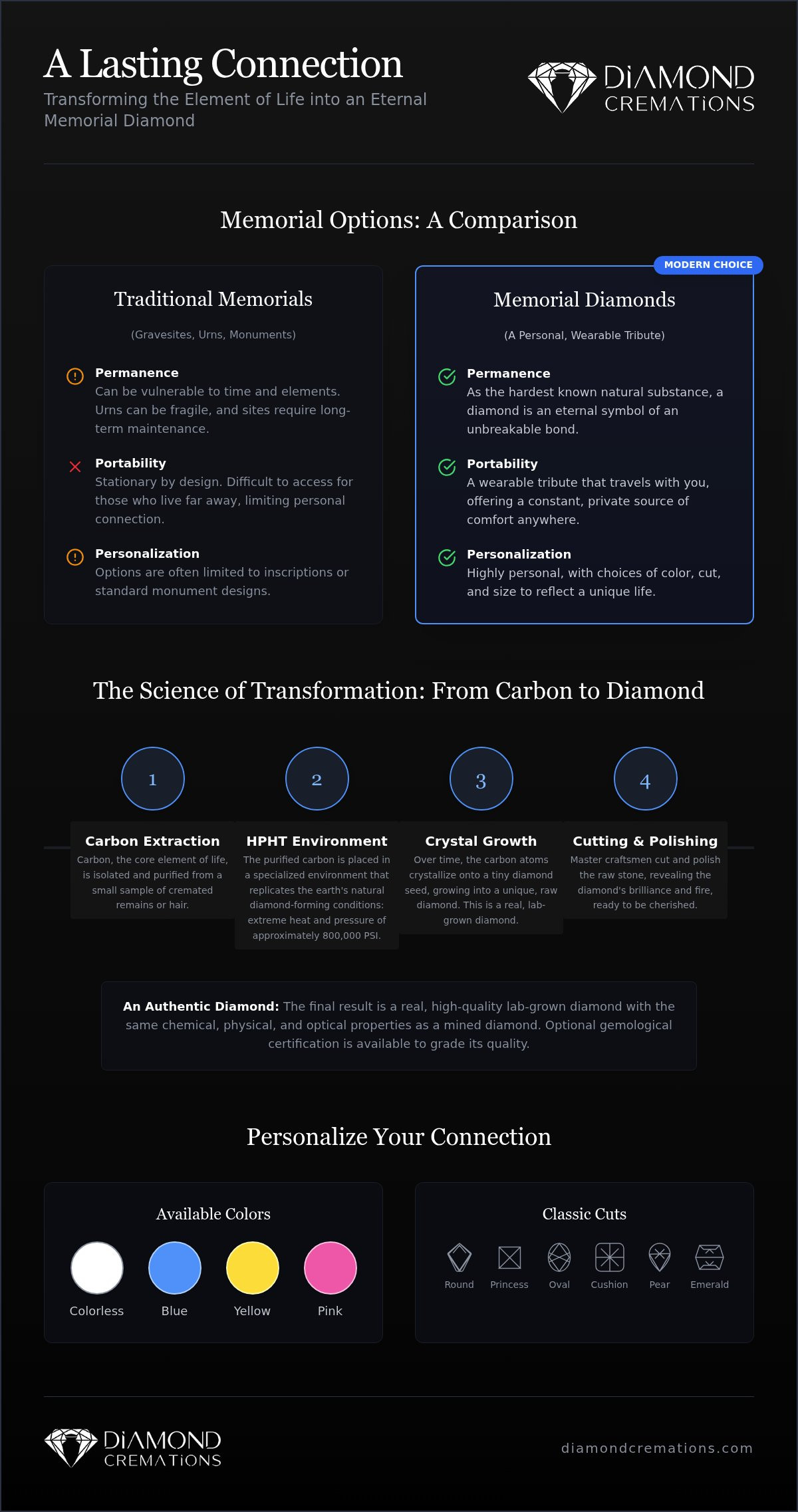
Choosing how to honor a loved one is a deeply personal decision, and the right choice is the one that brings the most peace and comfort. For centuries, options were limited to traditional methods like cemetery burials or keeping cremated remains in an urn. Today, the landscape of remembrance has expanded to include modern alternatives that offer new dimensions of personalization and connection.
When considering your options, it is helpful to analyze them based on three key factors: permanence, portability, and personalization. A traditional urn is portable but may not feel like a lasting tribute, while a charitable act in a loved one’s name is a beautiful gesture but lacks a physical touchstone. Modern options, like creating a memorial diamond from cremated remains, are designed to fulfill all three needs, offering an eternal, portable, and uniquely personal way to keep a loved one close after death.
Stationary Tributes: Gardens, Benches, and Graves
A designated physical space for reflection holds significant value. A memorial garden, a commemorative bench in a favorite park, or a traditional gravesite provides a fixed point of reference for honoring a life. These tributes serve as public and private landmarks where family and friends can gather, share stories, and feel a sense of place-based connection. They root a loved one’s memory in a specific, meaningful location.
The primary drawback of stationary tributes is their lack of accessibility. Geographic distance can make regular visits impossible, and the responsibility for long-term maintenance can become a concern for future generations. However, a stationary site can be beautifully complemented with a portable keepsake. This dual approach allows for both a public place of honor and a private, intimate connection that is always with you.
Portable Tributes: Jewelry and Memorial Diamonds
The 21st century has seen a rise in wearable memorials, a category of keepsakes that allows for a discreet and constant connection. Among these, memorial diamonds stand apart as a profound symbol of permanence and love. Created from the carbon of a loved one, a memorial diamond is not just a representation—it is a transformation. It turns the fundamental element of life into an object of exceptional beauty and strength.
The physical hardness of a diamond, the most durable substance on Earth, perfectly symbolizes an eternal bond. Set in a piece of cremation jewelry like a ring or a pendant, it becomes a constant, quiet reminder of a loved one’s presence. Unlike a traditional urn, which is often kept at home, a memorial diamond can be worn daily, offering a private and elegant tribute that keeps a loved one near the heart.
The Science of Carbon: Transforming Remains into Eternal Diamonds
The ability to create a diamond from the carbon in cremated remains or hair is grounded in established science. All life on Earth is carbon-based; it is the building block of our physical existence. A memorial diamond is a real, lab-grown diamond, not a simulant like cubic zirconia or moissanite. It shares the exact same chemical, physical, and optical properties as a diamond mined from the earth. The only difference is its origin.
The process begins by extracting and purifying the carbon from a small sample of hair or cremated remains. This elemental carbon is then used as the foundation for growing a unique diamond. The result is a brilliant gemstone that is physically identical to its natural counterpart, offering a scientifically sound and deeply meaningful way to create a lasting memorial. For a more detailed explanation of their authenticity, you can read about whether cremation diamonds are real diamonds.
The HPHT Process: Mimicking the Earth’s Forces
To transform purified carbon into a diamond, scientists replicate the natural conditions found deep within the Earth’s mantle. This is achieved through a process called High-Pressure/High-Temperature (HPHT). The carbon is placed in a specialized growth environment that subjects it to immense force—approximately 800,000 pounds per square inch (PSI)—and extreme heat.
Under these conditions, the carbon atoms begin to crystallize and bond to one another. To initiate this transformation in a controlled manner, a tiny diamond seed is often used to provide a template for the carbon atoms to attach to. Over a period of several weeks or months, the diamond grows, layer by layer, into a raw, uncut crystal. This meticulous process transforms the carbon of a loved one into a new, brilliant form.
Certification and Authenticity Standards
Once the memorial diamond is grown, cut, and polished, its quality and authenticity can be verified. Every diamond comes with a certificate of authenticity confirming its carbon source and creation process. Additionally, families have the option to have their diamond graded by a leading independent gemological laboratory, such as the Gemological Institute of America (GIA) or the International Gemological Institute (IGI).
A formal grading report provides an expert, unbiased assessment of the diamond’s characteristics, commonly known as the 4Cs: Cut, Color, Clarity, and Carat. This documentation verifies that the memorial diamond is a genuine diamond with specific qualities. It is important to understand that these reports grade the gemological properties of the stone; they do not and cannot verify its biological origin.
Personalizing Your Connection: Shapes, Colors, and Settings
Creating a memorial diamond is an opportunity to design a tribute that reflects the unique personality and spirit of your loved one. The process is not just scientific but also deeply artisanal, with numerous options for personalization that make each diamond a one-of-a-kind heirloom. From the color of the diamond to its final setting, every choice adds another layer of meaning.
The natural color of a memorial diamond can vary based on the unique chemical elements present in the carbon source. The most common colors available are colorless, blue, yellow, and pink. This choice can be symbolic—perhaps blue for a love of the ocean or yellow for a sunny disposition. Once grown, the raw diamond is then expertly cut and polished by skilled artisans to unleash its brilliance, ready to be placed in a setting that ensures it can be kept close for a lifetime.
Selecting a Meaningful Diamond Shape
The shape of a diamond, also known as its cut, determines how it reflects light and defines its overall aesthetic. Each shape has its own character and style, allowing you to choose one that resonates with your loved one’s memory. The most popular shapes include:
- Round: Classic and timeless, known for its exceptional brilliance.
- Princess: A modern square shape with sharp corners and stunning fire.
- Oval: An elegant and elongated shape that creates a graceful appearance.
- Cushion: A vintage-inspired square or rectangular shape with rounded corners.
- Pear: A distinctive teardrop shape that combines the best of the round and marquise cuts.
- Emerald: A sophisticated rectangular shape with stepped facets that create a "hall of mirrors" effect.
Choosing a shape is a personal decision that can reflect a loved one's style—classic, modern, vintage, or unique. To explore these options in more detail, our guide to choosing the perfect memorial diamond shape can provide further insight.
Jewelry Settings for Daily Connection
The final step in creating your wearable memorial is choosing a jewelry setting. The setting not only protects the diamond but also determines how you will carry it with you. The goal is to select a piece that feels comfortable, secure, and right for your lifestyle.
Pendants are a popular choice, as they allow the diamond to be kept literally "near the heart." A simple chain with a solitaire diamond is a timeless and elegant option. Rings are another meaningful choice, offering a constant visual reminder of an enduring bond on your hand. Whether you choose a ring, pendant, or another form of jewelry, selecting a high-quality metal like gold or platinum will ensure its longevity, creating a true heirloom piece that can be cherished for generations.
Establishing a Portable Legacy with Diamond Cremations
Embarking on the journey to create a memorial diamond is a significant emotional and technical undertaking. At Diamond Cremations, we serve as a compassionate and expert partner, guiding families through every step with transparency and respect. We understand the importance of trust when handling something so precious, which is why our process is designed to be secure, clear, and dignified from start to finish.
Our secure collection process for hair or cremated remains is available to families across the United States, ensuring that your loved one's remains are handled with the utmost care. We are committed to scientific integrity and open communication, helping you make informed decisions that feel right for you and your family as you create a lasting, portable legacy.
The Concierge Approach to Memorialization
We believe that families deserve dedicated support during this time. Our concierge approach means you will have a personal guide to assist you with both the technical details and emotional considerations of the process. This representative ensures a secure and documented chain of custody for the remains, providing peace of mind and answering any questions you may have.
Our focus is on the respectful transformation of a loved one's carbon into a brilliant, tangible tribute. We manage the complexities of the science so that you can focus on the meaning behind the memorial, ensuring the final result is a perfect reflection of the bond you wish to honor.
Creating an Heirloom for Future Generations
A memorial diamond is more than a keepsake; it is an heirloom. Its permanence ensures that the story and memory of your loved one can be passed down through generations. Unlike other memorial materials that may degrade over time, a diamond is forever. It serves as a physical link to family history and a timeless symbol of a life that continues to have an impact.
Choosing a memorial that brings peace and proximity is a powerful step in the healing journey. We encourage you to explore the options that feel most authentic to you and your loved one. Creating an eternal, portable connection is a beautiful way to honor a life and ensure their legacy shines on.
Frequently Asked Questions
Is it possible to turn a small amount of hair into a diamond?
Yes. Since hair is rich in carbon, it is a viable source for creating a memorial diamond. The process involves extracting and purifying the carbon from the hair before beginning the diamond growth process. This is a meaningful option for those who may not have access to cremated remains. You can learn more about this specific tribute in our guide to turning hair into a diamond.
Are memorial diamonds considered real diamonds by jewelers?
Absolutely. Memorial diamonds are real, lab-grown diamonds. They have the same chemical composition, crystal structure, and physical and optical properties as diamonds mined from the earth. A trained gemologist cannot distinguish a lab-grown diamond from a natural one without specialized equipment. They are not simulants or "fakes."
How much ash is typically required to create a memorial diamond?
A specific amount of cremated remains or hair is needed to ensure enough carbon can be extracted for the diamond creation process. The exact quantity can vary, and our specialists will provide clear instructions. We also ensure that any unused material is respectfully returned to the family.
Can I choose the color of the diamond made from a loved one?
Yes, you can select the color of your memorial diamond. The available options are colorless (white), blue, yellow, and pink. Each color is achieved through a controlled process that reflects the unique elemental composition of the provided carbon, allowing you to create a personalized tribute.
How long does the process of growing a diamond from carbon take?
Creating a memorial diamond is a meticulous and unhurried process. The growth phase alone can take several weeks to months, depending on the desired size and color of the diamond. The entire journey, from receiving the remains to delivering the final, polished gemstone, is handled with precision and care.
Can I have a memorial diamond made for a pet?
Yes. The process for creating a memorial diamond is the same for pets as it is for humans. Since all animals are carbon-based life forms, their cremated remains or fur can be used to grow a beautiful and lasting diamond tribute to a beloved companion.
Is a diamond seed used in the growth of a memorial diamond?
Yes, a tiny diamond seed is often used to initiate the crystallization process. This seed acts as a foundation, providing a structural template onto which the purified carbon atoms from your loved one can bond and grow into a new, unique diamond crystal.
Will the diamond come with a certificate of authenticity?
Yes, every memorial diamond comes with a certificate of authenticity that verifies its origin and creation process. Families also have the option of obtaining an independent gemological grading report from an institution like GIA or IGI, which provides a detailed analysis of the diamond's quality.