


Permanent Memorial Ideas: Honoring a Legacy for Generations to Come
When a loved one passes, the desire to honor their memory in a meaningful and enduring way is a natural and deeply human response. While grief is a personal journey, creating a permanent memorial provides a physical anchor for remembrance—a tangible connection to a life lived and a legacy that will be shared with future generations. The challenge lies in finding a tribute that feels as unique and significant as the person it represents.
Many people are moving away from traditional options, seeking alternatives that are more personal, portable, and reflective of a modern approach to remembrance. From community landmarks to the brilliance of a custom-made diamond, the possibilities for creating a permanent tribute have expanded significantly. This guide explores a range of permanent memorial ideas, helping you find a path that offers comfort, honors a unique life, and preserves a legacy for years to come.
Understanding the Value of a Permanent Memorial
In the quiet moments that follow a loss, many find solace in acts of remembrance like memorial services or gatherings. These events are vital for communal grieving and support. However, a permanent memorial serves a different, long-term purpose. It is a fixed point of reflection, a physical touchstone that endures long after the initial ceremonies have concluded.
- Defining permanence: A permanent memorial is a physical object or dedicated space designed to stand the test of time, offering a consistent place for remembrance.
- The psychological benefit: Having a dedicated object or location helps externalize memory, providing a healthy focus for grief and a space to feel connected to the loved one.
- Moving beyond the urn: While urns have traditionally served as vessels for remains, modern technology and artistic innovation have opened doors to more integrated and personal forms of memorialization. Many now seek options that transform, rather than simply contain.
- Events vs. objects: It's helpful to distinguish between memorial events (like a celebration of life) and permanent memorial objects. The former is a moment in time, while the latter is a tribute designed for longevity.
The Role of a Physical Legacy
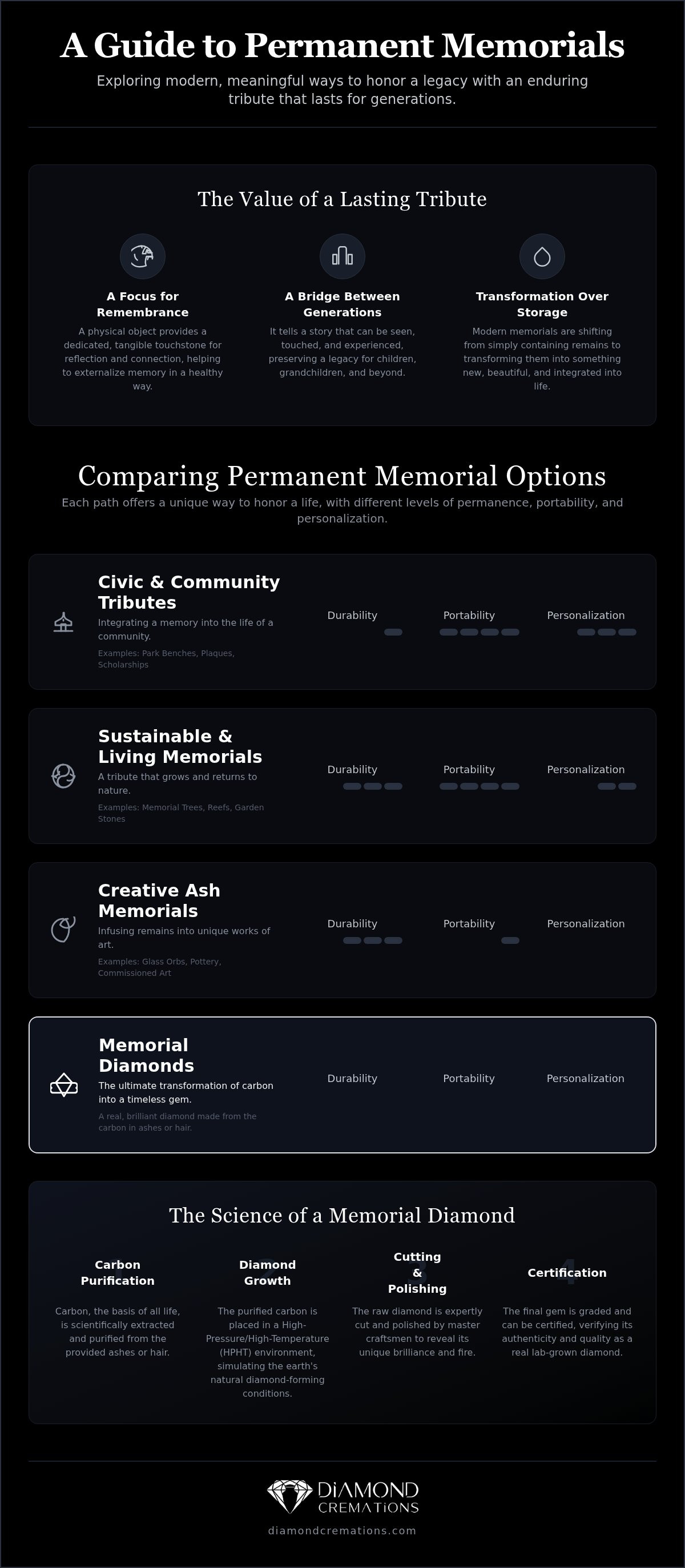
A physical legacy acts as a bridge between generations. It tells a story that can be seen, touched, and experienced by family and friends for decades. A simple park bench with an inscribed plaque, a piece of art infused with ashes, or a sparkling diamond set in a ring all serve this purpose. They transform the abstract concept of memory into a concrete form. This shift is particularly evident in the move from "storage" solutions like urns to "transformation" concepts, where remains are integrated into something new and beautiful. As families become more geographically dispersed, the portability of a memorial—such as a piece of cremation jewelry—has also become a key factor for many.
Evaluating Durability and Longevity
When choosing a permanent memorial, the material is a critical consideration. The goal is to select something that will withstand the effects of time and, in some cases, the environment.
- Materials that endure: Stone (like granite or marble), metals (like bronze), and pure carbon in its diamond form are known for their exceptional durability. These materials resist decay and degradation, ensuring the tribute remains intact.
- Environmental factors: An outdoor memorial, such as a garden stone or a bench, must be ableto withstand weather, sunlight, and changing temperatures. Indoor memorials, like sculptures or diamonds, are protected from these elements but should be crafted from high-quality, stable materials.
- The importance of craftsmanship: Regardless of the material, high-quality craftsmanship is essential. A well-made memorial will not only look better but will also last longer, fulfilling its purpose as a tribute for generations.
Civic and Community Tributes: Leaving a Mark in Public Spaces
For individuals who were deeply connected to their community, a civic tribute can be a particularly fitting way to honor their legacy. These memorials integrate a person's memory into the daily life of a town or city, allowing their story to be shared with a wider audience.
- Dedicated park benches: A simple yet profound gesture, a memorial bench offers a place for community members to rest, reflect, and enjoy a public space, all while seeing the name of the person being honored.
- Memorial plaques and walkway stones: Often placed in botanical gardens, historical sites, or community parks, inscribed plaques and stones create a subtle but lasting mark on a cherished location.
- Endowed scholarships or naming rights: For those passionate about education or community development, establishing a scholarship fund or dedicating a part of a library or community center can create a positive impact that continues indefinitely.
- The impact of storytelling: Civic memorials become part of the local narrative, ensuring that a person's contributions and spirit are not forgotten by the community they loved.
Public Memorial Benches and Plaques
Creating a public memorial often involves coordinating with local authorities or non-profit organizations. The first step is to contact your local parks and recreation department or the management of a specific garden or landmark to inquire about their dedication programs. They can provide guidelines on costs, installation, and approved materials. When selecting an inscription, choose words that capture the essence of your loved one’s personality or a favorite quote. It's also important to consider long-term maintenance, as some materials may require periodic cleaning or care to remain legible and dignified.
Philanthropic and Educational Legacies
A philanthropic memorial channels remembrance into positive action. Creating a scholarship fund at a local high school or university in a loved one’s name can provide opportunities for future generations, turning a personal loss into a source of public good. Similarly, contributing to a building fund for a library, hospital, or community center in exchange for naming rights for a room or wing ensures the name is associated with progress and community support. These forms of memorialization have a long-term social impact, weaving a person's legacy into the fabric of the community's future.
Sustainable and Living Memorials: Returning to Nature
For those who had a deep love for the natural world, a living or sustainable memorial can be a beautiful way to honor their memory. These options connect remembrance with environmental stewardship, creating a tribute that grows, evolves, and gives back to the planet.
- Memorial trees: Planting a tree creates a living legacy that provides oxygen, supports wildlife, and beautifies the landscape. It becomes a symbol of continued life and growth.
- Memorial reefs: For ocean lovers, ashes can be integrated into a permanent underwater structure called a memorial reef ball. These structures help restore marine ecosystems by providing a new habitat for fish and coral.
- Biodegradable urns: These urns are designed to break down naturally in the earth, often containing seeds that grow into a tree, wildflowers, or other plants, transforming remains into a new form of life.
- Environmental and personal connection: These memorials merge the act of remembrance with a commitment to ecological health, offering a profound sense of connection to the cycles of nature.
The Growth of Memorial Trees
A memorial tree is a powerful symbol of life's continuity. When choosing this option, it's important to select a tree species that is native to the local climate and will thrive for many years. Different trees carry different symbolic meanings—an oak for strength, a willow for grace, or a maple for balance. Whether planted in a private backyard or as part of a dedicated memorial forest, planning for the tree's long-term care is essential to ensure this living tribute flourishes for generations to come.
Oceanic Memorial Reefs
Memorial reefs offer a unique and eco-friendly tribute for those with a connection to the sea. In this process, cremated remains are mixed into a pH-neutral concrete to create a "reef ball," which is then placed on the ocean floor. These structures become a permanent part of the marine landscape, fostering new life by providing a surface for corals, algae, and other marine organisms to grow. For families, the reef's coordinates provide a specific destination for remembrance, a place to visit by boat and know that their loved one is contributing to the health of the ocean they cherished.
Creative Ash Memorials and Artistic Keepsakes
For many, a loved one's vibrant personality calls for a memorial that is equally expressive and unique. Artistic memorials infuse cremated remains into custom-made objects, transforming them into beautiful, one-of-a-kind tributes that can be displayed in the home.
- Glass-blown art: A small portion of ashes can be skillfully infused into molten glass, creating stunning swirls and patterns within spheres, hearts, sculptures, or other custom shapes.
- Vinyl records: For the music lover, a small amount of remains can be pressed into a functional vinyl record, carrying a favorite song, a personal voice recording, or simply the quiet sound of the needle on the groove.
- Memorial paintings: Some artists specialize in mixing ashes into oil or acrylic pigments, creating a bespoke portrait or landscape that literally contains a part of the person it honors.
- The rise of "mourning art": This modern revival of a Victorian tradition allows for a highly personal and creative way to process loss and celebrate a unique life through a tangible piece of art.
Infused Glass and Sculpture
The process of creating memorial glass is a delicate art. A skilled glassblower carefully swirls a small amount of ashes into the molten glass, ensuring the pattern is unique to each piece. Families can often customize the colors and shapes to reflect a loved one’s personality—vibrant blues for someone who loved the ocean, or warm yellows for a sunny disposition. These artistic memorials serve as beautiful focal points in a home, moving beyond a traditional urn to become a piece of art that invites conversation and fond remembrance.
Auditory and Visual Tributes
Memorials can also engage senses beyond sight and touch. Creating a playable memorial record is a technical and artistic process where ashes are pressed into the vinyl itself. This creates a deeply personal auditory keepsake. For visual tributes, commissioning a professional artist to create a memorial painting or sculpture ensures a high-end, gallery-quality installation. This elevates the memorial from a simple keepsake to a significant work of art that honors a legacy with sophistication and creativity.
Memorial Diamonds: The Science and Beauty of Enduring Carbon
Among the most personal and permanent memorial ideas is the creation of a memorial diamond. This remarkable process transforms the essential element of life—carbon—from ashes or hair into a genuine, certified diamond. It offers a tribute that is not only beautiful and timeless but also incredibly portable and intimate.
- What is a memorial diamond? It is a lab-grown diamond with the same chemical, optical, and physical properties as a mined diamond, created from the carbon purified from a loved one's or pet's remains.
- The HPHT process: The creation process simulates the natural conditions deep within the Earth, using High-Pressure/High-Temperature (HPHT) technology to grow the diamond crystal.
- Physical properties: These are real diamonds, not imitations or simulants. They rank a 10 on the Mohs scale of hardness, making them an exceptionally durable and lasting tribute. For more detail, you can explore the question of are cremation diamonds real diamonds.
- Personalization options: Each diamond can be customized by carat size, shape, and color, resulting in a bespoke gem that is as unique as the individual it honors.
The Science of Transformation
The journey from ashes to a diamond is a precise and sophisticated scientific process. First, carbon is extracted and purified from a portion of ashes or hair. This purified carbon is placed in a specialized environment designed to foster diamond growth. The environment is then subjected to extreme conditions using a High-Pressure/High-Temperature (HPHT) press, which applies forces of approximately 800,000 pounds per square inch (PSI) and intense heat. Over time, these conditions compel the carbon atoms to crystallize and form a raw diamond. The entire process requires artisanal precision and careful oversight to create each unique stone. You can learn more about how cremation diamonds are made through this scientific journey.
Crafting a Bespoke Legacy
Once the raw diamond has formed, it is cut and polished by expert craftspeople to the client’s exact specifications. The choices for personalization are extensive, allowing you to create a truly one-of-a-kind tribute.
- Choosing a cut: Popular shapes include the classic round brilliant, elegant princess, modern emerald, and soft cushion cuts, among others like oval and pear.
- The palette of remembrance: Memorial diamonds are available in a range of stunning colors, including colorless, blue, yellow, and pink, each with its own symbolic resonance.
- Certification and grading: As an option, a finished memorial diamond can be sent to a leading gemological institute, such as GIA or IGI, for an independent grading report. This report verifies the diamond's authenticity and grades its qualities (the 4Cs: cut, color, clarity, and carat), providing the same assurance as a high-quality mined diamond.
A memorial diamond offers a way to keep a loved one close, transforming a fundamental element of their physical being into an object of beauty and strength that can be passed down through generations.
Discover how you can create an enduring diamond memorial. Begin your journey of transformation with Diamond Cremations.
Frequently Asked Questions
- How much ash is needed for a memorial diamond? The amount of cremated remains or hair required can vary depending on the specific characteristics of the diamond you wish to create, such as its size and color. Generally, only a portion of the total remains is needed for the process. A consultation with the provider will clarify the exact amount for your specific order.
- Are memorial diamonds real diamonds? Yes, they are physically and chemically identical to diamonds mined from the earth. They are lab-grown diamonds, not simulants like cubic zirconia. They share the same hardness, brilliance, and composition, making them a genuine and lasting gemstone.
- Can you make a diamond from hair instead of ashes? Yes, hair is also a rich source of carbon and can be used to create a memorial diamond. This is a meaningful option for memorializing a loved one when cremation was not chosen or for creating a living tribute from your own hair.
- How long does the process of creating a memorial diamond take? The creation of a memorial diamond is a meticulous and individual process. The expected delivery timeframe is approximately 60–90 days, although the exact duration can vary based on the specific order and other circumstances.
- What is the most durable permanent memorial option? While materials like granite and bronze are very durable for outdoor memorials, diamonds are known as the hardest naturally occurring substance on Earth. This makes a memorial diamond one of the most durable and portable permanent memorial options available. While exceptionally hard, they can still chip or fracture under specific types of impact.
- Can I choose the color and shape of a memorial diamond? Yes, personalization is a key aspect of the process. You can typically choose from a range of colors, such as colorless, blue, yellow, and pink, as well as various classic cuts like round, princess, emerald, and more.
- Do memorial diamonds come with a certificate of authenticity? Reputable providers offer a certificate of authenticity that documents the carbon source and the creation process. Additionally, you can opt for an independent grading report from a respected gemological laboratory like GIA or IGI, which grades the diamond’s quality just as it would for a mined diamond.
- Is it possible to make multiple diamonds from one person’s remains? Yes, it is often possible to create more than one diamond, allowing multiple family members to have a personal keepsake. The number and size of the diamonds that can be created depend on the amount of carbon available in the provided remains and the specifications of the order.