


Beyond the Mantle: Meaningful Alternatives to Keeping Ashes in an Urn (2026)
Understanding the Shift: Why Families Move Beyond Traditional Urns
For centuries, the cremation urn has been the primary vessel for honoring the departed, a stationary and solemn presence in the home. While it remains a dignified choice for many, a growing number of individuals are seeking alternatives that feel more connected to the life that was lived. These alternatives to keeping ashes in an urn are not about replacing tradition but expanding it, prioritizing personal connection and active remembrance over simple storage.
This shift reflects a desire for memorials that can be touched, shared, and integrated into daily life. For families who are geographically dispersed or who move frequently, a portable tribute offers comfort and continuity. The modern approach to remembrance often involves transforming ashes into a new form—something that can be passed down not as a container of remains, but as a beautiful object with its own story.
The Psychology of Modern Remembrance
The way we think about memorialization is evolving. For some, the idea of keeping a loved one’s ashes in a box on a shelf can feel distant or impersonal. The focus is moving toward creating tributes that honor a personality, a passion, or a shared memory. A tactile connection can be an important part of the grieving process, and holding a smooth memorial stone or wearing a piece of jewelry can provide a tangible link to the person who is gone. This preference for integrated memorials—objects that blend art, science, and memory—allows remembrance to be a part of the home's living space rather than a separate, somber display.
Static vs. Active Memorials
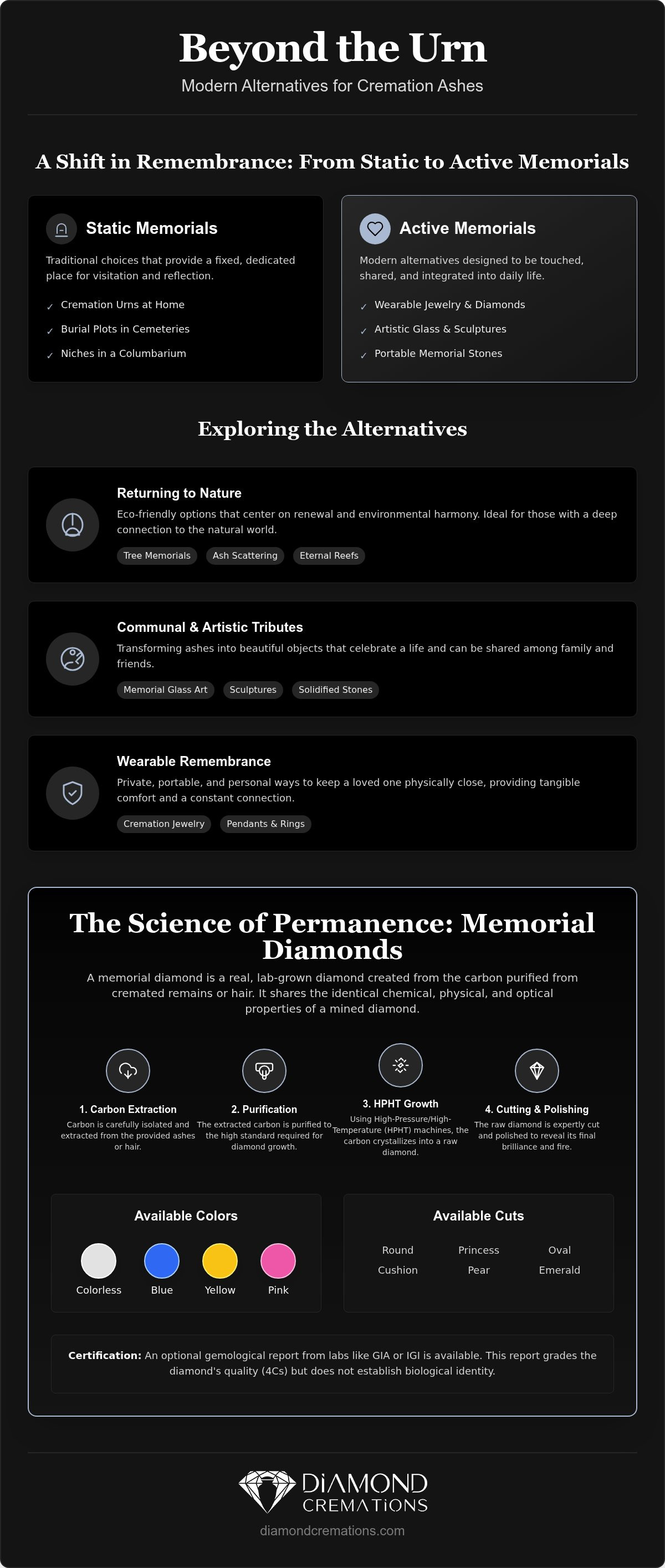
Memorials can be broadly understood in two categories: static and active. Static memorials include traditional urns, burial plots, or niches in a columbarium. They provide a fixed, dedicated place for visitation and reflection. Active memorials, in contrast, are designed to be part of life's ongoing motion. These include jewelry that can be worn, stones that can be carried, or artworks that are displayed as part of a home's decor. Choosing between them is a deeply personal decision, guided by what feels most appropriate for honoring a unique individual and what provides the most comfort to those who remain.
Returning to Nature: Eco-Friendly and Outdoor Memorials
For those who felt a deep connection to the natural world, an eco-friendly memorial can be a fitting tribute. These options are centered on the philosophy of returning to the earth, allowing a loved one's final act to be one of renewal and environmental harmony. However, it's important to consider the emotional implications, particularly the absence of a permanent physical marker to visit.
Many families navigate this by combining a nature-based memorial with a small physical keepsake. For example, the majority of ashes may be scattered in a meaningful location, while a small portion is retained to create a piece of jewelry or art. This approach honors a love for nature while providing a tangible point of focus for remembrance.
Scattering and Living Reefs
Scattering ashes is a timeless and popular choice, offering a powerful sense of release and freedom. Whether at sea, in a favorite forest, or from a mountaintop, a scattering ceremony can be a beautiful and cathartic final goodbye. It is essential to research and respect local regulations regarding scattering in public lands or waters.
A more structured marine option is an eternal reef. Here, cremated remains are mixed with an environmentally safe concrete to create an artificial reef formation, which is then placed on the ocean floor. These reefs help restore marine ecosystems by providing new habitats for fish and other sea life, creating a living memorial that contributes to the planet's health.
Tree Memorials and Botanical Tributes
Botanical memorials symbolize the continuation of life. With this option, ashes are placed in a biodegradable urn along with a seed or young tree. As the urn breaks down, the ashes nourish the soil and help the tree grow. This creates a living tribute that changes with the seasons, offering a place of natural beauty to visit for years to come. When choosing this path, it’s important to consider the long-term care the tree will require and to select a location where it can flourish for generations.
Communal and Artistic Tributes: Sharing the Legacy
When a loss is felt by a wide circle of family and friends, dividing the remains can allow each person to have their own personal tribute. This approach fosters a sense of shared remembrance, ensuring that everyone who wishes to can keep their loved one close. Transforming ashes into art or shared keepsakes shifts the focus from a single, centralized memorial to a distributed network of personal connections.
This method allows remembrance to take the form of beautiful objects that celebrate a life rather than somber reminders of a death. Open communication among family members is key to ensuring this process is handled with care and respect for everyone's wishes.
Memorial Glass and Sculptural Art
A small amount of ash can be infused into molten glass by a skilled artisan to create stunning, one-of-a-kind sculptures, paperweights, or orbs. The ashes appear as delicate white specks and swirls suspended within the colored glass, creating a visual effect that is both subtle and beautiful. These pieces blend seamlessly into home decor, serving as a tribute that is artistic and celebratory. They can become conversation starters that invite positive memories, rather than objects that command a somber silence.
Memorial Stones and Shared Keepsakes
Another option for sharing remains is to have them solidified into smooth, touchable stones. This process uses a portion of the ashes to create a collection of small, durable stones that resemble polished river rocks. They are easy to divide among family members and can be kept in a pocket, placed on a desk, or arranged in a garden. These "pocket memorials" offer a discreet and tactile way to keep a loved one near, providing a simple, physical comfort that can be carried anywhere.
Wearable Remembrance: The Rise of Cremation Jewelry
For many, the idea of keeping a loved one physically close provides immense comfort. Cremation jewelry is a popular way to achieve this, offering a private and portable method of remembrance. The market for memorial jewelry is diverse, ranging from simple, accessible pieces to high-end, custom-designed heirlooms. The choice of material—from stainless steel to platinum—often reflects the desired permanence of the tribute.
Types of Memorial Jewelry
The spectrum of memorial jewelry is broad, but most options fall into a few key categories:
- Chamber Jewelry: These are small pendants, bracelets, or rings with a tiny, concealed compartment designed to hold a pinch of ash. They are often sealed by a professional jeweler to ensure security.
- Resin-Based Jewelry: In this style, ashes are visibly suspended in a hardened, colorful resin. This allows for a high degree of artistic customization in a durable form.
- Solid Metal Tributes: Some jewelry incorporates ashes directly into the metal during the casting process, while others feature engravings of a fingerprint, signature, or meaningful date.
Durability and Daily Wear
When selecting memorial jewelry, craftsmanship is paramount. A secure seal is crucial for any piece designed to hold ashes. For a tribute intended to be worn daily and passed down through generations, choosing durable metals like gold or platinum is a wise investment. A well-made piece of cremation jewelry transitions from a temporary comfort to a lasting family heirloom, carrying a story of connection for years to come.
The Science of Permanence: Memorial Diamonds
Among the alternatives to a traditional urn, a memorial diamond stands out as a unique option for creating a lasting, tangible heirloom. This process uses the carbon extracted from a portion of cremated ashes or hair to create a real lab-grown diamond. The result is not a simulant or imitation, but a genuine diamond with the same chemical, optical, and physical properties as one formed in the earth. It offers a way to transform the very elements of a loved one into an object of beauty and permanence.
The HPHT Transformation Process
Creating a memorial diamond is a sophisticated scientific process. First, carbon is extracted and purified from the provided ashes or hair. This purified carbon is then placed in a specialized environment that replicates the conditions deep within the Earth's crust. Using a process known as High-Pressure/High-Temperature (HPHT), the carbon is subjected to immense pressure—approximately 800,000 pounds per square inch (PSI)—and extreme heat. A tiny diamond seed is used to initiate the crystallization process, providing a structural template for the carbon atoms to bond to. Over time, a new, unique raw diamond forms.
Personalizing Your Tribute
Once the raw diamond has grown, it is cut and polished by a professional, just like a mined diamond. The process allows for significant personalization. You can select the final shape, with options including Round, Princess, Oval, Cushion, Pear, and Emerald cuts. The natural composition of the remains influences the final color, which can range from colorless to various shades of blue, yellow, or pink.
For those who desire it, an optional grading report from a leading gemological institute like the GIA or IGI can be obtained. It's important to understand that this report verifies the diamond's gemological characteristics—its cut, color, clarity, and carat—but does not confirm the biological origin of the carbon. This process creates a real diamond that can be set into a ring, pendant, or other piece of jewelry.
A Memorial Beyond the Urn
A memorial diamond offers a form of remembrance that is both completely discreet and highly portable. It can be worn daily or kept in a safe place, a private tribute that carries a deep personal meaning. Unlike many other memorials, a diamond is an heirloom that can be passed down through centuries, carrying the story of a loved one forward for future generations. It represents a final, remarkable transformation—from a life lived to a point of light that lasts forever.
If you are considering how to best honor a loved one, exploring all available options is an important step in the journey. For those interested in the permanence and beauty of a diamond, further information can help guide your decision.
Learn more about transforming ashes into a custom memorial diamond.
Frequently Asked Questions About Urn Alternatives
What is the most popular alternative to keeping ashes in an urn?
While scattering remains a very common choice, wearable memorials like cremation jewelry are increasingly popular due to their personal and portable nature. The "best" alternative is entirely subjective and depends on individual and family preferences.
Can I turn a small amount of ashes into a real diamond?
Yes. The process of creating a memorial diamond requires only a portion of the total cremated remains. The carbon is extracted from the provided ashes or hair to grow a new, genuine lab-grown diamond.
Is it legal to scatter ashes in national parks or public waters?
Regulations vary significantly by location. Most national parks allow scattering with a permit and have specific rules about where and how it can be done. For scattering at sea, federal law requires that it take place at least three nautical miles from shore. Always check with local, state, and federal authorities before proceeding.
How much ash is actually needed to create a memorial keepsake?
The amount needed depends on the type of memorial. Glass art, resin jewelry, and solidified stones typically require only a small spoonful of ashes per piece. Creating a memorial diamond also requires just a portion of the total remains.
What happens to the remaining ashes if I only use a portion for a keepsake?
The remaining ashes are typically returned to the family. They can be kept in a smaller urn, scattered in a meaningful place, or used to create additional keepsakes for other family members.
Are memorial diamonds considered real diamonds by jewelers?
Yes. Memorial diamonds grown from ashes are physically and chemically identical to mined diamonds. They are considered real, lab-grown diamonds and can be set, appraised, and cared for by any professional jeweler.
Can I combine ashes from two people into one memorial item?
This may be possible depending on the specific memorial and the provider. For complex processes like creating a memorial diamond, you should consult directly with the company to discuss their policies and capabilities regarding combining remains.
How do I choose between scattering and a permanent keepsake?
This is a personal choice. Consider whether having a physical place to visit is important to you and your family. Scattering offers a sense of release and return to nature but leaves no tangible marker. A permanent keepsake provides a lasting, physical point of connection. Some families choose to do both, scattering some ashes while retaining a small amount for a keepsake.